Home/Blog/The Agent SDK: Powering the Future of AI-Augmented Enterprises
human + AI workflows
The Agent SDK: Powering the Future of AI-Augmented Enterprises
The Agent SDK: Powering the Future of AI-Augmented Enterprises In the rapidly evolving landscape of artificial intelligence, the ability to efficiently build and deploy sophisticat
12 MIN READ
28 Oct 2026
human + AI workflows
The Agent SDK: Powering the Future of AI-Augmented Enterprises
In the rapidly evolving landscape of artificial intelligence, the ability to efficiently build and deploy sophisticated AI solutions is paramount. At the heart of this capability lies The Agent SDK, a transformative toolset designed to accelerate the development of intelligent agents and AI-powered applications. This software development kit is not merely a collection of tools; it is a catalyst for innovation, enabling enterprises to seamlessly integrate AI into their core operations and foster a new era of human-AI collaboration.
A software development kit (SDK) is fundamentally a comprehensive collection of software development tools bundled into a single, installable package. These kits are designed to streamline the creation of applications by providing developers with essential components such as compilers, debuggers, and often a software framework. SDKs are typically specific to a particular hardware platform and operating system combination, making them indispensable for platform-specific app development, like an iOS SDK for Apple devices or a Java Development Kit for Android applications.
An SDK typically includes a range of critical tools that facilitate the development process. These commonly encompass application programming interfaces (APIs) in the form of on-device libraries of reusable functions, which interface with a particular programming language. Beyond APIs, an SDK can be as intricate as hardware-specific tools designed to communicate with embedded systems, or it may offer debugging facilities and other utilities, often presented within an integrated development environment (IDE). Many SDKs also provide sample software, technical notes, documentation, and tutorials to guide developers through their use.
In the context of AI, the emergence of an AI SDK marks a significant evolution. While traditional SDKs focus on general application development, an AI SDK is specifically tailored to help developers build AI-powered applications and agents. These specialized kits provide the necessary components to interact with AI models, manage data for AI processing, and integrate AI functionalities into broader systems. The strategic importance of an AI SDK lies in its capacity to democratize AI development, making it more accessible and efficient for a wider range of developers.
02The Strategic Benefits of Deploying an Agent SDK in Your AI Office
The adoption of an Agent SDK offers profound strategic advantages for organizations aiming to build and scale their AI capabilities, particularly within the innovative framework of an AI office. These benefits translate directly into more agile development cycles, enhanced integration, and significant cost efficiencies, fostering an environment where human and AI agents can collaborate seamlessly.
Efficient Development and Faster Deployment for AI Agents
One of the primary benefits of an Agent SDK is its ability to drive efficient development and faster deployment of AI agents. By providing a ready-made set of platform-specific building tools, an SDK eliminates the need for developers to create every component from scratch. This efficiency is crucial for organizations looking to rapidly iterate on AI solutions and respond to evolving business needs. For instance, an AI SDK designed for building agents allows developers to quickly prototype, test, and refine agent behaviors, drastically cutting down development timelines.
Seamless Integration and Cost Savings
Agent SDKs are engineered for seamless integration, offering API libraries and deployment tools that ensure AI agents can be easily incorporated into existing systems and workflows. This integration capability is vital for creating a cohesive AI-augmented enterprise where AI agents can interact with various data sources and applications without extensive custom coding. Furthermore, by streamlining the development process and reducing the complexity of integration, Agent SDKs contribute to substantial cost savings. Less time spent on foundational development and integration means resources can be reallocated to more innovative aspects of AI agent design and deployment.
Enabling Advanced AI Functionalities
Beyond efficiency and cost, Agent SDKs are instrumental in enabling advanced AI functionalities. Many application software developers leverage specific SDKs to incorporate sophisticated features such as analytics, push notifications, and monetization options into their apps. Similarly, an Agent SDK provides the specialized tools required for AI agents to perform complex tasks, analyze data, and learn from interactions. This includes support for multi-provider AI models, allowing developers to integrate various AI services and leverage the best capabilities for their specific agent requirements, ultimately enhancing the intelligence and utility of the agents.
03Key Components and Capabilities of a Modern Agent SDK
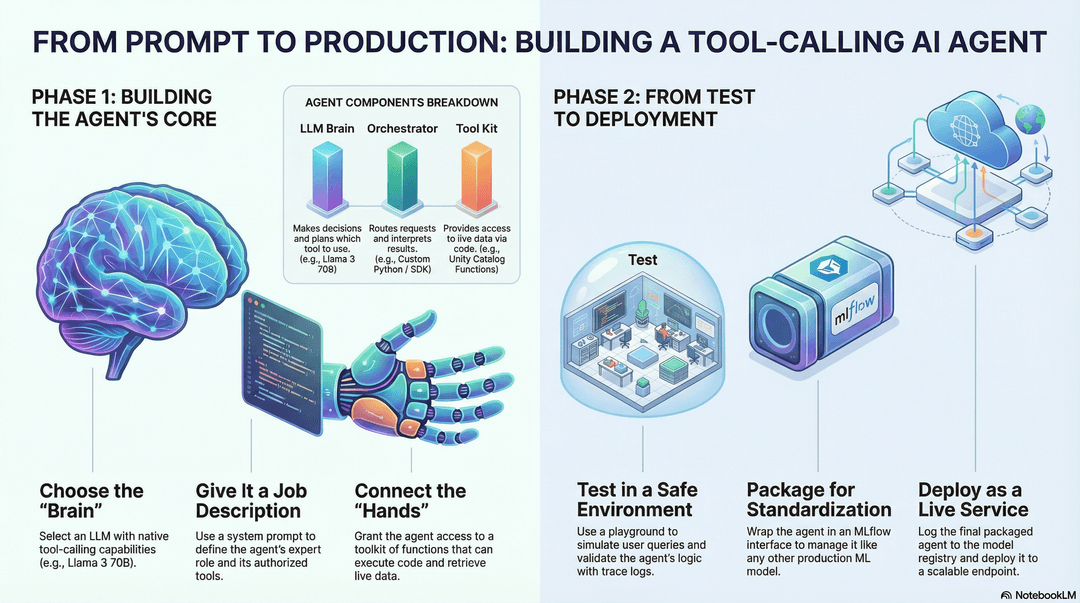
Understanding the inner workings of a modern Agent SDK reveals its power as a foundational element for building sophisticated AI agents. These kits are far more than simple code libraries; they are comprehensive environments designed to support the entire lifecycle of AI agent development, from initial design to deployment and ongoing maintenance.
API Libraries and Frameworks for Agent Development
At the core of any Agent SDK are its API libraries, which provide reusable functions to interface with specific programming languages and AI services. These APIs abstract away much of the complexity of interacting with underlying AI models and data sources, allowing developers to focus on the agent's logic and behavior. For example, an AI SDK might offer APIs for natural language processing, image recognition, or data analysis, enabling agents to understand and interact with their environment. Additionally, many SDKs include software frameworks that provide a structured foundation for building applications, ensuring consistency and maintainability across different AI agents.
Modern AI SDKs often boast framework-agnostic capabilities, supporting popular development environments like React, Next.js, Vue, Svelte, and Node.js. This versatility allows developers to leverage their existing skill sets and preferred tools when building AI-powered applications and agents. Such flexibility is crucial for rapid development and broad adoption within diverse enterprise ecosystems.
Debugging, Profiling, and Deployment Tools
Developing intelligent agents involves complex logic and interactions, making robust debugging and profiling tools indispensable. An Agent SDK typically includes debuggers to identify and resolve issues within an agent's code, ensuring reliable performance. Profilers help developers analyze an agent's resource consumption and execution time, optimizing its efficiency and responsiveness. These tools are often integrated into an IDE, providing a unified environment for coding, testing, and debugging.
Furthermore, deployment tools are a critical component, facilitating the smooth transition of developed AI agents from the development environment to production. These tools can automate deployment processes, manage dependencies, and ensure compatibility across different operating systems and platforms. For instance, the .NET SDK provides free downloads for building and running .NET apps on Linux, macOS, and Windows, showcasing the cross-platform nature often desired in modern development kits.
Support for Multi-Provider AI Models and Streaming
A cutting-edge AI SDK distinguishes itself through its support for multi-provider AI models. This capability allows developers to integrate and switch between various AI service providers, such as different large language models or specialized AI services, based on performance, cost, or specific task requirements. This flexibility ensures that AI agents can always leverage the best available AI capabilities.
Another advanced feature is built-in streaming support, which is vital for real-time interactions with AI models. Streaming capabilities allow AI agents to process and respond to information continuously, enhancing user experience and enabling dynamic, conversational AI applications. Features like built-in fallbacks further improve the robustness of AI agents, ensuring they can gracefully handle errors or unexpected responses from AI services, maintaining a consistent user experience.
00Building the AI-Augmented Enterprise: Nonilion and the Agent SDK
The strategic application of an Agent SDK is particularly transformative within the context of the AI-augmented enterprise, where human and AI agents collaborate within a shared digital workspace. Companies like Nonilion are at the forefront of defining this future, leveraging the power of advanced SDKs to create seamless, intelligent environments. The Agent SDK becomes a critical enabler for Nonilion's vision of AI offices, where human + AI collaboration is not just a concept, but a daily operational reality.
Empowering Human-AI Collaboration
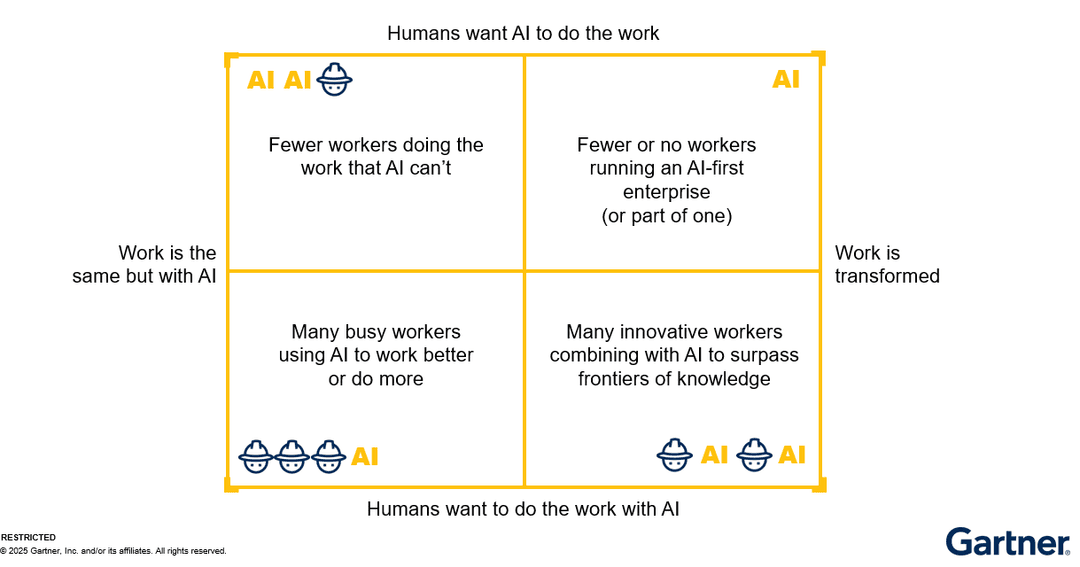
In an AI office, the goal is to augment human capabilities, not replace them. An Agent SDK facilitates this by providing the building blocks for AI agents that can understand context, execute tasks, and communicate effectively with their human counterparts. By using such an SDK, developers can create agents that handle repetitive tasks, gather information, or even contribute to creative processes, freeing up human teams to focus on higher-value work. This synergy is central to Nonilion's approach, where AI agents act as intelligent assistants, seamlessly integrated into virtual office workflows to enhance overall team productivity and decision-making.
Accelerating Workflow Automation and Agent Creation
The Agent SDK dramatically accelerates the creation of specialized AI agents tailored for specific workflow automation needs. Whether it's building a document analyzer, as demonstrated with the Laravel AI SDK in a 30-minute tutorial, or developing agents for complex data processing, the SDK provides the necessary tools. This rapid development capability allows enterprises to quickly automate mundane or time-consuming tasks, leading to significant operational efficiencies. In Nonilion's AI office, this means that custom AI agents can be rapidly developed and deployed to manage meeting follow-ups, synthesize information from various sources, or orchestrate complex asynchronous executions, ensuring that workflows run smoothly and intelligently.
The Role of Agent SDKs in Virtual AI Offices
For virtual AI offices, Agent SDKs are foundational. They enable the development of AI agents that can operate autonomously or in concert with human teams across distributed environments. These SDKs provide the necessary APIs and deployment mechanisms to ensure that agents are compatible with various cloud platforms and communication tools, making them adaptable to different virtual office setups. this platform, as an example of an AI office, relies on such robust SDKs to ensure its AI agents can seamlessly integrate into a shared workspace, facilitating team coordination and enabling a truly collaborative human + AI co-working experience. The security and compatibility considerations when choosing an SDK, as highlighted by AWS, are paramount in maintaining the integrity and functionality of these virtual environments.
05Practical Applications and Future Directions for Agent SDKs
The Agent SDK is not merely a theoretical construct; its practical applications are already transforming various industries and pointing towards exciting future directions for AI development. From enhancing document analysis to enabling cross-platform AI solutions, these toolkits are becoming indispensable.
Document Analysis and Beyond
A compelling practical application of an AI SDK is in document analysis. As demonstrated by a tutorial on building a document analyzer with the Laravel AI SDK, these kits empower developers to create agents capable of processing, understanding, and extracting insights from vast amounts of text. This capability extends beyond simple analysis to tasks like automated summarization, sentiment analysis, and intelligent information retrieval, revolutionizing how businesses handle data and knowledge management. Such agents can significantly reduce manual effort and improve the accuracy of data-driven decisions.
Cross-Platform Development for AI Agents
The demand for AI agents that can function across multiple platforms – be it mobile, web, or desktop – is growing. Agent SDKs facilitate this by offering cross-platform compatibility, allowing developers to write code once and deploy it everywhere. For instance, the .NET SDK supports building and running applications on Linux, macOS, and Windows, illustrating the potential for universal AI layer development. This flexibility ensures that AI agents can reach a broader audience and integrate into diverse technological ecosystems, from cloud computing environments to Internet of Things (IoT) devices, as highlighted by AWS.
Considerations for Choosing an Agent SDK
When selecting an Agent SDK, several critical factors must be considered to ensure its suitability for an organization's needs. The license agreement is fundamental, as it dictates the terms of use and distribution. Security is paramount, especially when dealing with sensitive data or mission-critical AI agents, requiring careful evaluation of the SDK's security features and practices. Compatibility with existing systems, programming languages, and AI models is also essential for seamless integration and future scalability. Finally, the availability of comprehensive documentation, community support, and robust debugging tools can significantly impact development efficiency and success.
An API (Application Programming Interface) is a set
07Why This Trend Matters for Nonilion
This trend matters to Nonilion because it points to a bigger change: teams are moving from simple calls toward persistent, AI-supported collaboration spaces. Nonilion can bridge live presence, meeting context, avatars, and follow-up work so the trend becomes a usable workflow instead of a headline.
08Shareable Extracts
The trend is not just "The Agent SDK: Powering the Future of AI-Augmented Enterprises" - it is a signal that team coordination is becoming the next competitive edge.
Hot take: the teams that win from this shift will not be the ones with more meetings; they will be the ones with clearer shared context after every meeting.
If the agent sdk: powering the future of ai-augmented enterprises keeps moving this fast, remote teams need a workspace where conversation, presence, and follow-up stay connected.
The Agent SDK: Powering the Future of AI-Augmented Enterprises In the rapidly evolving landscape of artificial intelligence, the ability to efficiently build and deploy sophisticated AI solutions is paramount.
At the heart of this capability lies The Agent SDK, a transformative toolset designed to accelerate the development of intelligent agents and AI-powered applications.
09Social Hooks
Everyone is talking about The Agent SDK: Powering the Future of AI-Augmented Enterprises. The overlooked part is what happens to team workflows after the headline fades.
The uncomfortable question behind The Agent SDK: Powering the Future of AI-Augmented Enterprises: are teams adapting their collaboration systems fast enough?
This is not a meeting trend. It is a coordination trend, and products like Nonilion sit right in the middle of that shift.