Home/Blog/The Strategic Imperative of ManyAgents: Scaling Intelligence in the AI-Powered Workplace
human + AI workflows
The Strategic Imperative of ManyAgents: Scaling Intelligence in the AI-Powered Workplace
The Strategic Imperative of ManyAgents: Scaling Intelligence in the AI-Powered Workplace The landscape of artificial intelligence is rapidly evolving, moving beyond the paradigm of
14 MIN READ
26 Oct 2026
human + AI workflows
The Strategic Imperative of ManyAgents: Scaling Intelligence in the AI-Powered Workplace
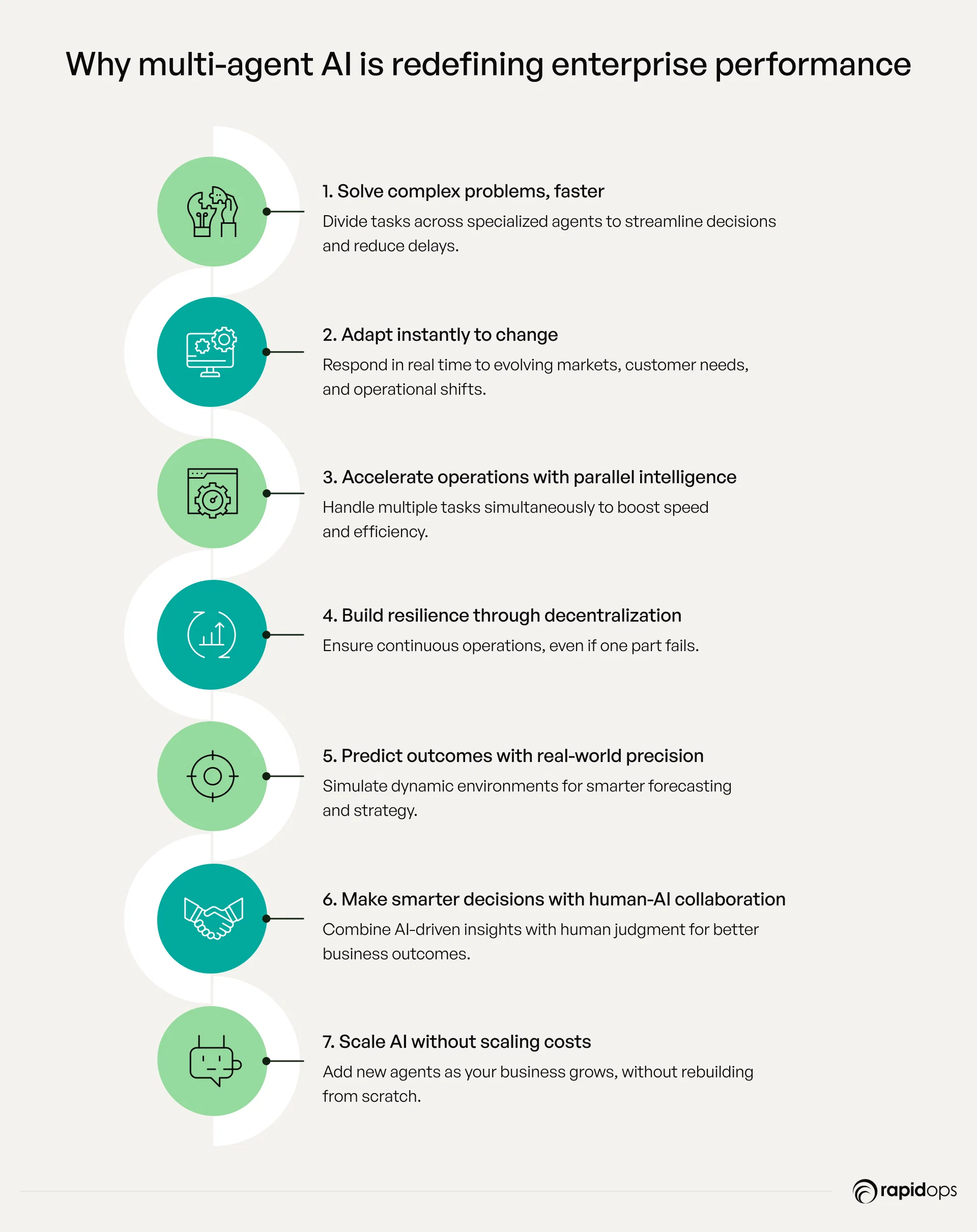
The landscape of artificial intelligence is rapidly evolving, moving beyond the paradigm of single, monolithic AI systems to embrace a more distributed and specialized approach. This shift introduces the concept of ManyAgents: multiple AI entities working in concert to tackle complex challenges, much like a well-coordinated human team. This strategic adoption of multiple agents is not merely about increasing computational power, but about optimizing workflows, enhancing specialization, and fostering seamless collaboration between humans and AI within dynamic environments like the modern AI office, exemplified by platforms such as Nonilion.
At its core, ManyAgents refers to the deployment and orchestration of several AI agents, each potentially designed for specific tasks or roles, working simultaneously to achieve a larger objective. Stu Green, for instance, developed an app called ManyAgents to balance multiple coding agents running concurrently, each doing
different work in parallel. More broadly, the term describes a system in which agents can plan, reason, use tools, exchange information, and hand work to one another rather than relying on a single general-purpose assistant.
A ManyAgents environment might include a research agent that gathers evidence, an analysis agent that identifies patterns, a writing agent that produces a draft, and a review agent that checks quality and compliance. These agents may use the same underlying model or different models selected for different requirements. The defining feature is not the number of agents alone, but the structured division of responsibility.
02Why One Agent Is Often Not Enough
A single AI assistant can be remarkably capable, but complex work creates competing demands. The same system may be expected to interpret a vague business request, search through internal documents, calculate financial implications, create a presentation, and verify that the final recommendation follows company policy. Each task requires a different form of reasoning and a different set of tools.
A single-agent workflow can also become difficult to control. As instructions accumulate, prompts grow longer and priorities become less clear. The agent may spend too much time on low-value subtasks, overlook an important constraint, or produce an answer that sounds persuasive without being adequately checked.
ManyAgents addresses this challenge through specialization. Instead of asking one assistant to perform every step, an organization can assign distinct roles:
Planning agents break broad goals into manageable actions.
Research agents locate relevant information and record sources.
Operational agents interact with software, databases, or APIs.
Creative agents generate alternatives, drafts, and concepts.
Evaluation agents test outputs against defined criteria.
Supervisory agents coordinate progress and decide when human input is required.
This resembles the structure of a high-performing team. Specialization reduces cognitive overload, while coordination allows the overall system to handle a wider range of work.
03The Architecture of a ManyAgents System
There is no single blueprint for building a multi-agent workplace. The right architecture depends on the task, the organization’s risk tolerance, and the tools available. Nevertheless, most systems contain several common layers.
1. The Coordinator
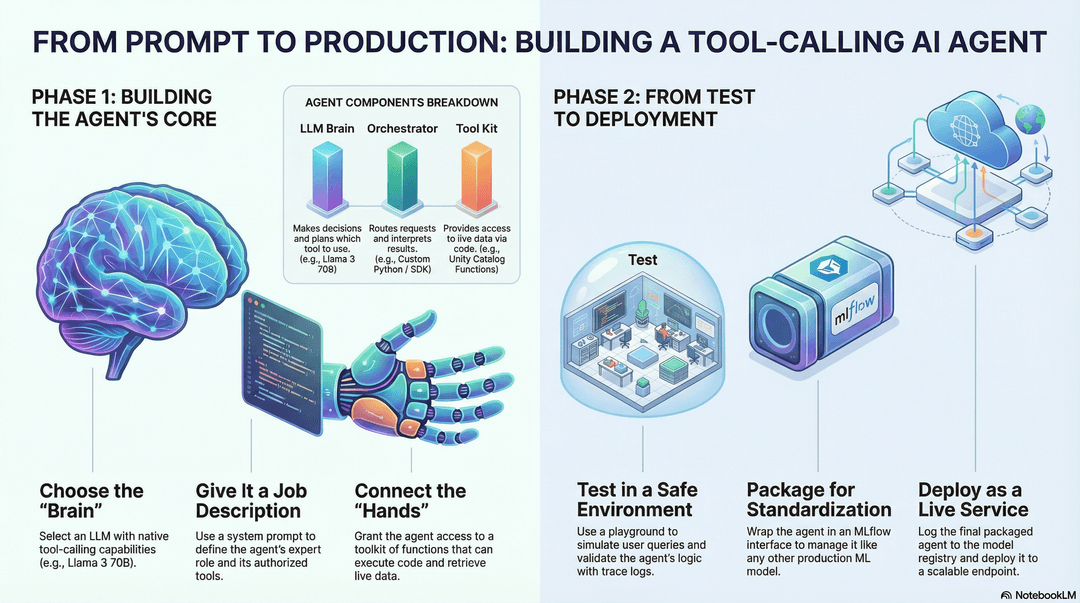
The coordinator, sometimes called an orchestrator, determines how work is distributed. It may assign tasks to specific agents, establish dependencies, monitor progress, and combine completed outputs.
For example, if a marketing team asks for a product launch plan, the coordinator could send parallel requests to:
A market research agent for competitor information.
A customer insights agent for audience segmentation.
A financial agent for budget assumptions.
A content agent for messaging options.
A compliance agent for claims and regulatory review.
The coordinator then assembles the findings into a sequence of deliverables. In more advanced systems, it can revise the plan when an agent reports missing data or an unexpected constraint.
2. Specialized Agents
Each agent should have a clear mandate. A research agent might be permitted to browse approved sources but not modify business records. A finance agent might access accounting data but be restricted from sending external communications. Clear boundaries make behavior easier to test and audit.
Specialization does not necessarily mean that every agent uses a different AI model. In many cases, the same model can perform multiple roles when given different instructions, tools, and access permissions. In other cases, organizations may use a faster, less expensive model for routine classification and a more capable model for complex analysis.
3. Shared Context and Memory
Agents need a way to exchange information. This may be a shared workspace, a structured task record, a document repository, or a message-passing system. The format matters. Unstructured conversations can become difficult to interpret, while structured records make status, assumptions, and decisions easier to track.
A useful shared task record might include:
The original objective.
Assigned owner and supporting agents.
Required inputs and known limitations.
Current status.
Intermediate findings.
Decisions made and their rationale.
Open questions.
Evidence or source references.
Approval requirements.
Memory should also be managed deliberately. Retaining every previous interaction can introduce irrelevant information and increase privacy risks. A better approach is to preserve durable facts, important decisions, and approved knowledge while allowing temporary working context to expire.
4. Tools and Permissions
ManyAgents becomes more valuable when agents can use tools, but tool access must be governed. An agent might query a customer relationship management system, create a spreadsheet, run code, or draft an email. Each capability increases usefulness and potential risk.
Permissions should follow the principle of least privilege. An agent should receive only the access needed for its role, and high-impact actions should require confirmation. Reading a report, updating a database, and issuing a payment are not equivalent activities. They should be subject to different approval thresholds.
04A Practical Example: The AI Office
Consider an employee preparing a quarterly business review. In a conventional workflow, the employee may spend hours collecting sales figures, asking colleagues for updates, checking customer notes, preparing charts, and writing an executive summary.
In a ManyAgents workflow, the employee gives the system a goal and a deadline. A coordinator divides the work:
A data agent retrieves approved sales and pipeline figures.
A regional agent compares performance across markets.
A customer agent identifies major account developments.
An operations agent summarizes delivery or support issues.
An analyst detects changes from the previous quarter.
A presentation agent turns the approved findings into slides.
A review agent checks calculations, missing citations, and unsupported claims.
The employee remains responsible for judgment and approval, but no longer needs to perform every administrative step manually. The system can present a concise briefing that identifies the strongest results, the areas of concern, and the decisions requiring attention.
This model is especially relevant to the modern AI office, where work is distributed across applications, departments, and time zones. Agents can act as a connective layer between systems that employees currently navigate one by one.
05Parallel Work and Faster Iteration
One of the clearest advantages of ManyAgents is parallelism. Independent tasks can be executed at the same time rather than in a strictly linear sequence. A coding team, for example, might ask separate agents to investigate a bug, propose a test suite, review a database query, and evaluate the user-interface impact.
Parallel execution can reduce turnaround time, but it requires coordination. Agents need defined inputs and outputs, and the system must know which tasks can safely run concurrently. If two agents attempt to modify the same file or database record, conflicts may arise. Effective orchestration therefore includes dependency management, version control, and conflict resolution.
Parallelism also supports exploration. Several agents can generate competing approaches to a problem, after which an evaluator compares them using criteria such as cost, reliability, maintainability, or customer impact. This can be more robust than accepting the first plausible answer from a single system.
06Quality Control Through Independent Review
A major benefit of multiple agents is the possibility of independent verification. An agent that creates an answer should not automatically be the only agent that evaluates it. A separate reviewer can check whether the result follows instructions, uses reliable evidence, and satisfies measurable requirements.
For instance, a document-generation workflow might use:
A drafting agent to produce the initial text.
A factuality agent to identify claims requiring support.
A style agent to check tone and readability.
A security agent to detect confidential information.
A final editor to resolve competing feedback.
Independent review does not guarantee correctness. Agents can share the same blind spots, and a reviewer may confidently approve an error. Human review remains important when decisions involve legal obligations, medical guidance, employment, financial commitments, or reputational risk. Still, structured review can catch routine problems earlier and make human oversight more focused.
07Governance, Safety, and Accountability
The more agents an organization deploys, the more important governance becomes. A system with one assistant may have a relatively simple audit trail. A network of agents can generate many decisions, tool calls, files, and messages in a short period.
Organizations should be able to answer basic questions about any important output:
Which agent produced it?
What instructions and data did it use?
Which sources influenced the result?
What tools did it access?
Did another agent review it?
Where did a human approve or override the process?
What happened when information was incomplete or contradictory?
Logging these details supports troubleshooting and accountability. It also helps teams improve the system over time by identifying recurring failure points.
Safety controls can include sandboxed execution, content filtering, data-loss prevention, approval gates, rate limits, and automatic shutdown conditions. Agents should be designed to report uncertainty rather than conceal it. If a source is unavailable or two datasets conflict, the appropriate behavior may be to pause and request clarification.
08The Human Role in a ManyAgents Workplace
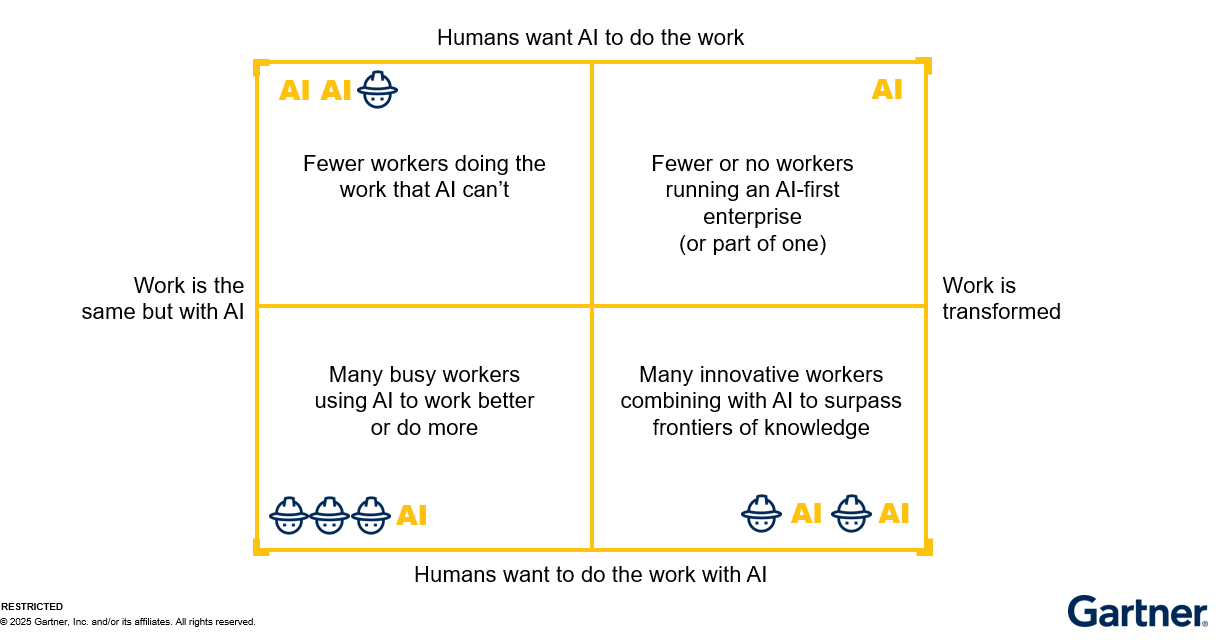
ManyAgents is not a replacement for organizational judgment. Its strongest role is often to expand human capacity. People define objectives, establish boundaries, interpret ambiguous situations, and accept responsibility for consequential decisions. Agents handle much of the searching, sorting, drafting, comparison, and routine execution.
This division of labor can improve the employee experience, but only if it is designed thoughtfully. Employees need to understand what agents can do, what they cannot do, and when escalation is required. They also need interfaces that make work visible. A person should not have to inspect dozens of hidden agent conversations to understand why a recommendation was produced.
A well-designed AI office may therefore present:
A clear task timeline.
The agents involved and their responsibilities.
Key evidence and assumptions.
Confidence indicators and unresolved questions.
Suggested actions.
Approval and escalation controls.
Transparency builds trust and allows employees to intervene before a small error becomes a larger operational problem.
09Measuring the Value of ManyAgents
Adopting a multi-agent system should not be justified by novelty alone. Organizations need measurable outcomes. Useful metrics may include:
It is also important to measure coordination overhead. Adding agents can increase infrastructure costs, latency, and complexity. If a simple task takes longer because it passes through too many agents, the architecture should be simplified. The goal is not maximum agent count; it is the most effective allocation of intelligence.
10Starting Small and Scaling Responsibly
Organizations can begin with a narrowly defined workflow that has clear inputs, outputs, and success criteria. Document review, internal research, software testing, meeting preparation, and service-ticket classification are often suitable starting points because their boundaries are relatively easy to establish.
A practical rollout may follow four stages:
Observe: Use agents to suggest actions while employees continue to perform them.
Assist: Allow agents to complete low-risk steps with human confirmation.
Automate: Permit approved workflows to run independently within strict limits.
Optimize: Analyze performance data and refine roles, permissions, and escalation rules.
This staged approach creates opportunities to test assumptions and gather feedback. It also prevents an organization from automating a broken process before understanding it.
11The Strategic Outlook
ManyAgents represents a shift from asking, “How capable is this AI assistant?” to asking, “How should intelligence be organized across the entire workflow?” That distinction is strategically important. Businesses compete not only through individual tools, but through the speed, quality, and adaptability of their operating systems.
When coordinated effectively, multiple agents can bring specialized expertise to routine and complex work, reduce delays between departments, and help employees focus on decisions that require context and judgment. The result is not an office filled with disconnected chatbots, but an intelligent network of digital collaborators governed by human priorities.
The organizations most likely to benefit will be those that treat ManyAgents as an operating model rather than a collection of experiments. They will define responsibilities, manage access carefully, measure outcomes, and preserve meaningful human oversight. In that environment, scaling intelligence does not mean removing people from the process. It means giving people a coordinated set of capable partners that can turn information into action more efficiently.
For ManyAgents, Nonilion can be used as the practical AI-office example: a shared workspace where human teammates and AI agents keep discussion, decisions, and execution connected.
12Why This Trend Matters for Nonilion
This trend matters to Nonilion because it points to a bigger change: teams are moving from simple calls toward persistent, AI-supported collaboration spaces. Nonilion can bridge live presence, meeting context, avatars, and follow-up work so the trend becomes a usable workflow instead of a headline.
13Shareable Extracts
The trend is not just "The Strategic Imperative of ManyAgents: Scaling Intelligence in the AI-Powered Workplace" - it is a signal that team coordination is becoming the next competitive edge.
Hot take: the teams that win from this shift will not be the ones with more meetings; they will be the ones with clearer shared context after every meeting.
If the strategic imperative of manyagents: scaling intelligence in the ai-powered workplace keeps moving this fast, remote teams need a workspace where conversation, presence, and follow-up stay connected.
This shift introduces the concept of ManyAgents: multiple AI entities working in concert to tackle complex challenges, much like a well-coordinated human team.
Defining the Multi-Agent Paradigm At its core, ManyAgents refers to the deployment and orchestration of several AI agents, each potentially designed for specific tasks or roles, working simultaneously to achieve a larger objective.
14Social Hooks
Everyone is talking about The Strategic Imperative of ManyAgents: Scaling Intelligence in the AI-Powered Workplace. The overlooked part is what happens to team workflows after the headline fades.
The uncomfortable question behind The Strategic Imperative of ManyAgents: Scaling Intelligence in the AI-Powered Workplace: are teams adapting their collaboration systems fast enough?
This is not a meeting trend. It is a coordination trend, and products like Nonilion sit right in the middle of that shift.