Home/Blog/Wikipedia's Cleanup of AI-Generated Content: A Blueprint for Digital Trust
human + AI workflows
Wikipedia's Cleanup of AI-Generated Content: A Blueprint for Digital Trust
Wikipedia's Cleanup of AI-Generated Content: A Blueprint for Digital Trust The rapid advancement of generative AI has ushered in an era of unprecedented content creation, but also
12 MIN READ
27 Oct 2026
human + AI workflows
Wikipedia's Cleanup of AI-Generated Content: A Blueprint for Digital Trust
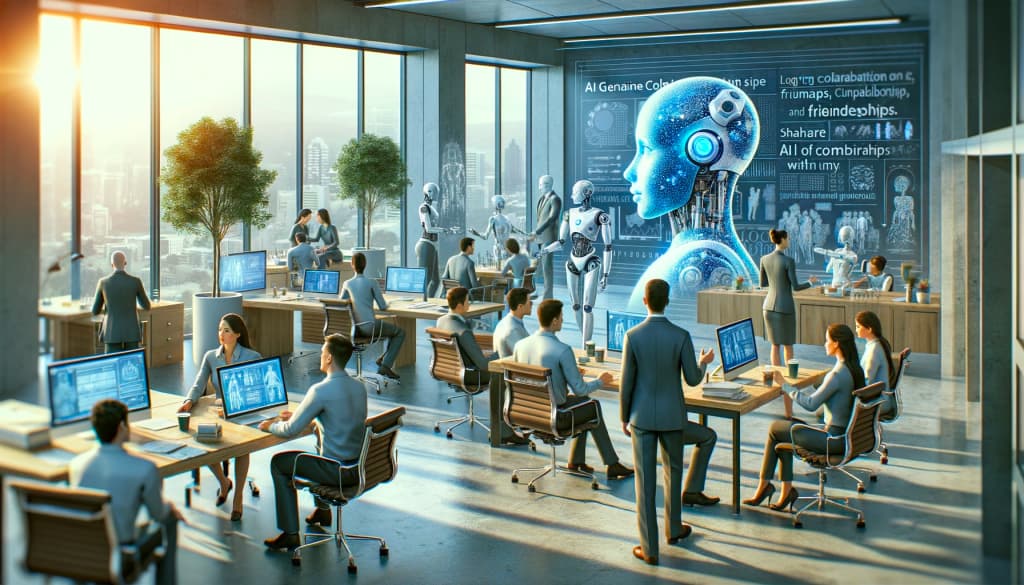
The rapid advancement of generative AI has ushered in an era of unprecedented content creation, but also significant challenges for platforms built on accuracy and trust. Wikipedia, as a leading bastion of collaboratively built knowledge, has taken a proactive and rigorous stance on the proliferation of AI-generated content. This initiative, often referred to as Wikipedia's Cleanup of AI-Generated Content, serves as a critical case study for any organization navigating the complexities of AI integration, highlighting the indispensable role of human oversight and strategic collaboration. In the evolving landscape of digital work, where AI agents increasingly support complex operations, platforms like Nonilion are designed to facilitate seamless human + AI collaboration within virtual AI offices, offering a glimpse into how such challenges can be managed with integrated intelligence.
01
The Influx of AI-Generated Content on Wikipedia: What is Being Cleaned Up?
The rise of AI-generated content in popular information sources like Wikipedia raises significant concerns about accountability, accuracy, and credibility. Wikipedia's cleanup efforts address a wide array of AI-produced material that has found its way into the encyclopedia. This includes instances where editors have directly copied and pasted output from generative AI chatbots such as ChatGPT, Gemini, or Claude into articles. The fundamental conclusion from organizations observing this trend is clear: Wikipedia editors should never copy and paste such direct output into articles.
Want your team to run this workflow with AI-native execution?
AI-generated translations: One notable case involved a translation produced by ChatGPT of Tzetzes's commentary on Lycophron's Alexandra, which was linked on 175 pages related to Greek mythology. Such translations, if problematic, shouldn't be linked on Wikipedia.
LLM-generated articles and expansions: Users have been found rapidly creating long biographies or expanding stubs using large language models (LLMs), with tools like GPTZero sometimes indicating a 100% probability of AI generation. This also extends to LLM-translated articles that require review.
AI-touched-up images: The project also addresses images that appear
to have been altered or created with generative image tools. These files can introduce fabricated details, remove context, or create uncertainty about provenance and licensing.
The concern is not simply that a machine produced the text or image. Wikipedia has always used software for spelling corrections, formatting, categorization, and other routine tasks. The deeper issue is whether the contribution can be checked against reliable sources and whether an editor is willing to take responsibility for it. A fluent paragraph may still contain invented citations, incorrect dates, distorted quotations, or claims that no published source supports.
02Why AI Hallucinations Are Especially Dangerous
Large language models generate likely sequences of words rather than verify facts in the way a researcher does. As a result, they can produce “hallucinations”: statements that sound authoritative but are false, misleading, or impossible to substantiate. In an encyclopedia, these errors are particularly damaging because polished prose can make them difficult to notice.
Common failure patterns include:
Fabricated references: An AI system may invent a book, article, publisher, page number, or web address. In other cases, it may combine real details from several sources into a citation that does not actually exist.
Misrepresented sources: A genuine source may be cited for a claim it does not make, or a source’s cautious wording may be rewritten as a definitive conclusion.
Chronological errors: Models can place people, institutions, technologies, or publications in the wrong period.
False quotations: A generated sentence presented as a quotation can be especially harmful because readers may assume it reflects a person’s exact words.
Overconfident interpretation: AI-generated prose often turns disputed theories into statements of fact, removing the uncertainty that careful scholarship preserves.
Repetition and generic language: Long machine-produced passages may restate the same idea, rely on vague transitions, or include details that do not improve the article.
Wikipedia’s core principle of verifiability provides a practical response to these risks. Editors are expected to support significant claims with reliable, published sources, but adding a citation alone does not make a passage reliable. The source must be relevant, accurately represented, and appropriate for the claim being made.
03Wikipedia’s Human-Review Model
Wikipedia is not governed by a single central editorial department. Its cleanup process depends on volunteers, administrators, subject-matter editors, automated tools, and community discussions. When suspicious content is discovered, editors may investigate the sources, compare the wording with other material, check the article’s history, and determine whether the passage should be corrected, rewritten, or removed.
This process reflects an important distinction between assistance and authorship. Software can help an editor identify possible spelling mistakes or locate patterns across thousands of pages. It cannot replace the editor’s obligation to understand the subject, evaluate evidence, and explain changes to other contributors.
In practice, a human-centered review may involve several steps:
Identify unusual material. Editors may notice unnatural phrasing, sudden changes in style, unsupported specificity, or references that cannot be located.
Check every important claim. A reviewer follows the cited sources and confirms that they support the text.
Separate valid information from invalid wording. A generated passage may contain a few accurate facts mixed with speculation or fabrication.
Rewrite from the sources. Rather than polishing the AI output, the editor returns to the underlying references and writes a concise, neutral summary.
Document the decision. Edit summaries, talk-page discussions, and maintenance tags help other volunteers understand what happened.
Monitor related contributions. If one article contains unreliable generated text, other pages created or expanded by the same process may require review.
This approach is slower than automatic publication, but speed is not Wikipedia’s only objective. The encyclopedia’s value depends on an accumulated reputation for careful checking. A single fabricated passage can undermine confidence in an entire article, particularly when it is copied by search engines, educators, journalists, or other websites.
04Detection Tools Have a Limited Role
AI-detection software is sometimes used to flag passages for human investigation. Such tools can be useful as signals, especially when reviewing a large collection of new or suspicious edits. However, they cannot reliably establish that a particular person used an AI system or that a passage is inaccurate.
Detection systems can produce both false positives and false negatives. Human writing may be incorrectly labeled as machine-generated, while carefully edited AI output may escape detection. The result can also vary according to the author’s language background, the length of the sample, and the type of text being examined.
For these reasons, a detector score should not be treated as proof. A more dependable review asks practical questions:
Can the claims be verified in reputable sources?
Do the cited references exist and say what the article claims?
Does the passage follow Wikipedia’s standards for neutrality and due weight?
Does it contain details that appear oddly specific but lack documentation?
Is the wording copied from a source without appropriate attribution?
Does the article’s edit history show a sudden, unexplained expansion?
This evidence-based approach avoids turning AI cleanup into a guessing game. The goal is not to identify a machine’s “writing style”; it is to protect the quality and traceability of the encyclopedia.
05The Copyright and Attribution Dimension
Generative AI also complicates copyright and attribution. A contributor may ask an AI system to summarize a copyrighted book, translate an article, or produce an illustration based on existing works. The resulting material may be difficult to trace, and the contributor may not know which source material influenced the output.
Wikipedia’s licensing and attribution requirements make provenance important. Text added to an article should be compatible with the project’s licensing rules and should not conceal copied material behind a minor change in wording. Translations require particular care because translating a copyrighted text can create a derivative work rather than an independently sourced summary.
Images present similar challenges. A file that looks original may include generated elements, manipulated people, invented objects, or a background derived from another image. Editors and media reviewers may need to examine how the file was created, what sources were used, and whether the description accurately discloses its origin. In subjects such as history, science, or current events, a synthetic image can also mislead readers even when no copyright problem is present.
06Why Cleanup Is Resource-Intensive
Wikipedia operates at enormous scale. Thousands of edits may be made every hour, and volunteers must prioritize vandalism, biographies of living people, medical claims, breaking news, and other high-risk areas alongside AI-related issues. Reviewing generated material is often more demanding than removing obvious spam because the prose may contain a mixture of accurate and inaccurate information.
Cleanup can therefore create several costs:
Verification burden: Editors must spend time locating and reading sources rather than improving articles.
Backlog growth: Suspicious pages may remain tagged or unfinished while volunteers investigate them.
Expertise requirements: Technical, medical, legal, and historical topics may require specialist knowledge.
Trust erosion: Readers may become less confident when they encounter citations that cannot be verified.
These costs explain why communities often emphasize prevention and contributor education. A low-quality article is not harmless merely because someone can repair it later. Every cleanup task competes with other work that could expand coverage or improve existing pages.
07Lessons for Organizations Using AI
Wikipedia’s experience offers a useful blueprint beyond encyclopedic publishing. Organizations adopting AI for research, writing, customer support, or administration can apply similar safeguards without rejecting automation altogether.
First, teams should define which tasks AI may perform and which require human approval. Drafting an outline, extracting action items, or suggesting search terms may present lower risks than writing a final medical explanation, legal analysis, or public statement. The higher the potential harm, the stronger the review requirement should be.
Second, every generated claim should have a clear evidence trail. A reviewer should be able to determine which source supports a statement, when it was checked, and who approved the final version. This is more useful than simply labeling content “AI-generated,” because a label does not reveal whether the material was verified.
Third, organizations should use staged workflows. A system might allow an AI agent to prepare a draft, route it to a subject-matter reviewer, request corrections, and record the final decision. Automation can manage handoffs and reminders while people retain authority over publication.
This is where human-and-AI collaboration platforms can provide practical value. An integrated virtual AI office can assign research tasks to specialized agents, collect citations, flag inconsistencies, and route high-risk outputs to qualified humans. The objective is not to publish everything a model produces. It is to make review visible, repeatable, and efficient.
08A Sustainable Standard for AI-Assisted Knowledge
Wikipedia’s cleanup of AI-generated content does not amount to a rejection of all machine assistance. It is a rejection of unverified publication and of the assumption that fluent language equals reliable knowledge. AI can help locate patterns, translate initial notes, organize information, and support routine editorial work. Those benefits become sustainable only when contributors remain accountable for the result.
The strongest standard is therefore straightforward: use AI where it improves the process, but require human judgment wherever accuracy, context, attribution, or public trust is at stake. Contributions should be grounded in reliable sources, transparent about their origins, and open to correction.
As generative systems become more capable, digital platforms will face an increasing volume of content that appears authoritative before it has been checked. Wikipedia’s response demonstrates that trust is maintained not through detection alone, but through community norms, source-based verification, documented decisions, and responsible collaboration. For any organization building an AI-enabled workplace, that combination provides a durable operating model: automation for scale, humans for judgment, and evidence for trust.
For Wikipedia's Cleanup of AI-Generated Content, Nonilion can be used as the practical AI-office example: a shared workspace where human teammates and AI agents keep discussion, decisions, and execution connected.
09Why This Trend Matters for Nonilion
This trend matters to Nonilion because it points to a bigger change: teams are moving from simple calls toward persistent, AI-supported collaboration spaces. Nonilion can bridge live presence, meeting context, avatars, and follow-up work so the trend becomes a usable workflow instead of a headline.
10Shareable Extracts
The trend is not just "Wikipedia's Cleanup of AI-Generated Content: A Blueprint for Digital Trust" - it is a signal that team coordination is becoming the next competitive edge.
Hot take: the teams that win from this shift will not be the ones with more meetings; they will be the ones with clearer shared context after every meeting.
If wikipedia's cleanup of ai-generated content: a blueprint for digital trust keeps moving this fast, remote teams need a workspace where conversation, presence, and follow-up stay connected.
Wikipedia, as a leading bastion of collaboratively built knowledge, has taken a proactive and rigorous stance on the proliferation of AI-generated content.
The rise of AI-generated content in popular information sources like Wikipedia raises significant concerns about accountability, accuracy, and credibility.
11Social Hooks
Everyone is talking about Wikipedia's Cleanup of AI-Generated Content: A Blueprint for Digital Trust. The overlooked part is what happens to team workflows after the headline fades.
The uncomfortable question behind Wikipedia's Cleanup of AI-Generated Content: A Blueprint for Digital Trust: are teams adapting their collaboration systems fast enough?
This is not a meeting trend. It is a coordination trend, and products like Nonilion sit right in the middle of that shift.
This article on Wikipedia's Cleanup of AI-Generated Content was generated by the Nonilion AI blog workflow using web research inputs and AI-assisted synthesis.