Home/Blog/US Reps Lead Democratic Resolution Opposing A.I. Bubble Bailout for Big Tech: A Stance for Economic Responsibility
human + AI workflows
US Reps Lead Democratic Resolution Opposing A.I. Bubble Bailout for Big Tech: A Stance for Economic Responsibility
US Reps Lead Democratic Resolution Opposing A.I. Bubble Bailout for Big Tech: A Stance for Economic Responsibility The rapid ascent of Artificial Intelligence continues to reshape
11 MIN READ
30 Oct 2026
human + AI workflows
US Reps Lead Democratic Resolution Opposing A.I. Bubble Bailout for Big Tech: A Stance for Economic Responsibility
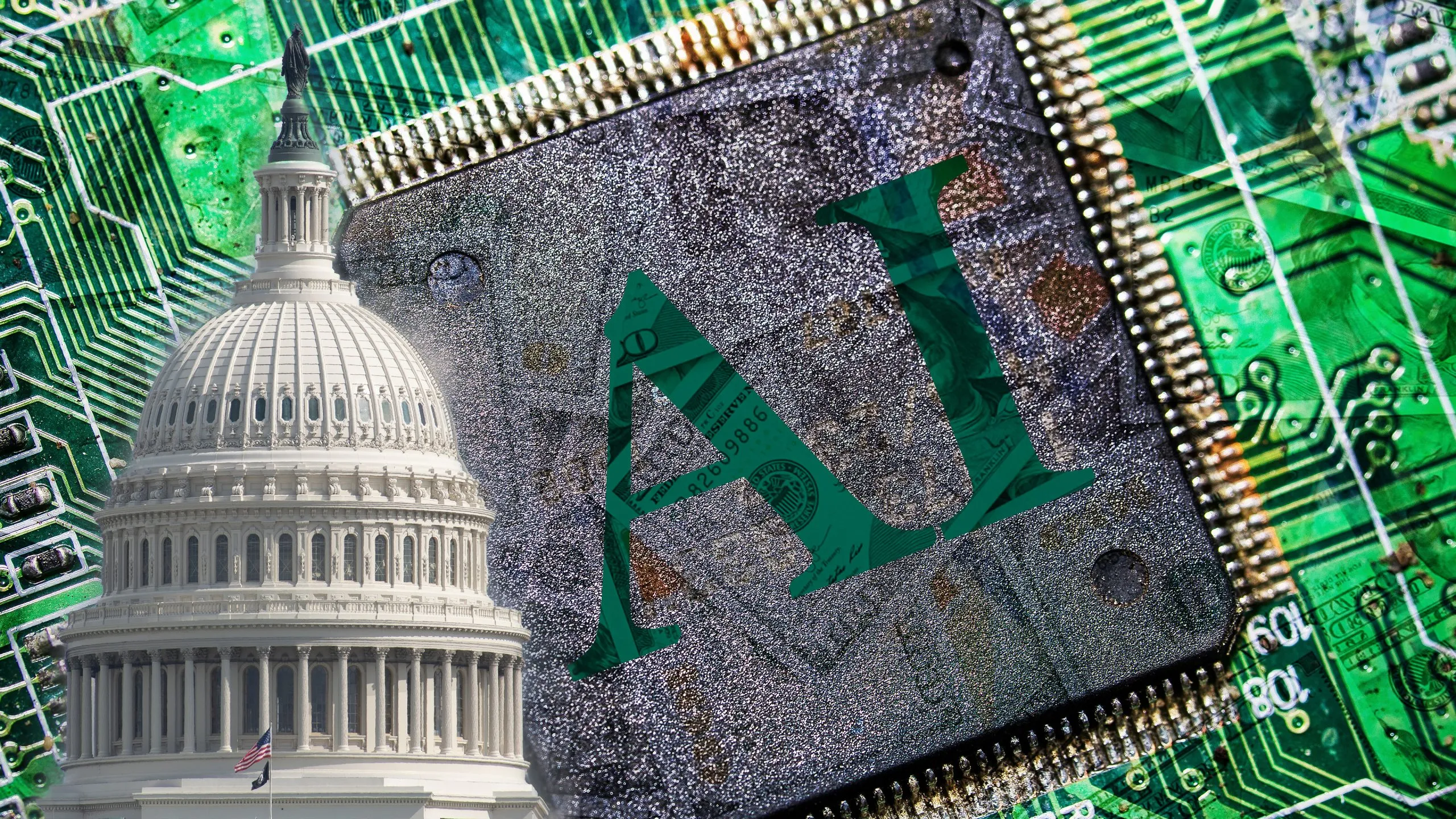
The rapid ascent of Artificial Intelligence continues to reshape industries, redefine work, and attract colossal investments. Yet, amidst this transformative growth, a significant debate is unfolding in Washington: the potential for an A.I.-related asset bubble and the call for accountability should it burst. In a decisive move, US Reps, led by key Democratic figures, have introduced a resolution that firmly opposes a federal bailout for Big Tech companies entangled in such a scenario. This proactive stance, emphasizing economic responsibility and protecting the American people, sets a crucial precedent for how AI's future will be governed and financed. It also highlights the critical need for sustainable AI development and integration, a principle that underpins collaborative AI office environments like Nonilion, where human and AI agents work in tandem to drive innovation responsibly.
01
Unpacking the Concerns: The Looming A.I. Bubble and Its Risks
Congresswoman Maxine Waters (D-CA), the top Democrat on the House Financial Services Committee, and Congressional Progressive Caucus (CPC) Chair Congressman Greg Casar (D-TX) have co-led a resolution that issues a stark warning about the economic risks associated with an artificial-intelligence-related asset bubble. Their concern stems from growing indicators that mirror past speculative periods, suggesting a potentially unstable foundation for the current AI boom.
Want your team to run this workflow with AI-native execution?
The resolution highlights that artificial intelligence-related firms are holding trillions of dollars in debt. A significant portion of this debt is raised through opaque and unregulated private credit markets, which can obscure the true financial health and risk exposure of these entities. This lack of transparency raises red flags for lawmakers, making it difficult to assess the systemic risks developing within the sector.
Furthermore, the Democratic lawmakers note that the stock market's current price-to-earnings ratio is approaching levels seen at the peak of the 1990s tech bubble. This historical parallel serves as a potent reminder of how quickly speculative investments can unravel, leading to significant economic fallout. The comparison underscores the urgency of their resolution.
Ranking Member Waters articulated the sentiment, stating, “Big tech and Wall Street are taking enormous risks with billions in borrowed money to fuel the A.I. boom, despite growing warning signs of a dangerous bubble. If it all comes crashing down they should not expect taxpayers to rescue them.” This statement underscores the core belief that private risk-taking should not translate into public burden.
02A Stance Against History Repeating Itself: No Bailouts for Reckless Bets
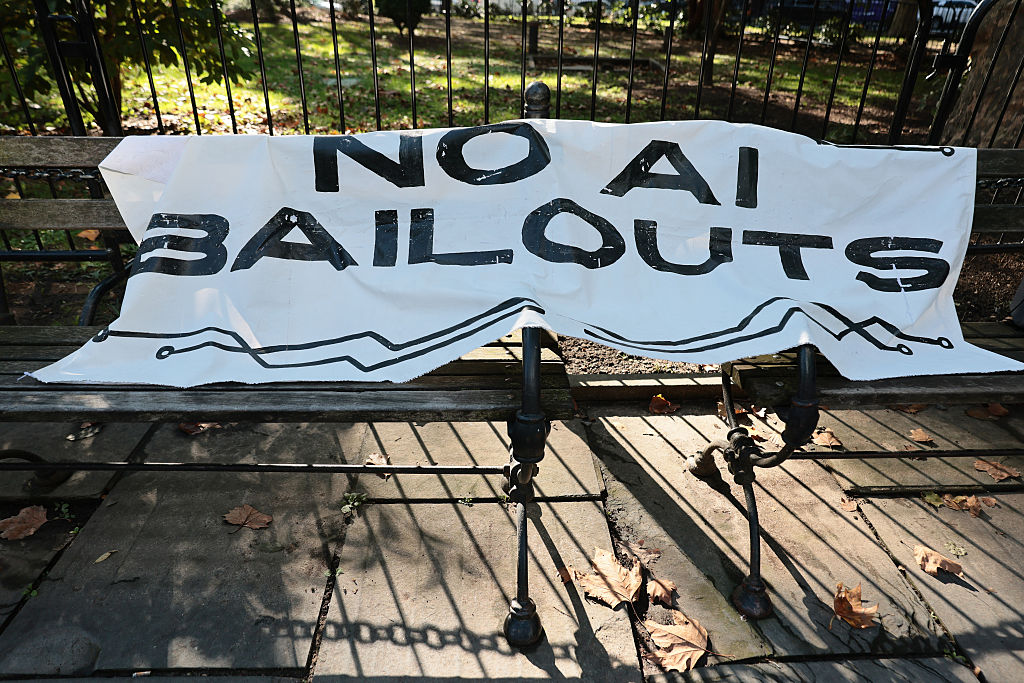
The resolution's core message is a direct opposition to a federal bailout of corporations or their business executives should an A.I. bubble collapse. This firm stance is deeply rooted in lessons learned from previous economic crises, particularly the 2008 financial crisis, which serves as a critical historical reference point for the lawmakers.
Ranking Member Waters explicitly recalled the events of 2008: “We saw what happened in 2008 when reckless Wall Street practices brought our economy to its knees. The banks got bailed out while millions of hardworking Americans lost their jobs, homes, and retirement savings. We cannot let history repeat itself.” This vivid recollection emphasizes the lawmakers' determination to prevent a similar scenario where the financial sector received trillions in liquidity without adequate accountability for senior executives involved in fraudulent behaviors.
CPC Chair Casar reinforced this position, asserting, “Big Tech billionaires are making increasingly reckless bets on A.I. They got richer off Trump’s deregulation and Republican tax breaks. Now they expect taxpayers to bail them out if those bets go bad. We won’t let them.” This statement not only critiques the current investment climate but also links it to past policy decisions that favored deregulation.
The resolution's cosponsors are committed to avoiding a federal response akin to the 2008 financial crisis. At that time, while too-big-to-fail banks enjoyed massive bailouts, 10 million homeowners lost their houses, and tens of millions of workers endured years without adequate employment. The lawmakers are resolute that if A.I. companies fail, they should undergo the same bankruptcy process as any other struggling firm, and executives who commit fraud should be held accountable.
03Protecting the American People: Prioritizing Workers and Communities
Central to the Democratic resolution is a strong commitment to protecting the American people, particularly workers, retirees, and low-income communities, from the potential harm of an economic downturn triggered by an A.I. bubble collapse. This commitment represents a fundamental shift in priorities compared to previous crisis responses.
The resolution affirms support for aggressive federal action specifically designed to safeguard these vulnerable groups. This contrasts sharply with the outcome of the 2008 financial crisis, where the focus on bailing out financial institutions left ordinary citizens to bear the brunt of the economic fallout. Millions lost their homes and retirement savings, while job markets struggled for years.
Congressional Progressive Caucus Chair Casar made it clear: “Federal help should go to workers and retirees.” This declaration underscores the resolution's intent to direct government resources toward those most likely to be adversely affected by an economic contraction, rather than to large corporations or their executives. The proposal argues that struggling AI firms should face the same bankruptcy process as other companies, ensuring a level playing field and preventing special treatment for Big Tech.
By committing to this protective stance, the Democratic lawmakers aim to prevent a repeat of historical injustices where the consequences of speculative financial practices disproportionately impacted everyday Americans. Their focus is on ensuring that any future federal intervention prioritizes the well-being and economic security of the broader populace.
04The Regulatory Landscape and the Call for Robust Scrutiny
The resolution also casts a critical eye on the current regulatory environment surrounding the artificial intelligence industry, highlighting significant gaps in oversight. The lawmakers contend that federal regulators have largely avoided applying robust scrutiny to the increasingly complex debt and equity schemes utilized by artificial intelligence firms.
This lack of comprehensive oversight is particularly concerning given the opaque nature of many AI-related financial instruments and private credit markets. Without adequate regulatory attention, the risks associated with these complicated financial structures can proliferate unchecked, contributing to the instability that could lead to an asset bubble.
The resolution specifically points to the Trump White House’s deregulatory focus as a contributing factor to this permissive environment. This historical context suggests that a period of reduced government oversight may have enabled AI firms to engage in riskier financial practices without sufficient checks and balances. Concerns about conflicts of interest related to A.I. during that period are also highlighted, further emphasizing the need for stricter ethical and financial guidelines.
In essence, the resolution urges the Federal Government, including Congress and key Federal agencies, to actively oppose any policies or practices that would perpetuate this lack of scrutiny. It calls for a more proactive and rigorous approach to regulating the financial activities of AI companies, ensuring transparency and accountability across the sector. This push for robust oversight is crucial for fostering a stable and sustainable environment for
artificial intelligence innovation while protecting the wider economy from the consequences of unchecked speculation.
05What a Responsible Response Could Look Like
Opposing a bailout does not mean opposing artificial intelligence, investment, or technological progress. Rather, the resolution draws a distinction between supporting productive innovation and guaranteeing the losses of companies that assume excessive risk. That distinction could shape future debates over federal policy, especially as lawmakers consider infrastructure, energy use, workforce development, and competition in the AI sector.
A responsible framework would begin with greater transparency. Regulators and investors need a clearer picture of how AI companies are financing data centers, semiconductor purchases, cloud-computing contracts, and research and development. Public reporting requirements could help reveal exposure to private credit, related-party transactions, concentrated customers, and long-term obligations that may become difficult to manage if demand for AI services slows.
Lawmakers may also examine whether existing financial safeguards are adequate for companies whose valuations depend heavily on rapid growth. Stress testing, disclosure of material risks, and closer monitoring of nonbank lenders could help identify vulnerabilities before they spread through the financial system. These measures would not eliminate the possibility of failure, but they could make failures more orderly and reduce the chance that losses are transferred to taxpayers.
The resolution’s emphasis on accountability also raises questions about corporate governance. Executives and board members should be expected to explain major borrowing decisions, compensation structures, and claims about anticipated AI revenue. If companies misrepresent their finances or conceal material risks, enforcement agencies should have the authority and resources to investigate. A market that rewards innovation while penalizing deception is more sustainable than one that treats rapid expansion as a substitute for sound management.
06Protecting Innovation Without Socializing Losses
The AI industry includes more than the largest technology companies. Startups, universities, independent developers, manufacturers, and small businesses are all contributing to the ecosystem. A broad bailout for dominant firms could weaken competition by allowing the most heavily indebted companies to survive while better-managed competitors struggle. It could also encourage investors to assume that the federal government will ultimately protect firms considered strategically important.
Targeted public investment could offer a different path. Funding for basic research, workforce training, public-interest technology, and secure digital infrastructure can generate broad benefits without guaranteeing the balance sheets of individual corporations. Programs that help workers transition into new roles may be especially important if AI changes hiring patterns across administrative, creative, technical, and service industries.
Collaborative AI environments such as Nonilion illustrate another aspect of this discussion. When human teams and AI agents work together, the value of the technology depends not only on computing scale but also on practical coordination, responsible deployment, and measurable outcomes. Tools that improve productivity without relying solely on speculative valuations can contribute to a more grounded AI economy.
07A Test of Public Trust
Ultimately, the resolution is also a statement about public trust. Americans are likely to judge the AI era not only by breakthroughs in medicine, science, and productivity, but by who benefits from those advances and who bears the costs when predictions fail. If private investors receive the gains during periods of expansion while workers and taxpayers absorb the losses during downturns, public confidence in both technology and government may erode.
The proposal led by Waters and Casar therefore places a clear principle at the center of the debate: financial risk should remain with the institutions and executives that choose to take it. Federal assistance should be reserved for protecting people, communities, and essential economic functions—not for shielding powerful corporations from the consequences of reckless decisions. Whether or not an AI bubble materializes, that standard offers a framework for encouraging innovation while demanding the accountability necessary for long-term economic stability.
08Why This Trend Matters for Nonilion
This trend matters to Nonilion because it points to a bigger change: teams are moving from simple calls toward persistent, AI-supported collaboration spaces. Nonilion can bridge live presence, meeting context, avatars, and follow-up work so the trend becomes a usable workflow instead of a headline.
09Shareable Extracts
The trend is not just "US Reps Lead Democratic Resolution Opposing A.I. Bubble Bailout for Big Tech: A Stance for Economic Responsibility" - it is a signal that team coordination is becoming the next competitive edge.
Hot take: the teams that win from this shift will not be the ones with more meetings; they will be the ones with clearer shared context after every meeting.
If us reps lead democratic resolution opposing a.i. bubble bailout for big tech: a stance for economic responsibility keeps moving this fast, remote teams need a workspace where conversation, presence, and follow-up stay connected.
Bubble Bailout for Big Tech: A Stance for Economic Responsibility The rapid ascent of Artificial Intelligence continues to reshape industries, redefine work, and attract colossal investments.
Yet, amidst this transformative growth, a significant debate is unfolding in Washington: the potential for an A.I.-related asset bubble and the call for accountability should it burst.
10Social Hooks
Everyone is talking about US Reps Lead Democratic Resolution Opposing A.I. Bubble Bailout for Big Tech: A Stance for Economic Responsibility. The overlooked part is what happens to team workflows after the headline fades.
The uncomfortable question behind US Reps Lead Democratic Resolution Opposing A.I. Bubble Bailout for Big Tech: A Stance for Economic Responsibility: are teams adapting their collaboration systems fast enough?
This is not a meeting trend. It is a coordination trend, and products like Nonilion sit right in the middle of that shift.
This article on US Reps Lead Democratic Resolution Opposing A.I. Bubble Bailout for Big Tech was generated by the Nonilion AI blog workflow using web research inputs and AI-assisted synthesis.