Home/Blog/Google fixed more Chrome bugs in June than over the past two years, thanks to AI: what actually happened
human + AI workflows
Google fixed more Chrome bugs in June than over the past two years, thanks to AI: what actually happened
Google fixed more Chrome bugs in June than over the past two years, thanks to AI: what the sources suggest Google’s June Chrome security releases suggest that AI is playing a large
10 MIN READ
31 Jul 2026
human + AI workflows
Google fixed more Chrome bugs in June than over the past two years, thanks to AI: what the sources suggest
Google’s June Chrome security releases suggest that AI is playing a larger role in security workflows than it did before. Based on the analyzed sources, Chrome fixed 1,072 security bugs in two June releases, and Google says AI helped with that process. For product, security, and operations teams, the broader takeaway is that AI is increasingly being used in work that depends on speed, coordination, and careful judgment.
For Nonilion, the practical lesson is about workflow design. The Chrome example points to a pattern that can also be useful in an AI office: using AI to help organize work, route follow-ups, and support execution across shared tasks.
Want your team to run this workflow with AI-native execution?
01What actually happened in Chrome’s June releases
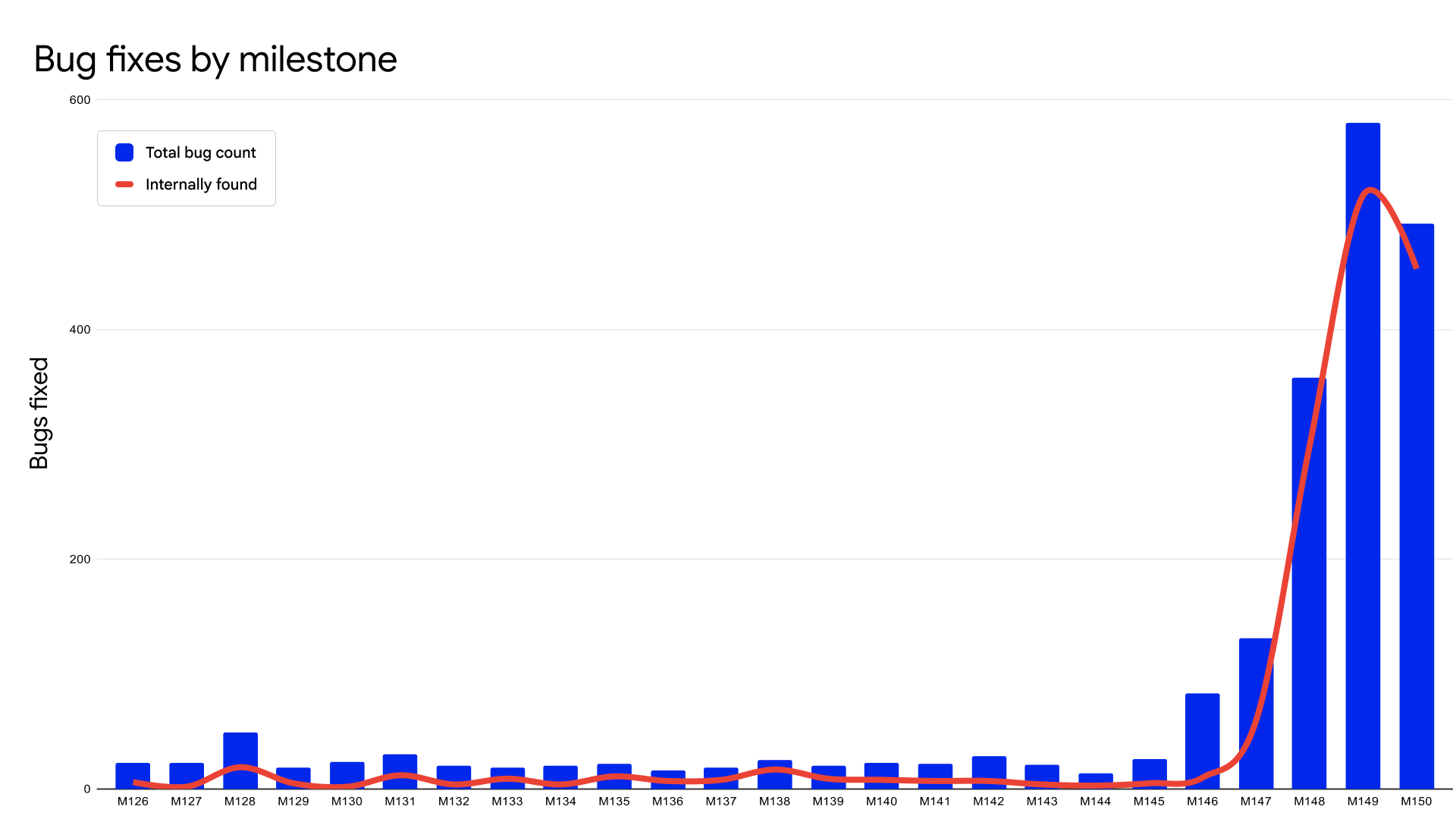
The core reported fact is that Chrome’s two major June releases patched 1,072 security bugs. Several sources connect that number to Google’s use of AI in security work, including vulnerability discovery and related internal processes.
What the sources support is a strong increase in bug-fixing volume and a reported role for AI in the workflow. What they do not fully establish is a single, simple cause for the entire increase. So the safest reading is that AI appears to have contributed to the process, rather than being the only explanation.
The important detail is not just the number of bugs fixed. It is that Google appears to be using AI in parts of the security pipeline that matter for speed and response.
02Why this matters beyond Chrome
The Chrome example is useful because it shows AI being applied to operational work, not just to content generation or simple productivity tasks. The sources describe AI helping with vulnerability discovery, triage, and patching, which are tasks where accuracy and timing both matter.
That makes the story relevant for teams outside security as well. AI can help surface issues, sort incoming work, and keep processes moving, but it still needs human oversight for decisions that involve risk, priority, or tradeoffs.
For teams building AI offices, including Nonilion, the lesson is practical: AI is most useful when it is embedded into a workflow, not treated as a separate tool.
03How the AI-assisted workflow appears to work
Based on the analyzed sources, the workflow appears to include several steps:
Finding vulnerabilities with AI-assisted discovery and fuzz testing.
Triaging vulnerabilities so issues can be prioritized.
Fixing vulnerabilities with support from AI tools.
Releasing updates through Chrome’s normal update process.
Applying updates so users receive the fixes.
The sources suggest that Google has used Gemini-based assistance in parts of this process. That points to a connected workflow rather than isolated tools.
This kind of structure is relevant for an AI office because the same logic can be used to manage everyday work: capture incoming items, classify them, assign them, and verify completion.
What changed in June
June stands out because of the scale of the releases. The two Chrome updates patched 1,072 security bugs, and some coverage describes this as an unusually active patch period.
The broader shift is that AI may be helping teams shorten the time between discovery and remediation. That does not mean the process is fully automated. It means AI is being used to support a faster operational loop.
The sources also mention that some bugs had gone undetected for a long time. That supports the idea that AI-assisted discovery can help surface issues that traditional methods missed.
04Why human judgment still matters
Even with AI involved, humans remain important in security work. Triage, patch development, and release decisions all require judgment.
That matters because speed alone is not enough. A faster patch cycle is useful only if the fixes are correct and deployed responsibly. Human review helps ensure that AI-generated suggestions are evaluated in context.
The same balance applies in an AI office like Nonilion. AI agents can help capture action items, draft follow-ups, and keep tasks moving after meetings, but people still need to decide priorities, handle exceptions, and make final calls.
05What this means for product, security, IT, and operations teams
The Chrome update cycle offers a useful model for other teams. It shows how AI can help compress the time between issue discovery and resolution when the workflow is well designed.
Teams can apply the same general logic in different ways:
Product teams can use AI to surface recurring friction and route it to the right owner.
Security teams can use AI to support vulnerability discovery and triage.
IT teams can use AI to help prioritize requests and manage backlog.
Operations teams can use AI to keep execution moving across handoffs.
The strategic lesson is that AI becomes more useful when it is part of a process. Chrome’s security workflow is one example of that idea.
For organizations building AI offices, that same principle applies. The value is not only in generating output, but in coordinating work across people and agents so nothing stalls between steps.
00What this topic means for AI offices like Nonilion
The Chrome story maps well to the AI office concept. In a shared workspace, humans and AI agents can collaborate on discovery, triage, assignment, and verification.
Imagine a meeting ends with a long list of action items. In an AI office workflow, an AI agent can help capture the items, classify them, assign owners, and prepare follow-up drafts. Humans then review priorities, handle nuance, and approve execution.
That is the same discover → triage → assign → verify logic, adapted to office collaboration.
The key idea is that the future of work is not only about speed. It is also about shared visibility and coordinated action. An AI office works best when people and agents operate in one system with clear handoffs and accountability.
Where AI offices fit
AI offices sit between automation and collaboration. They are not just task managers, and they are not just chat interfaces. They are environments where AI agents can help organize work while humans keep control of direction and quality.
That makes them relevant for work that involves many incoming items, prioritization, and verification. In that sense, the Chrome workflow is a useful metaphor for what an AI office can support.
For [this platform](https://this platform.com/), the practical opportunity is to support async execution. AI can help keep work moving after the meeting ends, while people focus on the decisions that need human context.
When AI should act first and when people should intervene
The sources suggest a useful boundary. AI is well suited to high-volume, pattern-based work such as finding issues, sorting them, drafting fixes, and routing work. People should intervene when the task requires judgment, risk assessment, or final approval.
A simple rule emerges:
AI first: discovery, classification, drafting, routing.
Human first: prioritization, exception handling, release decisions.
Shared control: verification, review, and escalation.
That balance is what makes the Chrome example useful. The workflow is faster, but it is not hands-off.
07The future of work lesson
The biggest lesson from the Chrome story is not only that more bugs were fixed. It is that AI is being used to support a tighter operational loop.
That lesson applies beyond security. Any team that handles recurring inputs, complex handoffs, or follow-up-heavy work can benefit from the same structure.
That is where [this platform](https://this platform.com/) fits naturally as an AI office. It can help teams coordinate human decisions with agent execution in one shared workspace, turning meetings into action and action into verified outcomes.
08Key takeaways
Google’s June Chrome releases show how AI can support security work at scale. Based on the analyzed sources, Google said AI helped Chrome fix 1,072 security bugs across two June releases.
The broader takeaway is more measured: AI is moving into operational workflows where speed and judgment both matter. Human oversight still plays a central role, especially in high-trust work.
For teams building AI offices, including [this platform](https://this platform.com/), the opportunity is to coordinate humans and agents in one shared workspace so discovery, triage, assignment, and verification happen with better visibility and less delay.
09Why This Trend Matters for Nonilion
This trend matters to Nonilion because it points to a bigger change: teams are moving from simple calls toward persistent, AI-supported collaboration spaces. Nonilion can bridge live presence, meeting context, avatars, and follow-up work so the trend becomes a usable workflow instead of a headline.
10Shareable Extracts
The trend is not just "Google fixed more Chrome bugs in June than over the past two years, thanks to AI: what actually happened" - it is a signal that team coordination is becoming the next competitive edge.
Hot take: the teams that win from this shift will not be the ones with more meetings; they will be the ones with clearer shared context after every meeting.
If google fixed more chrome bugs in june than over the past two years, thanks to ai: what actually happened keeps moving this fast, remote teams need a workspace where conversation, presence, and follow-up stay connected.
Google fixed more Chrome bugs in June than over the past two years, thanks to AI: what the sources suggest Google’s June Chrome security releases suggest that AI is playing a larger role in security workflows than it did before.
Based on the analyzed sources, Chrome fixed 1,072 security bugs in two June releases, and Google says AI helped with that process.
11Social Hooks
Everyone is talking about Google fixed more Chrome bugs in June than over the past two years, thanks to AI: what actually happened. The overlooked part is what happens to team workflows after the headline fades.
The uncomfortable question behind Google fixed more Chrome bugs in June than over the past two years, thanks to AI: what actually happened: are teams adapting their collaboration systems fast enough?
This is not a meeting trend. It is a coordination trend, and products like Nonilion sit right in the middle of that shift.
This article on Google fixed more Chrome bugs in June than over the past two years, thanks to AI was generated by the Nonilion AI blog workflow using web research inputs and AI-assisted synthesis.