Home/Blog/Generative AI in 2025: What It Means for Work, Teams, and AI Offices
human + AI workflows
Generative AI in 2025: What It Means for Work, Teams, and AI Offices
Generative AI in 2025: What It Means for Work, Teams, and AI Offices Generative AI is often discussed in the context of content creation, but it is also used in workplace settings
11 MIN READ
29 Jul 2026
human + AI workflows
Generative AI in 2025: What It Means for Work, Teams, and AI Offices
Generative AI is often discussed in the context of content creation, but it is also used in workplace settings to help teams draft, summarize, plan, and organize work with human judgment still involved. Based on the analyzed sources, a practical way to think about generative AI is as a set of models and workflows that can support collaboration.
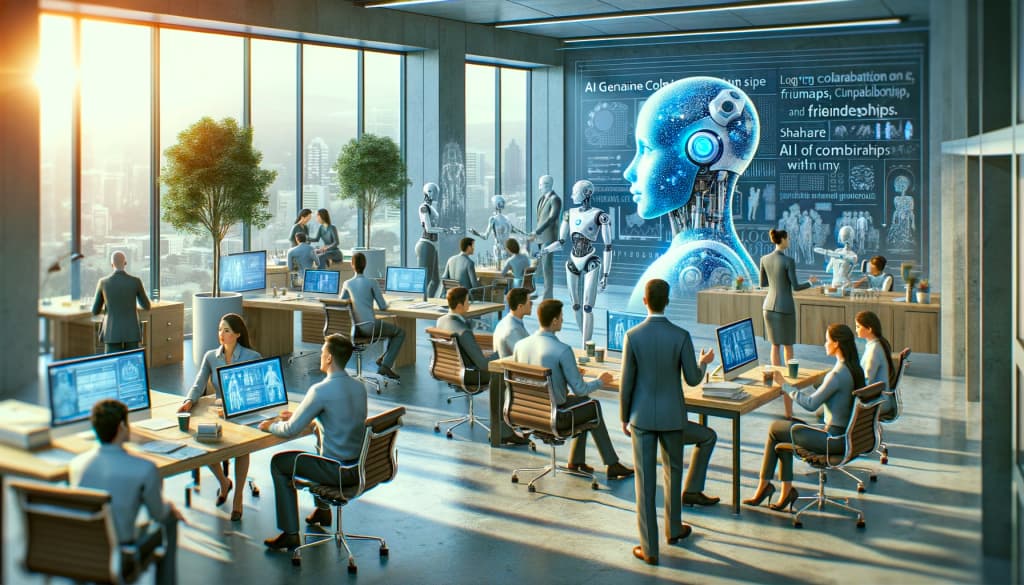
That shift matters for AI offices, where humans and AI agents share a workspace. In a setting like Nonilion, the value is not just in generating text, but in helping turn meetings, notes, and requests into coordinated async work.
01What generative AI means in 2025: from content generation to workplace capability
Want your team to run this workflow with AI-native execution?
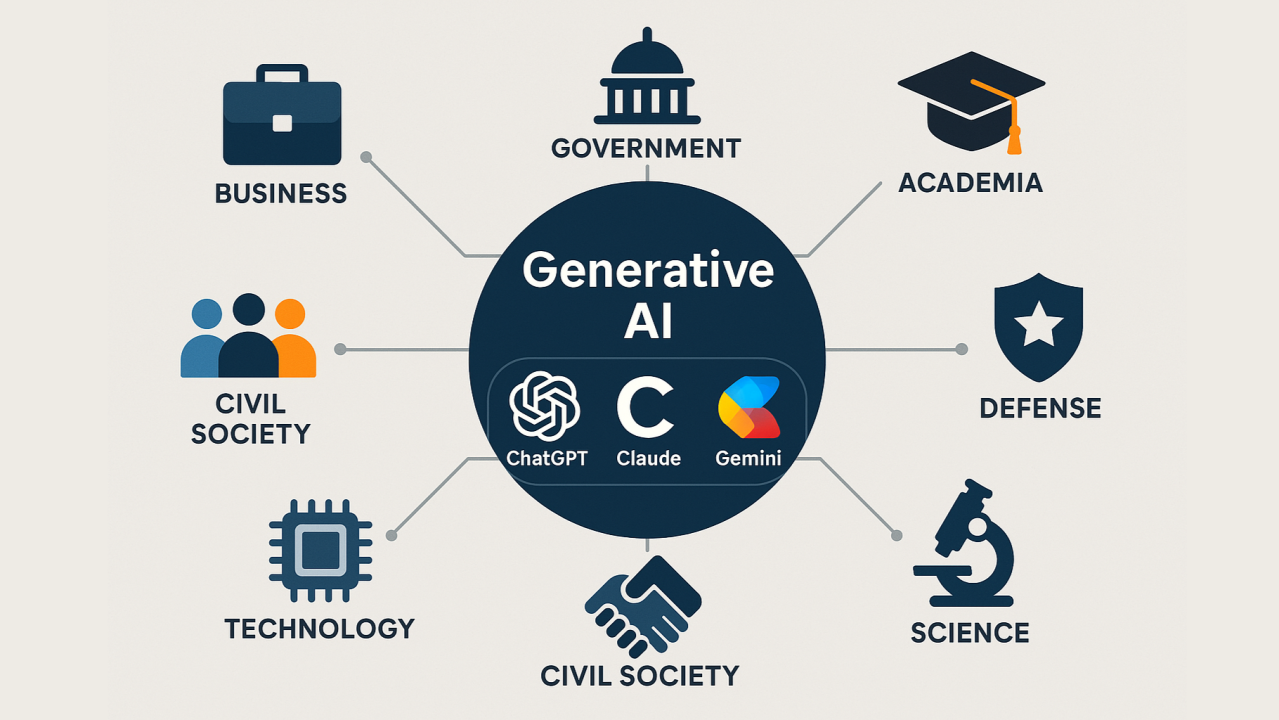
Generative AI is commonly defined as AI that can create original content such as text, images, video, audio, or software code in response to a prompt or request. The sources also describe it as a system that learns patterns from data and uses that knowledge to produce new output.
In workplace contexts, generative AI is often discussed in terms of productivity, decision support, personalization, and availability. In that sense, it can function as a useful work layer for teams, not only as a creative assistant.
This is why the phrase “generative” matters in both the dictionary sense and the technical sense. It points to a capability for generating, originating, producing, or reproducing, while in office workflows it can also help people move from information to action.
02How generative AI works: LLMs, multimodal models, RAG, and agentic workflows
The analyzed sources point to several building blocks behind generative AI. Large Language Models, or LLMs, are a common form of this technology and are often associated with human-like text generation. Small Language Models, or SLMs, are described as more specialized and able to work with less data.
The sources also reference model architectures and techniques such as transformers, diffusion models, generative adversarial networks, and variational autoencoders. For a workplace audience, the important point is not memorizing the architecture list, but understanding that different models are suited to different tasks.
A practical summary looks like this:
LLMs: useful for drafting, summarizing, ideation, and conversational support.
Multimodal models: relevant when teams work across text, images, video, audio, or code.
RAG, or Retrieval-Augmented Generation: can improve outputs by pulling in external information.
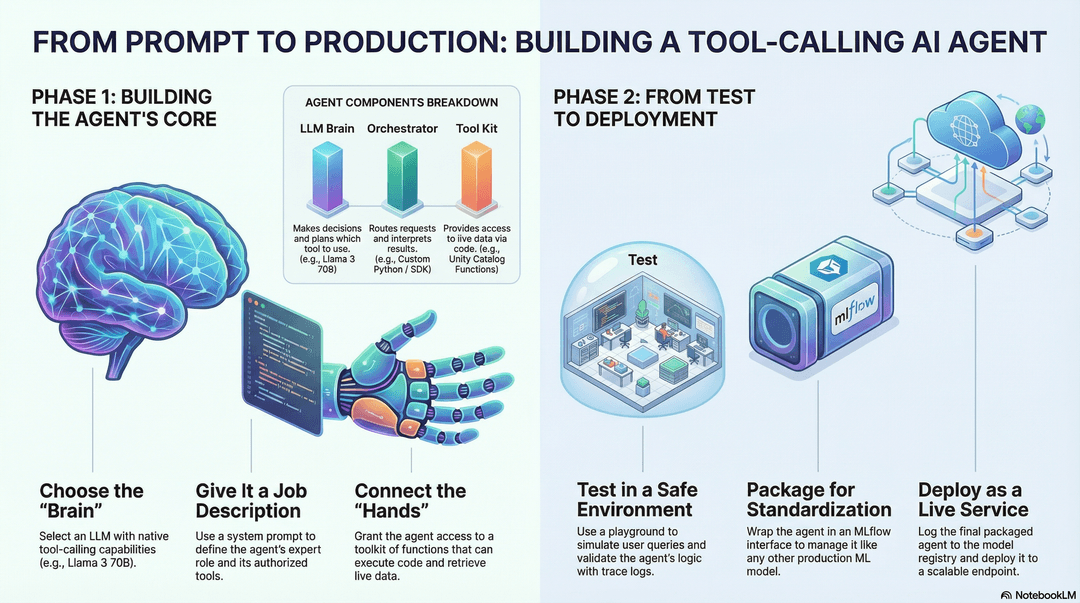
Agentic workflows: connect generation to action, so the system can support coordinated work rather than isolated prompts.
This matters because generative AI is not only about producing words. It is also about how models, retrieval, and agents can support a shared workspace where human teams and AI agents collaborate.
03Why generative AI matters for teams: productivity, coordination, and knowledge reuse
The strongest business case in the sources is productivity. IBM notes benefits such as enhanced creativity, faster decision-making, dynamic personalization, and constant availability. AWS similarly highlights accelerated research, improved customer experience, optimized business processes, and employee productivity.
For teams, the deeper value is coordination. Generative AI can help people reuse knowledge that already exists inside the organization, rather than repeatedly recreating the same draft, summary, or plan. That is especially important in asynchronous work, where context can otherwise get lost between meetings.
The strategic implication is simple: teams should not ask only, “Can this generate content?” They should also ask:
Can it reduce repeated work?
Can it move information from one person to the next more cleanly?
Can it help the team decide faster?
Can it support execution after the meeting ends?
In an AI office model, that is where human + AI collaboration becomes meaningful. The human provides judgment, priorities, and accountability. The AI agent helps with memory, structure, and follow-through.
04Generative AI in the office: practical use cases for drafting, summarizing, planning, and execution
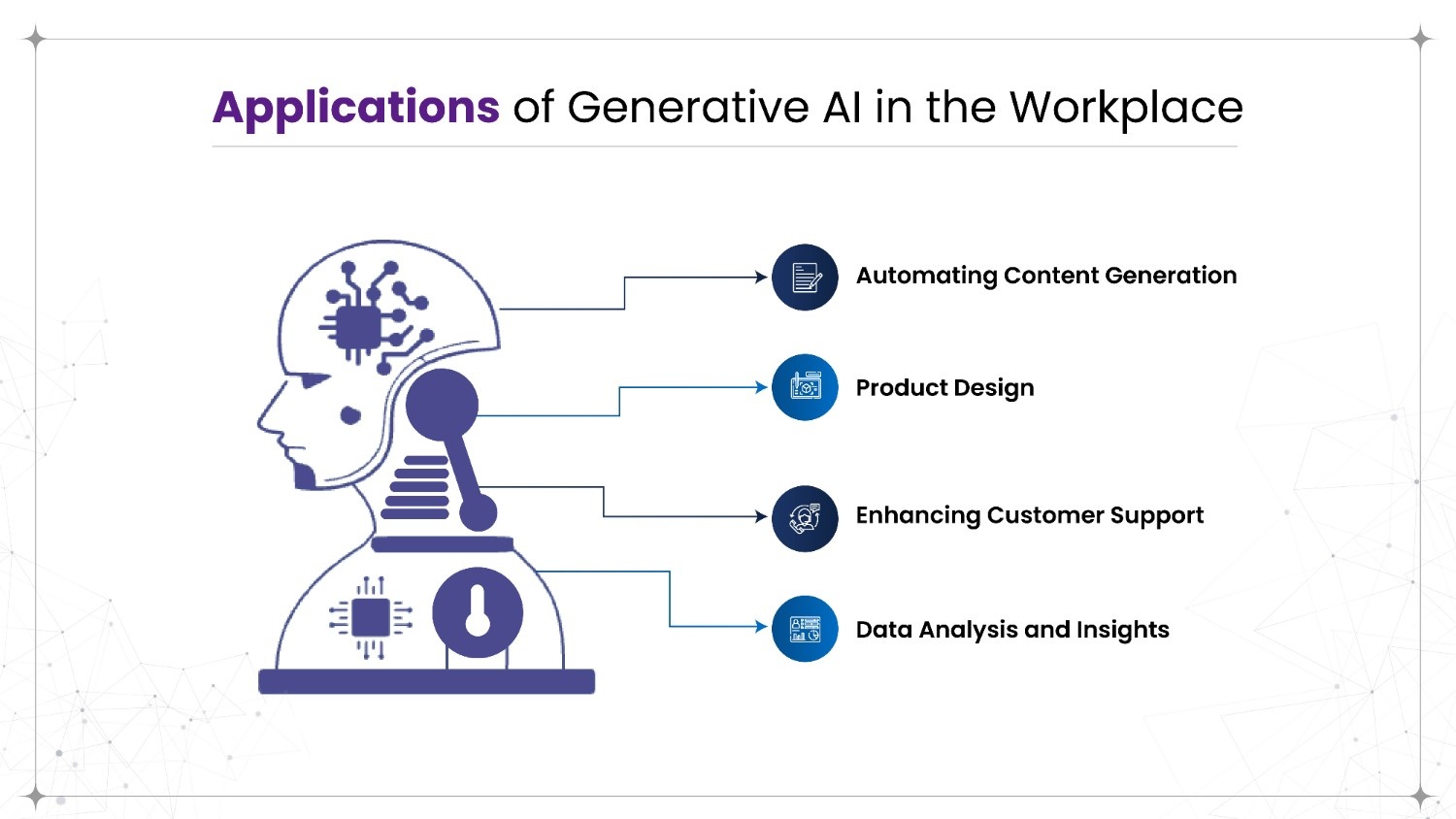
The sources consistently point to office-friendly use cases such as chatbots, media creation, product development, design, customer service, sales, and marketing. In a team setting, those broad categories translate into everyday work tasks.
Common office uses include:
Drafting emails, briefs, and internal updates.
Summarizing meetings, documents, and long threads.
Turning rough notes into plans, checklists, or next steps.
Supporting research by retrieving relevant information.
Helping teams coordinate across functions with faster first drafts.
The key advantage is not perfection. It is speed plus structure. Generative AI can create a workable starting point, which humans then refine.
That is also where Nonilion fits as a practical example of an AI office. Instead of treating meeting notes as an endpoint, a team can use AI agents in a shared workspace to convert discussion into action items, assign follow-ups, and support async execution after the live conversation ends.
05What generative AI is not: limits, risks, and where human judgment still matters
The sources are clear that generative AI has limits and risks. IBM lists hallucinations and other inaccurate outputs, inconsistent outputs, bias, lack of explainability and metrics, threats to security, privacy and intellectual property, and deepfakes. AWS also highlights limitations around security, creativity, cost, and explainability.
So generative AI is not a replacement for human judgment. It can produce fluent output that sounds confident even when it is wrong. It can also reflect bias in the data it learned from or create content that is difficult to verify.
That means teams should keep humans responsible for:
Final decisions.
Sensitive communications.
Verification of facts and sources.
Security and privacy review.
Strategic tradeoffs and accountability.
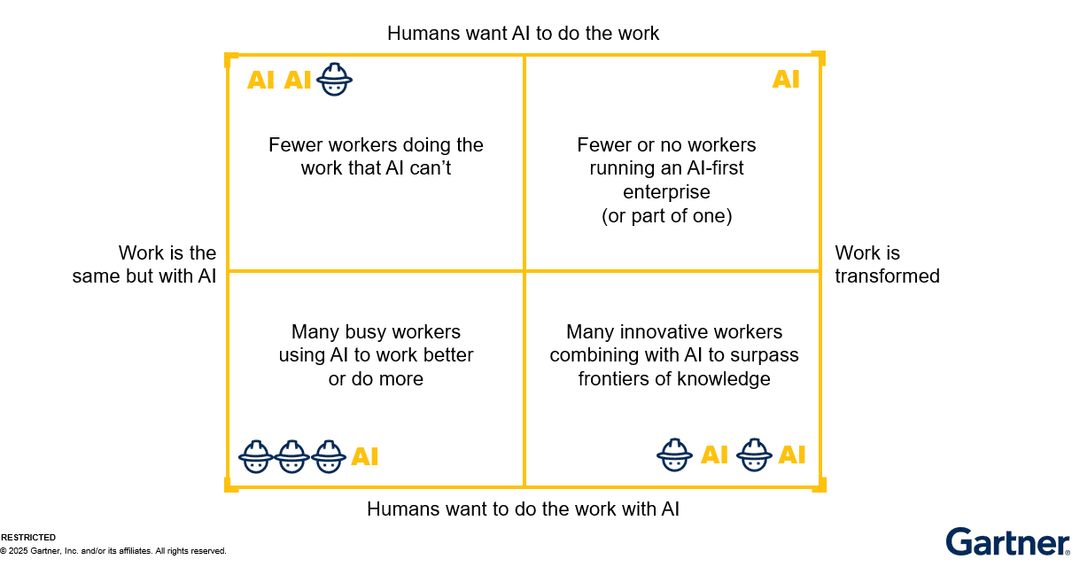
The best operating model is not human versus AI. It is human with AI, where the model supports the work but does not own the consequences.
06How humans and AI agents should divide work in a shared workspace
The sources explicitly connect generative AI with AI agents and agentic AI. That makes the division of labor a central question for modern teams.
Humans define goals, make decisions, and handle exceptions.
AI agents draft, retrieve, organize, summarize, and keep work moving.
Shared workflows connect the two so the output of one step becomes the input to the next.
In practice, this means humans should spend more time on direction and judgment, while agents handle repetitive coordination work. For example, a team can use an AI agent to summarize a meeting, extract action items, and prepare a follow-up draft, while the human owner checks accuracy and approves the final message.
This model is especially important in AI offices, where the workspace itself is designed for collaboration between people and agents. Nonilion is a useful lens here because it represents the shift from isolated prompts to coordinated work in one shared environment.
00What generative AI means for AI offices like Nonilion
The future of generative AI is not just better prompts. It is better orchestration. The sources suggest a progression from content generation to agentic AI, and that progression is closely tied to the idea of AI offices.
In an AI office context, generative AI can help teams:
Capture what happened in a meeting.
Turn discussion into structured next steps.
Route tasks to the right people.
Retrieve context when needed.
Keep work moving asynchronously.
That is where this platform fits contextually. As a shared workspace for human + AI collaboration, it can help teams move from live conversation to coordinated async execution, with AI agents supporting the handoff between thinking, planning, and doing.
The strategic point is that the office itself changes. Instead of using generative AI in isolated pockets, teams can embed it into the flow of work.
08How a team can use generative AI inside this platform to turn meetings into action
A practical AI office workflow starts with a meeting and ends with execution. The value is in what happens between those points.
One simple pattern is:
Capture the meeting notes or transcript.
Use generative AI to summarize key decisions.
Ask an AI agent to extract action items and owners.
Route the follow-ups into the shared workspace.
Let humans review, adjust, and approve before execution.
This approach uses generative AI for structure, not just prose. It also respects the limits of the technology by keeping human oversight in the loop.
In this platform, that means the team is not merely generating a recap. It is building a coordination system where AI agents help transform meeting output into async work that can continue after the call ends.
09When to use generative AI, retrieval, or an AI agent: a decision guide for teams
Teams often get better results when they choose the right tool for the job. Based on the sources, a simple decision guide looks like this:
Use generative AI when you need a first draft, summary, idea, or structured response.
Use retrieval or RAG when accuracy depends on pulling in external or internal information.
Use an AI agent when the task requires a sequence of steps, coordination, or follow-through.
That distinction matters because not every work problem is a generation problem. Some problems need facts. Others need orchestration. Others need a human decision after the AI has done the heavy lifting.
For AI offices, the most effective workflows combine all three. A team may retrieve the right context, generate a summary, and then use an agent to move the work forward.
10The future of AI offices: from isolated prompts to coordinated async work
The sources show generative AI moving into the mainstream of business use, with organizations already deploying it across functions and many more expected to do so through APIs and applications. The next step is not just broader adoption. It is better integration into how teams actually work.
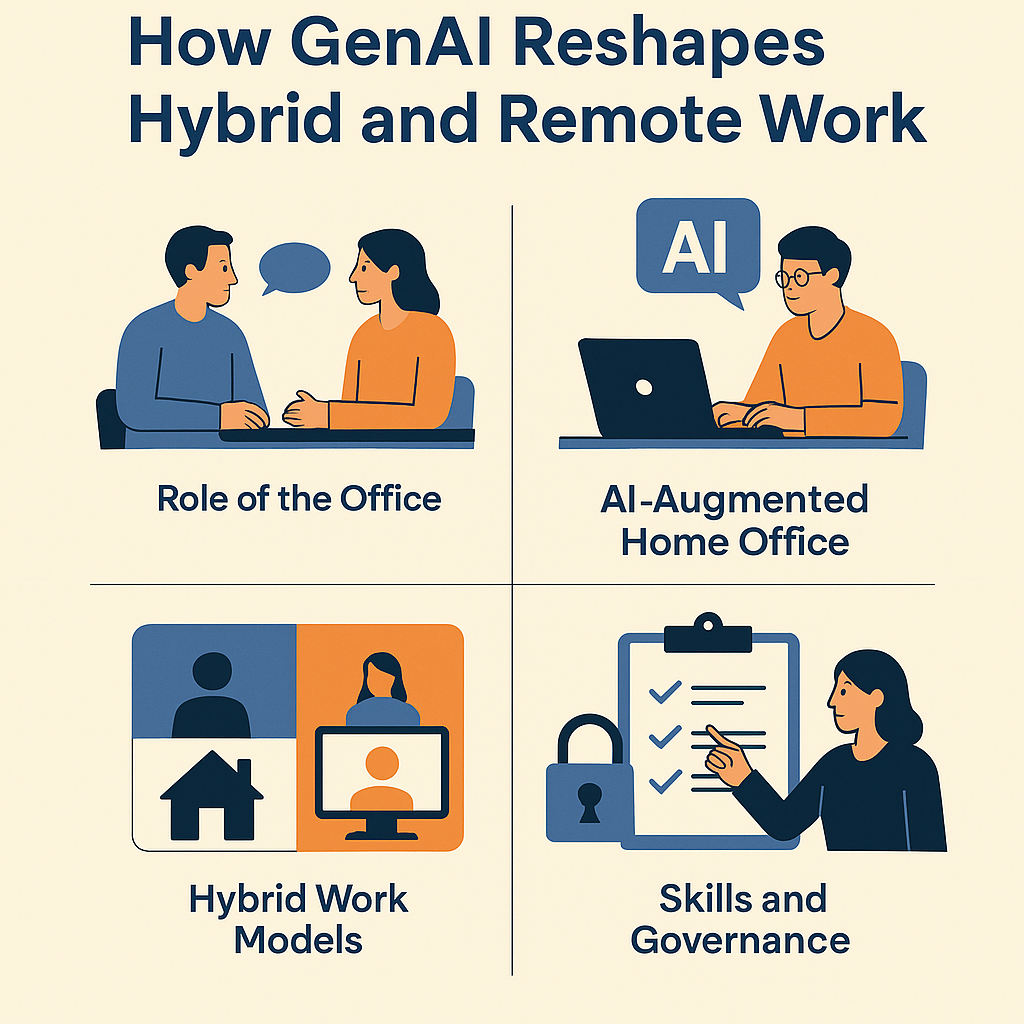
That future looks less like isolated prompting and more like coordinated async work. AI offices will increasingly rely on systems where humans and AI agents share context, distribute tasks, and maintain momentum across time zones and schedules.
For this platform and similar environments, the opportunity is to make collaboration more continuous. Meetings become input. AI agents help organize the output. Humans keep control of the important decisions. The result is a workplace that is faster, more reusable, and more aligned with how modern teams already operate.
11Key Takeaways
Generative AI in 2025 is best understood as a workplace capability that supports drafting, summarizing, planning, and execution. The underlying models matter, but the bigger shift is operational: teams are moving toward shared workflows where humans and AI agents collaborate in one workspace.
The most effective teams will know when to use generation, when to use retrieval, and when to delegate to an agent. In an AI office model like this platform, that combination can turn meetings into action and action into coordinated async work.
12Why This Trend Matters for Nonilion
This trend matters to Nonilion because it points to a bigger change: teams are moving from simple calls toward persistent, AI-supported collaboration spaces. Nonilion can bridge live presence, meeting context, avatars, and follow-up work so the trend becomes a usable workflow instead of a headline.
13Shareable Extracts
The trend is not just "Generative AI in 2025: What It Means for Work, Teams, and AI Offices" - it is a signal that team coordination is becoming the next competitive edge.
Hot take: the teams that win from this shift will not be the ones with more meetings; they will be the ones with clearer shared context after every meeting.
If generative ai in 2025: what it means for work, teams, and ai offices keeps moving this fast, remote teams need a workspace where conversation, presence, and follow-up stay connected.
Based on the analyzed sources, a practical way to think about generative AI is as a set of models and workflows that can support collaboration.
That shift matters for AI offices, where humans and AI agents share a workspace.
14Social Hooks
Everyone is talking about Generative AI in 2025: What It Means for Work, Teams, and AI Offices. The overlooked part is what happens to team workflows after the headline fades.
The uncomfortable question behind Generative AI in 2025: What It Means for Work, Teams, and AI Offices: are teams adapting their collaboration systems fast enough?
This is not a meeting trend. It is a coordination trend, and products like Nonilion sit right in the middle of that shift.