Home/Blog/The End of an Athlon: A Metaphor for Modern Work Fragility
AI-native teamwork
The End of an Athlon: A Metaphor for Modern Work Fragility
The End of an Athlon: A Metaphor for Modern Work Fragility In the annals of computing history, the AMD Athlon CPU holds a peculiar place, not just for its performance, but for its
13 MIN READ
23 Aug 2026
AI-native teamwork
The End of an Athlon: A Metaphor for Modern Work Fragility
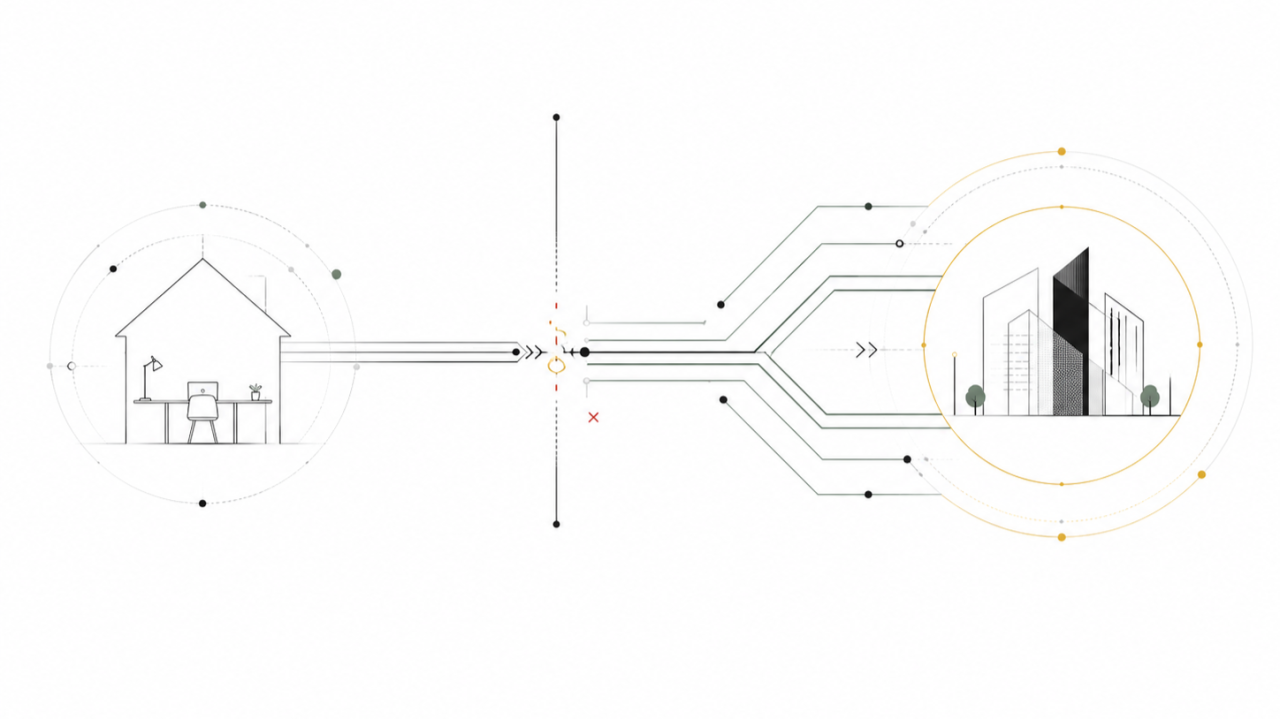
In the annals of computing history, the AMD Athlon CPU holds a peculiar place, not just for its performance, but for its notorious physical fragility. The phrase "The End of an Athlon" often conjures images of a literal, untimely demise – a chunk of silicon gone, a die fractured, a CPU irrevocably damaged (Source 1). This historical anecdote, while specific to early 2000s hardware, serves as a powerful metaphor for the inherent vulnerabilities that can plague even the most sophisticated systems, from physical components to complex digital workflows in today's AI-driven offices. Understanding these points of failure, and designing for resilience, is paramount in an era where human + AI collaboration, facilitated by platforms like Nonilion, is redefining productivity and innovation.
01The Fragile Legacy of the Athlon CPU
The story of the Athlon's physical vulnerability is a vivid reminder of how critical robust design and careful handling are for complex technologies. During the early 2000s, enthusiasts and PC builders frequently encountered a specific and dramatic failure: the physical destruction of the CPU die (Source 1). This wasn't merely a software crash or a performance bottleneck; it was often a catastrophic structural failure, where a piece of the Athlon CPU would literally break off, sometimes sticking to the heatsink designed to cool it (Source 1).
Want your team to run this workflow with AI-native execution?
This fragility stemmed from the design of the Athlon XP processors, particularly during CPU swaps for research or upgrades (Source 1). The bare silicon die, which was the actual processing unit, was exposed on the top of the chip package. Unlike previous generations or competing Intel processors that often had an integrated heat spreader (IHS) protecting the delicate die, many Athlon CPUs lacked this protective layer. This meant that direct, uneven pressure from a heatsink, or even a slight misalignment during installation, could lead to a fracture (Source 1).
One memorable account details an Athlon XP 1800+ meeting its "untimely end at the hands of a device that was designed to prevent the exact misfortune" (Source 2). In this instance, a spacer kit, intended to provide a level plane for the heatsink and protect the fragile silicon, actually caused the failure. The spacer was "just a wee little bit too thick," preventing proper contact between the CPU die and the heatsink, leading to instant overheating and destruction upon power-up (Source 2). This highlights a critical lesson: even well-intentioned preventative measures can introduce new vulnerabilities if not perfectly executed or designed.
The PC-builder community was acutely aware of this problem, developing makeshift solutions like copper spacer kits (Source 2). Yet, as the anecdote illustrates, these solutions were not foolproof and sometimes exacerbated the very problem they sought to solve. The "End of an Athlon" thus became a cautionary tale, underscoring the delicate balance between performance, physical design, and user interaction. It's a testament to how a single point of physical vulnerability can undermine an entire system, leading to unexpected and complete failure.
02Beyond Silicon: The Metaphor of System Vulnerability
The physical fragility that led to "The End of an Athlon" offers a powerful metaphor for the vulnerabilities inherent in any complex system, extending far beyond hardware to the intricate digital workflows and collaborative environments of modern work. Just as a small crack in a silicon die could bring a powerful CPU to a halt, a seemingly minor oversight or a single point of failure in a digital process can disrupt entire operations, leading to significant delays, data loss, or missed opportunities.
Consider the "untimely end at the hands of a device that was designed to prevent the exact misfortune" (Source 2). This isn't just a hardware story; it's a narrative about the unintended consequences of solutions. In today's digital landscape, this translates to:
Over-engineered processes: A workflow designed to be robust might become so complex that it introduces new points of failure or becomes difficult for humans to manage effectively.
Misaligned tools: Software tools, much like the too-thick spacer, might not integrate perfectly, leading to gaps in communication or execution.
Lack of comprehensive understanding: Just as one might not fully grasp the precise contact needed for a heatsink, teams might implement solutions without a complete understanding of their downstream effects on other processes or team members.
The "fragile silicon" (Source 2) represents any critical component within a system that, if compromised, can lead to widespread failure. In a modern AI office, this could be:
A crucial data pipeline that is not properly monitored.
A communication channel that breaks down between human and AI agents.
An automated workflow lacking necessary error handling or fallback mechanisms.
A human team member overwhelmed by manual tasks that could be automated, creating a bottleneck.
These digital "fracture marks" might not be visible like a broken CPU, but their impact can be just as devastating. The lesson from the Athlon is clear: systems, whether silicon or software, are only as strong as their weakest link. Identifying and fortifying these vulnerabilities before they lead to an "untimely end" is a strategic imperative for any organization aiming for sustained productivity and innovation. This requires a proactive approach to system design, continuous monitoring, and the ability to adapt and respond to unforeseen challenges, much like the PC community learned to do with their fragile CPUs.
03Building Resilience: Lessons from the Athlon Era for AI Offices
The historical challenges faced by Athlon users provide valuable insights into building resilient systems, lessons directly applicable to the evolving landscape of AI offices and human + AI collaboration. The core principle is that robust design and preventative measures are paramount to avoid catastrophic failures. In the digital realm, this means moving beyond reactive troubleshooting to proactive system architecture and intelligent automation.
One key takeaway is the importance of predictive monitoring and early warning systems. Just as an experienced PC builder might visually inspect heatsink contact, AI agents in a modern office can continuously monitor workflows, data streams, and project progress. They can identify anomalies or potential bottlenecks long before they escalate into critical issues. For example, an AI agent could detect an unusual delay in a data processing pipeline or a deviation from expected project timelines, flagging it for human intervention or even self-correcting minor issues.
Another lesson is the need for standardized, fail-safe procedures. The Athlon's fragility led to the development of specific handling techniques and accessories like spacers (Source 2). In an AI office, this translates to:
Automated workflow validation: AI agents can ensure that every step in a process adheres to predefined standards, preventing the digital equivalent of a "too-thick spacer" from disrupting the system.
Redundancy and failover mechanisms: Designing workflows with alternative paths or backup processes ensures that if one component or agent encounters an issue, the overall system can continue to function without an "untimely end."
Clear protocols for human-AI interaction: Defining how humans and AI agents collaborate, including handover points and decision-making frameworks, minimizes miscommunication and ensures smooth operation.
Platforms like Nonilion are specifically designed to embed this kind of resilience into the fabric of daily operations. By providing a shared virtual workspace where human and AI agents collaborate seamlessly, Nonilion helps prevent the digital "fractures" that can halt progress. Its capabilities in workflow automation, async execution, and intelligent team coordination mean that tasks are not reliant on a single point of failure. If one AI agent encounters an issue, others can pick up the slack, or the system can intelligently route the task to a human for review, ensuring continuity and preventing the digital "End of an Athlon" for critical projects.
This proactive approach to resilience means that instead of reacting to failures after they occur, organizations can anticipate and mitigate them. It’s about creating an environment where the delicate balance between efficiency and robustness is maintained, allowing human ingenuity and AI capabilities to flourish without the constant threat of unexpected system collapse.
04The Future of Work: Preventing Digital Athlon Moments with AI
The evolution from physically fragile hardware to resilient, AI-driven digital environments marks a significant shift in how we approach work and system stability. The lessons learned from the "untimely end" of an Athlon CPU are now being applied to cultivate robust AI offices, where human + AI collaboration thrives without the threat of sudden, catastrophic workflow failures. This is where platforms like Nonilion play a pivotal role, fundamentally changing how organizations prevent what we might call "digital Athlon moments."
In the future of work, preventing these digital Athlon moments—unexpected workflow breakdowns, critical project stalls, or communication failures—is achieved through intelligent design and continuous oversight by AI agents. Consider the challenges of managing complex projects or intricate data processing tasks. Without intelligent systems, a single misstep, a forgotten approval, or a data inconsistency can lead to a cascade of errors, bringing an entire project to a halt. This is the modern equivalent of a heatsink failing to make contact, leading to an instant system crash (Source 2).
Nonilion addresses these vulnerabilities by creating a unified, intelligent workspace where AI agents are integrated into every layer of operation. These agents aren't just tools; they are active collaborators, designed to enhance the resilience of the entire system. Here's how:
Proactive Workflow Automation: AI agents on this platform can automate repetitive tasks, but more importantly, they can anticipate potential issues within a workflow. If a dependency is missing or a deadline is approaching without sufficient progress, the AI can flag it, reallocate resources, or even initiate a contingency plan, preventing a workflow from reaching its "untimely end." This ensures async execution remains smooth and self-correcting.
Intelligent Team Coordination: In a human + AI collaborative environment, coordination is key. this platform's AI agents facilitate seamless communication and task handovers between humans and other AI agents. They can monitor team bandwidth, identify potential bottlenecks, and suggest optimal task assignments, ensuring that no single point of human or AI failure brings the entire team to a standstill. This prevents the digital equivalent of an entire project team being stalled because one "fragile silicon" component of the workflow breaks down.
Robust Meeting Follow-ups and Decision Tracking: Often, critical information or decisions made in meetings can be lost or miscommunicated, leading to future project fragility. this platform’s AI agents can meticulously track meeting outcomes, assign follow-up actions, and ensure accountability, creating a resilient chain of execution that prevents ambiguity from becoming a point of failure.
Continuous Learning and Adaptation: Just as the PC community learned from Athlon failures to improve installation techniques and cooling solutions, this platform's AI agents continuously learn from workflow patterns and outcomes. They adapt and refine processes, making the entire system more robust over time. This iterative improvement builds inherent resilience, preventing repeated digital Athlon moments.
By leveraging AI agents for workflow automation, async execution, and intelligent team coordination within a shared workspace, this platform transforms potential points of fragility into strengths. It ensures that the complex interplay of human and AI efforts is managed with an unprecedented level of foresight and stability, allowing organizations to operate with confidence, knowing that their digital processes are designed to withstand unforeseen challenges and prevent their own "untimely ends."
While the primary narrative of "The End of an Athlon" centers on the historical fragility of AMD CPUs, the term "Athlon" itself encompasses a broader range of meanings and contexts in the modern world. It's important to acknowledge these diverse interpretations, much like understanding the various facets of system resilience in today's AI offices.
Beyond the CPU, "Athlon" is also prominently associated with Athlon Optics, a company renowned for its rugged, hunting-focused optics, including thermal scopes, chronographs, and various other optical devices (Source 4). For users of Athlon Optics products, questions often arise about practical functionality and performance. For instance, a common query among users of an Athlon chronograph is whether it's possible to "resume a session" after turning the device off (Source 3). This highlights the importance of user-friendly design and continuity features in any technological product, whether it's a CPU or a piece of optical equipment.
Users also frequently seek "hands on experience with this athlon" (Source 5) when considering purchases, looking for real-world reviews and insights into specific models like thermal scopes or rifle scopes.
06Why This Trend Matters for Nonilion
This trend matters to Nonilion because it points to a bigger change: teams are moving from simple calls toward persistent, AI-supported collaboration spaces. Nonilion can bridge live presence, meeting context, avatars, and follow-up work so the trend becomes a usable workflow instead of a headline.
07Shareable Extracts
The trend is not just "The End of an Athlon: A Metaphor for Modern Work Fragility" - it is a signal that team coordination is becoming the next competitive edge.
Hot take: the teams that win from this shift will not be the ones with more meetings; they will be the ones with clearer shared context after every meeting.
If the end of an athlon: a metaphor for modern work fragility keeps moving this fast, remote teams need a workspace where conversation, presence, and follow-up stay connected.
The End of an Athlon: A Metaphor for Modern Work Fragility In the annals of computing history, the AMD Athlon CPU holds a peculiar place, not just for its performance, but for its notorious physical fragility.
The phrase "The End of an Athlon" often conjures images of a literal, untimely demise – a chunk of silicon gone, a die fractured, a CPU irrevocably damaged (Source 1).
08Social Hooks
Everyone is talking about The End of an Athlon: A Metaphor for Modern Work Fragility. The overlooked part is what happens to team workflows after the headline fades.
The uncomfortable question behind The End of an Athlon: A Metaphor for Modern Work Fragility: are teams adapting their collaboration systems fast enough?
This is not a meeting trend. It is a coordination trend, and products like Nonilion sit right in the middle of that shift.