Home/Blog/The Cordis-Plugin: Unlocking the Next Generation of AI Agent Composability
human + AI workflows
The Cordis-Plugin: Unlocking the Next Generation of AI Agent Composability
The Cordis-Plugin: Unlocking the Next Generation of AI Agent Composability The landscape of artificial intelligence is rapidly evolving, moving beyond monolithic systems towards mo
12 MIN READ
17 Aug 2026
human + AI workflows
The Cordis-Plugin: Unlocking the Next Generation of AI Agent Composability
The landscape of artificial intelligence is rapidly evolving, moving beyond monolithic systems towards more modular, adaptive, and collaborative AI agents. At the heart of this transformation lies the cordis-plugin concept, a meta-framework designed to revolutionize how AI agents are built and managed. This innovative approach promises to deliver unparalleled flexibility and robustness, fundamentally reshaping the future of work where human and AI collaboration thrives in dynamic environments like the Nonilion AI office, ensuring seamless integration and efficient task execution.
01The Dawn of Dynamic AI: Why Cordis Matters for the Future of Work
The vision for advanced AI agents is one where they can dynamically adapt, learn, and collaborate, much like human team members. However, achieving this requires a foundational architectural shift. Traditional AI systems often become
Want your team to run this workflow with AI-native execution?
limited by rigid, tightly coupled designs that make them difficult to extend or reconfigure. cordis-plugin addresses this by encouraging a plugin-oriented model in which capabilities can be added, removed, or replaced without rebuilding the entire agent stack.
In practical terms, this means an agent can evolve as its environment changes. A customer support agent, for example, might begin with basic ticket triage, then gain sentiment analysis, knowledge-base retrieval, escalation routing, and multilingual response generation as separate plugins. Each capability remains independently maintainable, while the overall agent behaves as a cohesive system. This modularity is especially valuable in fast-moving workplaces, where priorities shift quickly and software must keep pace.
00What Makes cordis-plugin Different?
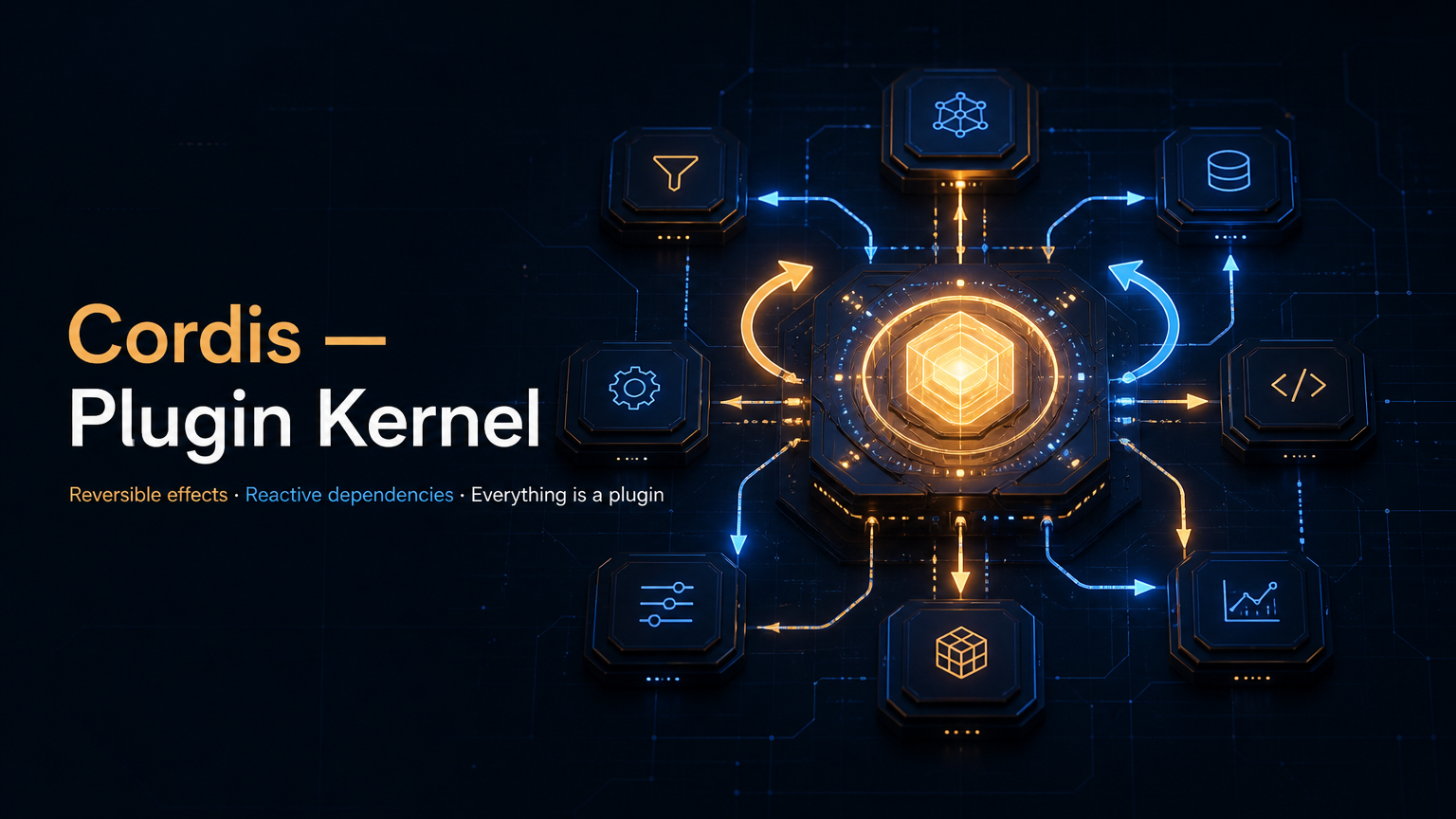
At its core, cordis-plugin is not just a library for extending functionality. It is a composability layer that helps define how agent behaviors are discovered, loaded, orchestrated, and governed. Instead of hardcoding every tool or workflow into a single agent definition, developers can expose capabilities through standardized interfaces that the framework can recognize and activate.
This approach introduces several important advantages:
Loose coupling: Individual plugins can be developed and updated independently.
Runtime flexibility: Agents can adapt their behavior based on context, permissions, or task type.
Scalability: New capabilities can be introduced without redesigning the whole system.
Maintainability: Smaller, focused modules are easier to test and debug.
Reusability: The same plugin can often be shared across multiple agents or teams.
The result is an architecture that feels closer to an ecosystem than a single application. Agents become assemblages of specialized parts, each contributing a distinct function while remaining interoperable.
03A Plugin Model for Agent Intelligence
The plugin model becomes especially powerful when applied to AI workflows. Rather than treating intelligence as one opaque process, cordis-plugin encourages separating concerns into distinct layers. One plugin might handle document parsing, another may manage retrieval from internal knowledge sources, and another could format output according to a brand voice or compliance policy.
This separation allows teams to reason about agent behavior more clearly. If an agent produces weak answers, developers can inspect whether the issue lies in retrieval, prompt construction, tool selection, or output validation. Instead of retraining an entire model or rewriting a monolithic workflow, they can improve a single plugin and redeploy it.
For organizations like Nonilion, this is particularly useful because different departments often need different AI behaviors. Sales may require lead qualification plugins, operations may need scheduling and reporting plugins, and HR may need policy-aware assistants. A shared plugin architecture makes it easier to support these varied needs while preserving consistency across the organization.
04Common Building Blocks in a Cordis-Style System
While implementations can vary, a cordis-plugin ecosystem typically includes a few recurring building blocks.
1. Capability registration
Plugins need a way to announce what they can do. This may include metadata such as the plugin name, version, dependencies, permissions, and supported tasks. Registration helps the host system determine when and how a plugin should be used.
2. Lifecycle hooks
A good plugin system defines clear lifecycle events, such as initialization, activation, suspension, and shutdown. These hooks allow plugins to prepare resources, clean up state, and respond to changes in the agent environment.
3. Event-driven communication
Rather than relying on direct calls between every component, plugins often communicate through events. This makes the system more flexible and reduces tight dependencies. For example, a “document received” event might trigger a parser plugin, which then emits a “structured content ready” event for downstream analysis.
4. Policy and permission controls
Because AI agents may interact with sensitive data or external systems, the framework needs guardrails. Plugin-level permissions can restrict access to files, APIs, memory, or execution contexts, helping ensure that each component only does what it is allowed to do.
Composable systems can become complex quickly. Logging, tracing, and metrics are essential for understanding how plugins interact and where failures occur. In a mature setup, every plugin action should leave an audit trail that supports debugging and governance.
00Real-World Use Cases for cordis-plugin
The value of a plugin-based AI architecture becomes clearer when viewed through practical examples.
Customer support automation
A support agent can combine multiple plugins to handle incoming requests: intent classification, account lookup, knowledge retrieval, response drafting, and escalation detection. If the company updates its support policy, only the policy plugin needs adjustment.
Internal knowledge assistants
Employees often need help finding information scattered across wikis, shared drives, and project tools. A knowledge assistant can use separate plugins for search, access control, summarization, and citation generation, ensuring answers are both useful and trustworthy.
Workflow orchestration
In operations settings, an AI agent might coordinate tasks across calendars, CRMs, messaging tools, and project trackers. Plugins make it possible to plug into each system independently, while the orchestrator manages sequencing and error handling.
Content generation pipelines
Marketing teams can use plugins for topic research, outline generation, style enforcement, fact checking, and publication formatting. This allows the content pipeline to remain flexible as brand guidelines and campaign goals evolve.
06Benefits for Human-AI Collaboration
One of the strongest arguments for cordis-plugin is that it improves collaboration between people and agents. Humans work best when systems are predictable, inspectable, and adaptable. A plugin-based architecture supports all three.
First, it improves predictability by making capabilities explicit. Team members can see which plugins are active and what each one is responsible for. Second, it improves inspectability because failures can be traced to a specific module instead of hidden in a large, opaque workflow. Third, it improves adaptability because teams can refine or replace parts of the system without disrupting the whole.
This is especially valuable in hybrid work environments. A manager might want an AI assistant to draft meeting notes, but only after a human approves sensitive action items. In a cordis-plugin setup, that approval step can be implemented as a dedicated plugin or policy gate, ensuring the assistant remains useful without becoming overreaching.
07Designing for Safety and Governance
As AI agents become more autonomous, safety becomes a central concern. Plugin-based systems can help by introducing clear boundaries around what each component can access and execute. Instead of granting broad permissions to a single agent, developers can assign narrowly scoped privileges to individual plugins.
This principle supports several governance goals:
Least privilege: Plugins only receive the access they need.
Auditability: Actions can be attributed to specific modules.
Containment: Faulty plugins can be isolated or disabled.
Compliance: Sensitive workflows can enforce policy checks at each step.
In regulated industries, these features are not optional. Financial services, healthcare, and legal teams need AI systems that can explain their behavior and respect strict operational rules. cordis-plugin offers a structural path toward that kind of accountability.
08Extensibility Without Chaos
Modularity is powerful, but only if it is governed well. Without standards, plugin ecosystems can become fragmented, with inconsistent interfaces and duplicated logic. A successful cordis-plugin implementation therefore depends on thoughtful conventions.
Teams should define:
naming and versioning rules
input and output schemas
dependency declarations
error-handling expectations
compatibility requirements
testing and release procedures
These conventions reduce friction and make it easier for developers to contribute new capabilities safely. They also help prevent the “plugin sprawl” problem, where too many loosely managed extensions create more complexity than they solve.
09The Role of the Orchestrator
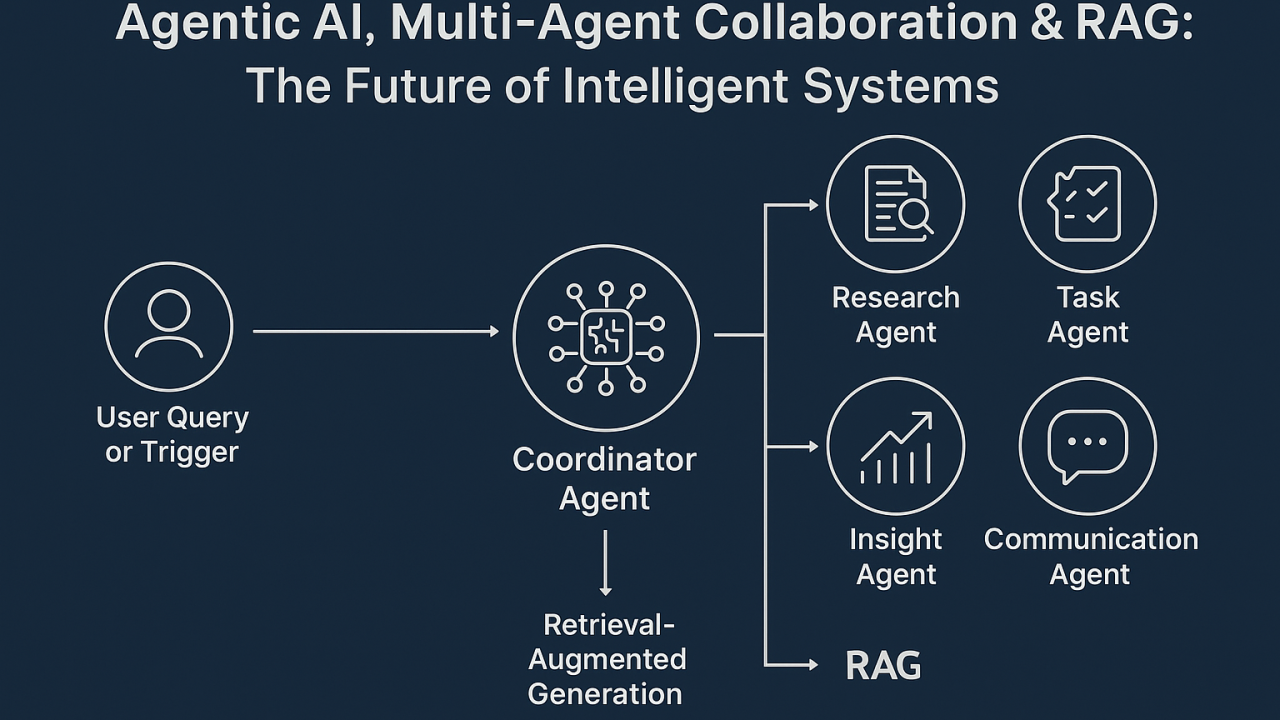
A plugin system is only as effective as the layer that coordinates it. The orchestrator is responsible for deciding which plugins to invoke, in what order, and under what conditions. It may use rules, heuristics, policies, or model-driven reasoning to make these decisions.
For example, if an agent receives a request to summarize a confidential document, the orchestrator might:
verify access permissions
route the document through a parsing plugin
send extracted text to a summarization plugin
apply a redaction plugin if needed
format the result for the target audience
This orchestration layer is where composability becomes intelligence. Rather than relying on a single fixed workflow, the system can adapt its path based on context and constraints.
10Why This Matters for the Future of Work
The future of work will likely be defined by systems that can assemble the right capabilities at the right moment. Employees will not want to manage dozens of disconnected tools, and organizations will not want to rebuild AI systems from scratch every time a process changes. cordis-plugin offers a path toward a more responsive and sustainable model.
In that model, AI agents are not static products. They are living systems that grow with the organization. New business units can be supported by new plugins. New compliance requirements can be enforced by policy plugins. New collaboration patterns can emerge as teams discover better ways to combine human judgment with machine speed.
That is the promise of composability: not just more features, but more freedom to evolve.
11Getting Started with a Plugin Mindset
Adopting a cordis-plugin approach begins with a shift in design thinking. Instead of asking, “How do we build one agent that does everything?” teams should ask, “What capabilities should be separate, reusable, and governable?”
A practical starting point is to identify a single workflow and break it into discrete steps. Then determine which steps are stable enough to become plugins and which should remain in the orchestrator. From there, teams can define interfaces, permissions, and test cases before expanding the system further.
This incremental approach reduces risk and makes adoption more manageable. It also helps teams build confidence in the plugin model by demonstrating clear wins early on.
12Toward a More Composable AI Stack
As AI systems become more integrated into daily work, composability will matter as much as raw model capability. The organizations that succeed will be the ones that can assemble, adapt, and govern intelligence with precision. cordis-plugin points toward that future by offering a framework for modular, collaborative, and resilient agent design.
Rather than locking intelligence into a single workflow, it invites teams to build ecosystems of specialized capabilities. That shift opens the door to more scalable automation, better human oversight, and AI systems that can truly grow alongside the people who use them.
13Why This Trend Matters for Nonilion
This trend matters to Nonilion because it points to a bigger change: teams are moving from simple calls toward persistent, AI-supported collaboration spaces. Nonilion can bridge live presence, meeting context, avatars, and follow-up work so the trend becomes a usable workflow instead of a headline.
14Shareable Extracts
The trend is not just "The Cordis-Plugin: Unlocking the Next Generation of AI Agent Composability" - it is a signal that team coordination is becoming the next competitive edge.
Hot take: the teams that win from this shift will not be the ones with more meetings; they will be the ones with clearer shared context after every meeting.
If the cordis-plugin: unlocking the next generation of ai agent composability keeps moving this fast, remote teams need a workspace where conversation, presence, and follow-up stay connected.
The Cordis-Plugin: Unlocking the Next Generation of AI Agent Composability The landscape of artificial intelligence is rapidly evolving, moving beyond monolithic systems towards more modular, adaptive, and collaborative AI agents.
At the heart of this transformation lies the cordis-plugin concept, a meta-framework designed to revolutionize how AI agents are built and managed.
15Social Hooks
Everyone is talking about The Cordis-Plugin: Unlocking the Next Generation of AI Agent Composability. The overlooked part is what happens to team workflows after the headline fades.
The uncomfortable question behind The Cordis-Plugin: Unlocking the Next Generation of AI Agent Composability: are teams adapting their collaboration systems fast enough?
This is not a meeting trend. It is a coordination trend, and products like Nonilion sit right in the middle of that shift.