Home/Blog/The Aircraft Pilot: Essential Expertise in an Increasingly Automated World
human + AI workflows
The Aircraft Pilot: Essential Expertise in an Increasingly Automated World
The Aircraft Pilot: Essential Expertise in an Increasingly Automated World The role of the aircraft pilot stands as a testament to human skill and responsibility, even as technolog
11 MIN READ
20 Aug 2026
human + AI workflows
The Aircraft Pilot: Essential Expertise in an Increasingly Automated World
The role of the aircraft pilot stands as a testament to human skill and responsibility, even as technology advances rapidly. In an era where automation reshapes industries, the core functions of an aviator remain indispensable, blending intricate control with strategic oversight. This dynamic interplay between human capability and technological assistance offers valuable insights into the evolving landscape of work, mirroring the collaborative environments found in modern AI offices like Nonilion, where human and AI agents work in concert.
01The Enduring Role of the Aircraft Pilot in an Automated Sky
An aircraft pilot, also known as an aviator, is fundamentally an individual who controls an aircraft's flight by operating its directional controls [1].
Want your team to run this workflow with AI-native execution?
While “flying the plane” is the most visible part of the job, a pilot’s responsibilities begin long before takeoff and continue well after landing. In practice, the role combines technical operation, systems management, communication, and judgment under pressure. A pilot must understand the aircraft’s performance limits, interpret weather patterns, calculate fuel requirements, review route restrictions, and coordinate with air traffic control and cabin crew.
Before a flight, pilots typically complete a detailed preflight routine. This may include reviewing the flight plan, checking the aircraft’s weight and balance, verifying fuel load, examining maintenance logs, and assessing weather along the route and at the destination. Even on routine flights, small changes in wind, visibility, or runway conditions can affect safety and efficiency. The pilot’s job is to anticipate those variables and make informed decisions that keep the flight within safe operating margins.
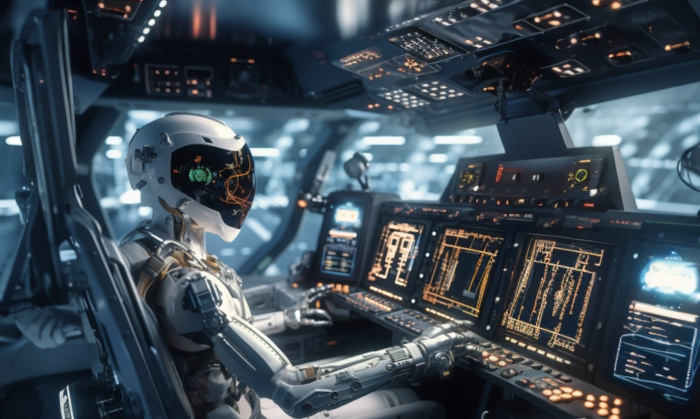
During flight, pilots monitor instruments, manage navigation, communicate with controllers, and respond to changing conditions. In modern cockpits, automation handles many repetitive tasks, but the pilot remains the final authority. That means knowing when to let systems work and when to intervene. A strong pilot is not simply a controller of the aircraft, but a manager of risk, information, and timing.
03Core Skills Every Pilot Must Develop
Becoming a competent aircraft pilot requires more than memorizing procedures. It demands a blend of cognitive, physical, and interpersonal skills that are refined over years of training and experience.
Situational Awareness
Situational awareness is the ability to understand what is happening around the aircraft at any given moment. This includes aircraft position, altitude, speed, surrounding traffic, weather, fuel status, and the status of onboard systems. A lapse in awareness can quickly lead to errors, especially in busy airspace or poor visibility.
Decision-Making Under Pressure
Pilots often need to make decisions with incomplete information and limited time. Should a flight continue through worsening weather, divert to another airport, or hold until conditions improve? These decisions require judgment, discipline, and a strong understanding of operational priorities. Good pilots know that the safest choice is not always the most convenient one.
Communication
Clear communication is essential in aviation. Pilots speak with air traffic controllers, dispatchers, cabin crew, maintenance teams, and sometimes passengers. Miscommunication can create confusion or delay, so pilots are trained to use standardized phraseology and confirm critical instructions. This precision is one reason aviation remains one of the safest transportation systems in the world.
Technical Knowledge
A pilot must understand aircraft systems, aerodynamics, navigation, and performance calculations. This includes knowing how engines, hydraulics, avionics, and flight control surfaces interact. In many situations, a pilot’s ability to diagnose a problem quickly can determine whether a flight continues safely or must be diverted.
04Training and Certification Pathways
The path to becoming an aircraft pilot varies by country and type of flying, but it usually involves a progression of licenses, ratings, and accumulated flight hours. Most pilots begin with a private pilot license, which allows them to fly for personal use. From there, they may pursue an instrument rating, commercial license, and eventually an airline transport pilot certificate if they want to fly for major airlines.
Training typically includes both ground school and flight instruction. Ground school covers subjects such as meteorology, navigation, regulations, aircraft systems, and human factors. Flight training teaches practical skills like takeoff, landing, stall recovery, emergency procedures, and instrument flying.
For airline pilots, the training does not end with certification. They must complete recurrent training regularly, often in simulators, to practice emergencies and stay current on procedures. This ongoing education is critical because aviation technology, regulations, and operational standards continue to evolve.
05The Importance of Human Judgment in Automated Flight
Modern aircraft are equipped with advanced autopilots, flight management systems, and warning technologies that reduce workload and improve precision. Yet automation does not eliminate the need for human oversight. In fact, it creates a new kind of responsibility: monitoring the machine while remaining ready to take control.
Automation is highly effective when conditions are stable and predictable. It can maintain altitude, follow routes, optimize fuel use, and reduce fatigue. However, it may not always respond as a human would in unusual or rapidly changing situations. Pilots must understand the logic and limitations of onboard systems so they can detect when automation behaves unexpectedly or when a manual intervention is necessary.
This balance between automation and human judgment is increasingly relevant across many industries. Just as AI tools can support knowledge workers without replacing strategic thinking, aircraft systems support pilots without replacing accountability. The pilot remains the decision-maker, responsible for interpreting data, assessing risk, and acting in the best interest of safety.
06Different Types of Aircraft Pilots
Not all pilots fly the same kind of aircraft or work in the same environment. The profession includes several distinct career paths, each with its own demands and rewards.
Airline Pilots
Airline pilots operate scheduled passenger or cargo flights. They typically fly large commercial aircraft and work within highly structured procedures. Their responsibilities include managing long-haul routes, coordinating with crew members, and ensuring compliance with strict operational standards.
Commercial Pilots
Commercial pilots may fly charter flights, aerial photography missions, agricultural aircraft, or corporate jets. Their work is often more varied than airline flying and may involve smaller aircraft, specialized equipment, or irregular schedules.
Military Pilots
Military pilots operate aircraft in defense and tactical missions. Their training is intense and mission-specific, often involving high-performance aircraft, advanced maneuvers, and complex operational environments. While their objectives differ from civilian aviation, the need for precision and discipline is equally high.
Private Pilots
Private pilots fly for recreation, personal travel, or business use. Although they do not fly commercially for hire, they still must meet licensing requirements and maintain proficiency. Many aviation professionals begin as private pilots before advancing into more specialized roles.
07Challenges Pilots Face in the Real World
The public often sees aviation as sleek and routine, but pilots work in an environment shaped by uncertainty. Weather can change quickly, mechanical issues can arise unexpectedly, and air traffic congestion can create delays or reroutes. Fatigue, time zone changes, and irregular schedules also affect performance, especially in long-haul operations.
One of the most persistent challenges is managing workload. Pilots must stay alert for long periods while processing large amounts of information. This is where training, teamwork, and cockpit resource management become essential. Two-pilot crews, in particular, rely on mutual verification and shared decision-making to reduce the chance of error.
Another challenge is maintaining proficiency. Skills that are not used regularly can fade, so pilots must continually practice both routine and emergency procedures. Simulators play a major role here, allowing crews to rehearse rare but critical scenarios in a safe environment.
08Safety Culture and Accountability
Aviation has developed one of the strongest safety cultures in any industry. That culture is built on standardization, transparency, and continuous improvement. Pilots are trained to follow checklists, report anomalies, and treat deviations seriously, even when no immediate danger is present.
This emphasis on accountability is not about assigning blame; it is about preventing future incidents. Data from flight operations, maintenance records, and incident reports are used to improve procedures and training. Pilots contribute to this ecosystem by documenting events accurately and participating in safety reviews.
The result is a system where human expertise and organizational learning reinforce one another. A pilot’s individual decisions matter, but those decisions are supported by a broader framework designed to catch errors before they become accidents.
09The Future of the Aircraft Pilot
As aircraft become more connected and intelligent, the pilot’s role will continue to evolve. Future cockpits may feature even more automation, predictive diagnostics, and decision-support tools. These developments could reduce workload and improve efficiency, but they are unlikely to eliminate the need for trained aviators.
Instead, the pilot of the future may spend less time manually controlling every phase of flight and more time supervising systems, interpreting complex data, and handling exceptions. This shift mirrors broader changes in the workplace, where professionals increasingly collaborate with intelligent tools to achieve better outcomes. In aviation, as in other fields, the most effective approach is not replacement but augmentation.
There is also growing interest in sustainability. Pilots may play a role in optimizing flight paths, reducing fuel consumption, and supporting the adoption of more efficient aircraft technologies. As the industry works toward lower emissions and quieter operations, pilots will remain central to implementing these changes safely and effectively.
Despite the rise of automation, the aircraft pilot remains essential because aviation is ultimately a field of responsibility. Machines can calculate, stabilize, and assist, but they do not bear moral or legal accountability for the flight. Pilots do. They are the ones who interpret conditions, make final decisions, and protect the lives of everyone on board.
That combination of technical mastery and human judgment is what makes the role enduring. In a world increasingly shaped by intelligent systems, the aircraft pilot exemplifies how expertise evolves rather than disappears. The cockpit may become more automated, but the need for skilled, adaptable, and accountable humans will remain at the heart of flight.
For aircraft pilot, Nonilion can be used as the practical AI-office example: a shared workspace where human teammates and AI agents keep discussion, decisions, and execution connected.
11Why This Trend Matters for Nonilion
This trend matters to Nonilion because it points to a bigger change: teams are moving from simple calls toward persistent, AI-supported collaboration spaces. Nonilion can bridge live presence, meeting context, avatars, and follow-up work so the trend becomes a usable workflow instead of a headline.
12Shareable Extracts
The trend is not just "The Aircraft Pilot: Essential Expertise in an Increasingly Automated World" - it is a signal that team coordination is becoming the next competitive edge.
Hot take: the teams that win from this shift will not be the ones with more meetings; they will be the ones with clearer shared context after every meeting.
If the aircraft pilot: essential expertise in an increasingly automated world keeps moving this fast, remote teams need a workspace where conversation, presence, and follow-up stay connected.
The Aircraft Pilot: Essential Expertise in an Increasingly Automated World The role of the aircraft pilot stands as a testament to human skill and responsibility, even as technology advances rapidly.
In an era where automation reshapes industries, the core functions of an aviator remain indispensable, blending intricate control with strategic oversight.
13Social Hooks
Everyone is talking about The Aircraft Pilot: Essential Expertise in an Increasingly Automated World. The overlooked part is what happens to team workflows after the headline fades.
The uncomfortable question behind The Aircraft Pilot: Essential Expertise in an Increasingly Automated World: are teams adapting their collaboration systems fast enough?
This is not a meeting trend. It is a coordination trend, and products like Nonilion sit right in the middle of that shift.