Home/Blog/React UI Kit V7: Powering the Collaborative Canvas of the AI-First Office
human + AI workflows
React UI Kit V7: Powering the Collaborative Canvas of the AI-First Office
Envisioning React UI Kit V7: A Canvas for the AI-First Office In an era of rapid technological evolution, the tools for building digital experiences are constantly adapting. For co
11 MIN READ
24 Jun 2026
human + AI workflows
Envisioning React UI Kit V7: A Canvas for the AI-First Office
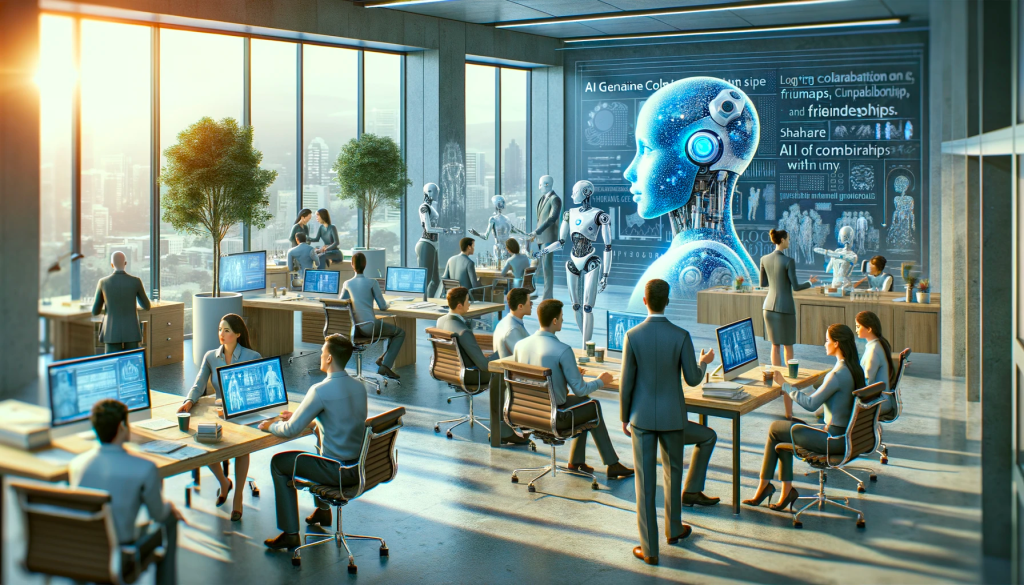
In an era of rapid technological evolution, the tools for building digital experiences are constantly adapting. For companies like Nonilion, which are developing solutions for the AI-first office, the underlying infrastructure for user interfaces is a critical consideration. A robust and forward-thinking solution, such as a hypothetical React UI Kit V7, could be envisioned as a canvas upon which human-AI collaboration is painted, enabling seamless interaction within a shared virtual workspace.
01The Evolving Role of UI Kits in Modern Web Development
Modern web development demands efficiency, consistency, and a delightful user experience. UI kits have emerged as indispensable tools, providing pre-built, customizable components that accelerate development cycles and ensure a cohesive aesthetic across applications.
Want your team to run this workflow with AI-native execution?
Beyond Aesthetics: Speed, Consistency, and Accessibility
At their core, UI kits address fundamental needs. They offer developers a library of production-ready components, from buttons and forms to complex data grids, allowing them to "move faster with intuitive React UI tools" (MUI). This accelerates development by reducing the need to build every element from scratch. Beyond speed, UI kits enforce consistency in design and behavior, crucial for maintaining brand identity and reducing user cognitive load. Furthermore, a well-engineered UI kit prioritizes accessibility, ensuring that applications are usable by a broad audience, often adhering to standards like WCAG. This dedication to accessibility is a hallmark of leading kits (MUI, Untitled UI).
What Defines a "Next-Gen" UI Kit? (e.g., V7)
A "next-gen" UI kit, exemplified by a hypothetical React UI Kit V7, goes beyond merely providing components. It embodies a philosophy of adaptability and future-proofing. Such a kit would feature advanced component architecture, allowing for deep customization while maintaining integrity. It would be built with modern web technologies, offering superior performance and scalability. Crucially, it would anticipate emerging interaction patterns, particularly those driven by artificial intelligence. Some kits already hint at this, with mentions of being "AI-ready" (Untitled UI), indicating a proactive approach to integrating with intelligent systems. V7 would be characterized by its comprehensiveness, offering "every component you need... ready for production" (MUI), coupled with "unrivaled documentation" (MUI) and a strong emphasis on extensibility to adapt to unique application requirements.
02Exploring the Frontier: UI Kits for the AI-Powered Office
The rise of AI agents and collaborative intelligence fundamentally reshapes the demands on user interfaces.
Visualizing AI Agent Outputs: Clarity in Complex Data
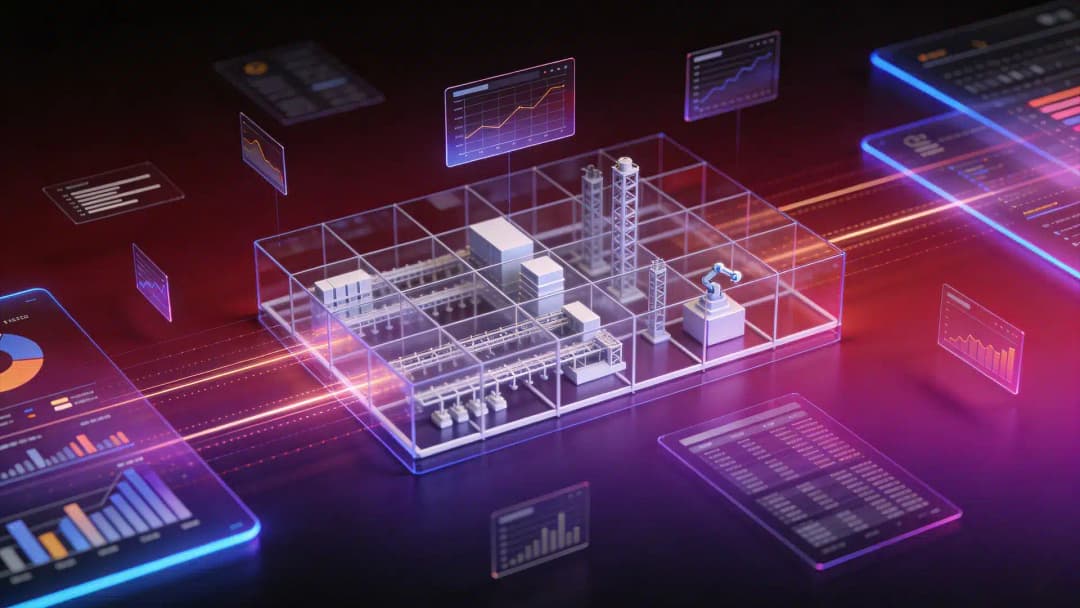
AI agents often generate vast amounts of data, from analytical insights to creative content. A UI kit for the AI-first office needs specialized components capable of presenting this complex information clearly and intuitively. This includes dynamic charts, interactive data tables with filtering and sorting for AI-generated reports, and visual metaphors that help users quickly grasp the essence of an AI's output without being overwhelmed.
Effective collaboration between humans and AI agents requires new interaction patterns. UI kits must provide components that support these patterns, such as real-time feedback mechanisms for AI suggestions, intuitive ways to refine AI queries, and clear indicators of an AI agent's current status or confidence level. Components for conversational interfaces, like those found in "React Chat UI Kit - V7" (CometChat), become particularly relevant here, allowing users to interact with AI agents naturally.
Orchestrating Workflows: Managing AI Agents and Tasks
In an AI-powered office, users need to manage and orchestrate multiple AI agents and their associated tasks. A next-gen UI kit would include components for workflow visualization, task assignment to AI agents, monitoring agent progress, and reviewing AI-generated actions. This could involve dashboard components, task lists with AI-specific metadata, and notification systems that keep users informed of critical AI activities.
03Designing for Collaborative Intelligence: UI/UX Principles for Human + AI
The design principles guiding UI kits in an AI-first environment shift to prioritize trust, clarity, and cognitive ergonomics.
Transparency and Explainability: Building Trust in AI Interactions
Users need to understand why an AI agent made a particular suggestion or took a specific action. UI components must facilitate transparency, offering "explainability" features like tooltips that detail an AI's reasoning or visual cues that highlight the data points influencing an AI's output. This builds trust and empowers users to leverage AI effectively.
Contextual Awareness: Providing the Right Information at the Right Time
An intelligent UI adapts to the user's current context. A UI kit for AI collaboration would offer components that can dynamically display relevant AI insights or controls based on the user's workflow, the current task, or even their past interactions. This reduces clutter and ensures that AI assistance is always pertinent.
Ergonomics for Extended Cognition: Reducing Cognitive Load
Interacting with multiple AI agents and complex data can be cognitively demanding. UI kits must provide components designed for "ergonomics for extended cognition," minimizing visual noise, simplifying complex data presentations, and streamlining interaction flows to reduce the mental effort required from users. This allows humans to focus on higher-level tasks, augmenting their capabilities with AI, rather than being burdened by the interface.
For Nonilion, a platform dedicated to fostering human-AI co-creation and async execution within a shared virtual workspace, a sophisticated UI kit like a hypothetical React UI Kit V7 could be foundational. It could be envisioned as an architectural backbone enabling the seamless integration of human and artificial intelligence.
From Concepts to Components: How V7 Accelerates Nonilion's Vision
this platform's vision for the AI-first office relies on dynamic, interactive interfaces that support complex collaborative workflows. A React UI Kit V7 would provide the building blocks to rapidly prototype and deploy these interfaces. By offering a comprehensive suite of "pixel-perfect, production-ready components" (Untitled UI), V7 could allow this platform's development teams to focus on innovative AI features and interaction logic, rather than reinventing UI primitives. This acceleration is critical for a platform aiming to shape the future of work where human and AI agents collaborate on tasks like meeting follow-ups, document synthesis, and project management.
Specialized Components for this platform's AI Agents
In this platform's environment, AI agents are active participants in workflows. V7 would ideally include specialized components tailored for these agents. This could involve custom "agent cards" that display an AI's identity, current task, and progress; interactive widgets for configuring AI agent parameters; or visualizers that illustrate an AI's contribution to a shared document or project. These components could help ensure that AI agents are not just backend processes but visible, interactive entities within the shared workspace.
Fostering Human-AI Co-Creation and Async Execution
this platform champions human-AI co-creation and asynchronous execution. V7 would provide the UI elements necessary to support these advanced interaction models. This includes components for version control that highlight AI contributions, collaborative text editors with AI-driven suggestions, and asynchronous communication tools that integrate AI agent updates seamlessly. The kit would enable the UI to dynamically adapt, showing relevant AI insights or controls only when needed, supporting this platform's goal of reducing cognitive load and enhancing overall team coordination.
05Implementing React UI Kit V7 in an AI-Centric Environment
Adopting a UI kit like V7 in an AI-centric environment requires careful consideration of integration, customization, and performance.
Integration Best Practices: Connecting to AI Services and APIs
A robust UI kit must be designed for seamless integration with backend AI services and APIs. V7 would offer clear guidelines and potentially helper components for connecting UI elements to real-time AI outputs, streaming data, and asynchronous AI task completion notifications. This ensures that the UI is not merely a static display but a dynamic window into the AI's operations.
Customization and Extensibility: Adapting to Unique AI Use Cases
The AI landscape is diverse, and unique use cases demand highly customizable interfaces. V7 would be built with extensibility in mind, allowing developers to easily theme components, extend their functionality, and create entirely new components that adhere to the kit's design system. This flexibility is crucial for this platform, where AI agents and workflows are constantly evolving.
Performance and Scalability: Handling AI-Generated Content at Scale
AI agents can generate content at scale, from large datasets to complex visualizations. A UI kit for this environment must be performant and scalable. V7 would leverage efficient rendering techniques and optimized component structures to ensure that the UI remains responsive and fluid, even when displaying vast amounts of dynamically generated AI content.
06The Road Ahead: UI Kits as Enablers of AI's Full Potential
The journey toward the AI-first office is ongoing, and UI kits will play an increasingly critical role in shaping its trajectory.
Anticipating Future AI Interaction Patterns
As AI capabilities advance, new interaction patterns will emerge. UI kits must anticipate these shifts, incorporating components for multimodal interactions (voice, gesture), adaptive interfaces that learn from user behavior, and immersive experiences that blend physical and virtual AI interactions. The evolution of UI kits will be intrinsically linked to the progress of AI itself.
The Strategic Importance: Investing in AI-Ready UI Infrastructure
For organizations looking to harness the full potential of AI, investing in an AI-ready UI infrastructure can be a strategic advantage. Choosing a comprehensive, extensible, and performant UI kit like a hypothetical React UI Kit V7 is not just about aesthetics or development speed; it can be about building the foundation for effective human-AI collaboration, driving innovation, and staying competitive in the AI-first era.
07Conclusion: Envisioning the Future, One Component at a Time
React UI kits have transformed web development, offering unparalleled efficiency and consistency. As we transition into the AI-first office, the demands on these kits intensify, requiring specialized components and design principles that facilitate seamless human-AI collaboration. A next-gen solution like a hypothetical React UI Kit V7 becomes more than a library; it becomes the essential framework for visualizing AI intelligence, orchestrating complex workflows, and fostering trust. For platforms like this platform, committed to contributing to the future of work through human-AI co-creation and async execution, such a UI kit could be more than just a tool—it could be a foundational element upon which the collaborative canvas of tomorrow is built, component by component.
This trend matters to Nonilion because it points to a bigger change: teams are moving from simple calls toward persistent, AI-supported collaboration spaces. Nonilion can bridge live presence, meeting context, avatars, and follow-up work so the trend becomes a usable workflow instead of a headline.
09Shareable Extracts
The trend is not just "React UI Kit V7: Powering the Collaborative Canvas of the AI-First Office" - it is a signal that team coordination is becoming the next competitive edge.
Hot take: the teams that win from this shift will not be the ones with more meetings; they will be the ones with clearer shared context after every meeting.
If react ui kit v7: powering the collaborative canvas of the ai-first office keeps moving this fast, remote teams need a workspace where conversation, presence, and follow-up stay connected.
Envisioning React UI Kit V7: A Canvas for the AI-First Office In an era of rapid technological evolution, the tools for building digital experiences are constantly adapting.
For companies like $1, which are developing solutions for the AI-first office, the underlying infrastructure for user interfaces is a critical consideration.
10Social Hooks
Everyone is talking about React UI Kit V7: Powering the Collaborative Canvas of the AI-First Office. The overlooked part is what happens to team workflows after the headline fades.
The uncomfortable question behind React UI Kit V7: Powering the Collaborative Canvas of the AI-First Office: are teams adapting their collaboration systems fast enough?
This is not a meeting trend. It is a coordination trend, and products like Nonilion sit right in the middle of that shift.
11Sources and Author
Sources
MUI: The React component library you always wanted
mui.com