

Developer Productivity
openclaw: What Developers Need to Know
Beyond Personal: Collective AI Agents and the Evolution of the AI Office I. Introduction: The Emergence of the Autonomous Personal Assistant What is OpenClaw and the Potential of I
01Beyond Personal: Collective AI Agents and the Evolution of the AI Office
I. Introduction: The Emergence of the Autonomous Personal Assistant
What is OpenClaw and the Potential of Individual AI Automation?
Want your team to run this workflow with AI-native execution?
There is significant interest in autonomous AI agents, which hold the potential to assist with numerous personal tasks and enhance individual productivity. Such an AI could potentially manage aspects of your digital life, aiming to free up time for high-value work. Personalized automation holds appeal, suggesting a future where digital assistants could manage routine tasks.
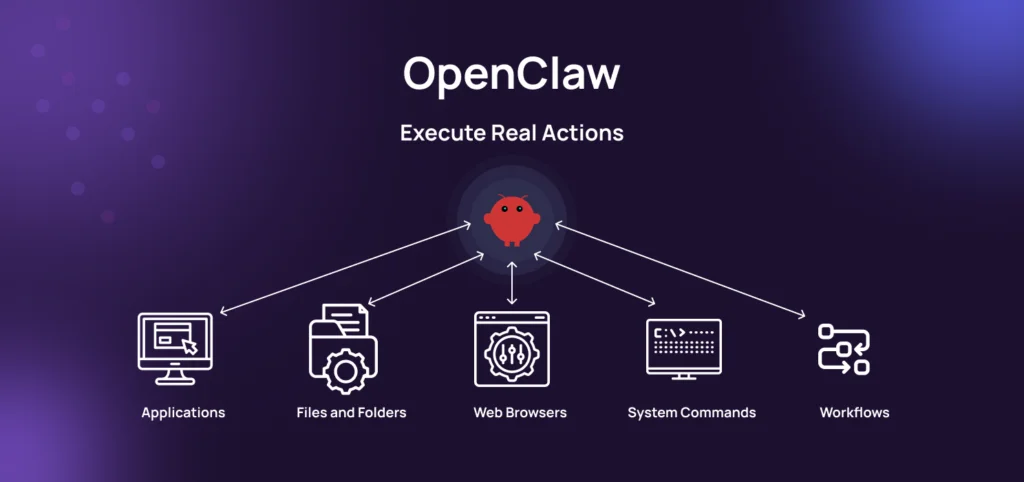
A prominent example in this field is OpenClaw, a free and open-source autonomous artificial intelligence agent. It functions as a personal AI assistant that users can run on their own devices, whether macOS, Linux, or Windows. OpenClaw’s core functionality centers on leveraging large language models (LLMs) to understand requests and execute multi-step tasks. Its capabilities include clearing your inbox, sending emails, managing your calendar, and even checking you in for flights. All these actions are accessible through familiar chat interfaces like WhatsApp, Telegram, or any other chat app you already use.
The self-hosted, open-source nature of OpenClaw appeals strongly to privacy-conscious users and developers seeking control over their AI tools. Its vision, highlighted in various discussions, suggests a forward-looking approach to individual productivity, aiming for AI to be integrated into daily personal workflows.
OpenClaw demonstrates potential applications of AI for individual efficiency. It offers a vision of personal automation. However, while such personal agents can enhance individual efficiency, significant potential for organizations may lie in moving beyond solo automation to collective intelligence. This is where AI agents and humans collaborate within a shared workspace. This collaborative framework represents an important aspect of the evolving AI office, exemplified by platforms like Nonilion. Nonilion provides the essential infrastructure for multiple AI agents and humans to co-exist and collaborate seamlessly within a unified virtual workspace, moving beyond individual chat interfaces to a structured, auditable environment where collective goals are pursued.
II. The Allure of Individual Efficiency: A Closer Look at Personal AI
Personal Agents and Streamlining Daily Tasks
The "What": Defining the Scope of Personal AI Assistance
Personal AI assistants like OpenClaw are designed to be highly functional and accessible. They leverage large language models (LLMs) to interpret user commands and execute complex, multi-step tasks. For instance, OpenClaw can act as a proactive personal agent, connecting AI models with your local files and messaging platforms to get things done.
The convenience of interacting with these AI agents through existing messaging platforms, such as WhatsApp or Telegram, can reduce friction and learning curves. Users can simply chat with their AI to initiate actions. OpenClaw's capabilities extend to both reactive responses to direct commands and proactive management, such as automatically managing schedules or flagging important information, potentially acting as a personal assistant with daily briefings.
The "Why": The Driving Force Behind Individual Automation
The primary driver behind the adoption of individual automation is the potential for time savings and enhanced focus. By offloading repetitive, low-cognitive-load tasks—like managing an inbox or checking flight status—AI aims to free up human time and mental energy for more strategic, creative, and complex work.
This delegation of administrative burdens may also contribute to reducing mental load and potentially improve overall well-being and mitigate the risk of burnout. The appeal of a self-hosted, customizable AI that operates within one's personal digital environment further enhances this value proposition, offering a sense of personalization and control that resonates deeply with users seeking to optimize their personal productivity.
III. The Collaboration Chasm: From Personal Agents to Team Intelligence
The Limits of Solo Automation in a Collaborative World
The "Where" Individual AI Falls Short for Teams
While personal AI assistants like OpenClaw excel at individual task management, their inherent design presents significant limitations when applied to collaborative team environments.
Firstly, there is a fundamental lack of shared context. Personal agents operate within a silo, designed to serve a single user's needs. They inherently lack awareness of overarching team goals, project statuses, or shared organizational knowledge. This leads to fragmented information, where each individual's AI might be optimizing their personal workflow without understanding how it impacts or could be integrated with the broader team's efforts, potentially resulting in duplicated efforts or misaligned activities across a team.
Secondly, the absence of multi-agent orchestration is a critical hurdle. While one personal agent can efficiently manage your inbox and calendar, it cannot seamlessly coordinate with another agent managing a colleague's calendar to schedule a joint meeting, or with an agent responsible for providing real-time project updates to the entire team. The challenge of synchronizing multiple individual agents for a collective outcome, where agents need to communicate, share data, and collaborate on a unified objective, is substantial and largely unaddressed by solo automation solutions.
Finally, personal agents often exhibit limited human-AI teaming capabilities in a collective sense. They are primarily tools for an individual, rather than active collaborators with a team. The model typically lacks robust mechanisms for collective human oversight, shared feedback loops, and iterative refinement across a group, which are crucial for effective team-based work and continuous improvement.
The "Why" Organizations Need More Than Personal Assistants
For organizations, relying solely on individual AI solutions presents several challenges. Scaling challenges are paramount; individual setups don't scale efficiently across an entire department or enterprise without significant integration overhead and potential inconsistencies. Each user setting up their own OpenClaw instance, while powerful for them, doesn't automatically translate into enterprise-wide efficiency.
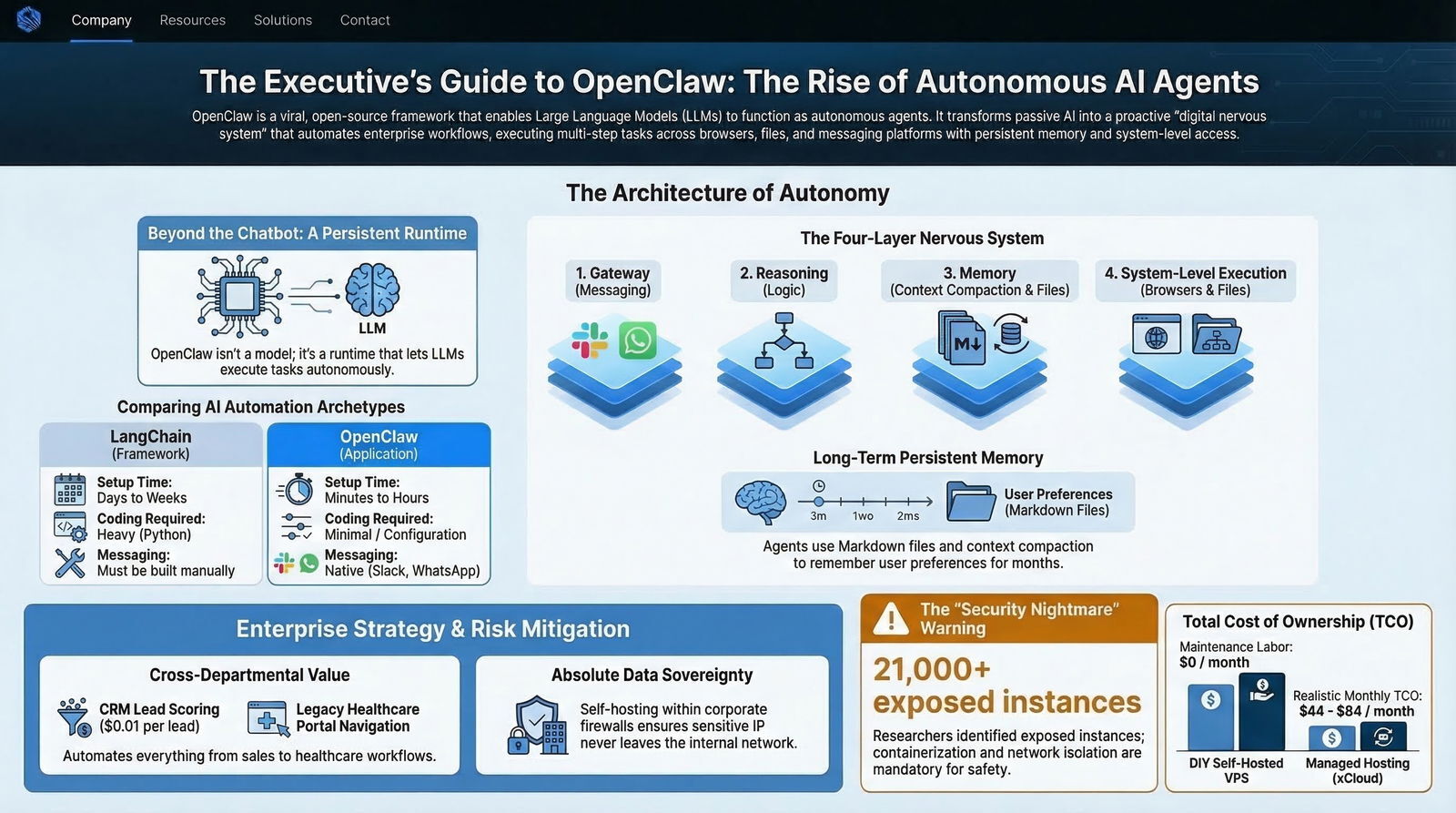
Furthermore, security and governance become complex. Self-hosted, individual setups can pose challenges for centralized IT governance, data security, and compliance in a corporate environment. While OpenClaw does feature a security model and default settings, managing these across numerous individual installations within an enterprise context requires a different approach than a centralized platform.
Ultimately, the need for collective impact suggests organizations may look beyond personal assistants. Organizational transformation may benefit from AI that enhances team productivity and collective intelligence, not just individual output. The sum of individually optimized tasks, while beneficial, does not automatically equate to an optimized team or organization capable of achieving complex, shared objectives. The evolving AI office may benefit from a more integrated, collaborative approach to AI deployment.
IV. Building the Collective: AI Agents in a Shared Workspace
What This Means for AI Offices: Orchestrating Human and AI Talent with Nonilion
Bridging the Gap: The Vision of the Collaborative AI Office
The limitations of solo automation suggest a need to move beyond personal productivity tools to a vision of the collaborative AI office. Envision a future where AI agents are not just personal assistants but integrated components of a team, operating within a shared, secure environment. This shift aims to transform AI from a mere tool that augments individual capability into an active, intelligent teammate.
This vision emphasizes shared context and collective intelligence. In a virtual AI office, agents have access to shared knowledge bases, project management tools, and communication channels. This shared context enables agents to understand the broader organizational goals, access relevant information, and collaborate effectively with both human colleagues and other AI agents. It’s about creating an ecosystem where AI contributions are harmonized and directed towards collective outcomes.
Nonilion as the Blueprint for Human + AI Collaboration
This is precisely where Nonilion emerges as a practical example of an AI office platform designed for sophisticated human + AI collaboration. Nonilion offers a platform for orchestrating human and AI talent, aiming to enhance how teams work.
Specifically, [this platform](https://this platform.com/) offers the robust infrastructure for virtual office collaboration, allowing multiple AI agents and humans to co-exist and collaborate seamlessly within a unified virtual workspace. This moves beyond individual chat interfaces, offering a structured, auditable environment where all team members—human and AI—can contribute and track progress toward shared objectives.
Moreover, [this platform](https://this platform.com/) excels in workflow automation and team coordination. It enables the orchestration of complex, multi-step team processes. For example, an AI agent within [this platform](https://this platform.com/) could initiate a new project by gathering initial requirements, another AI agent could then pull relevant data from internal systems, a third could draft a preliminary report based on that data, and a human team member could then review and approve the final output—all coordinated and tracked within the [this platform](https://this platform.com/) platform. This aims to ensure that tasks flow efficiently and intelligently across the team.
[this platform](https://this platform.com/) also addresses the need for async execution and meeting follow-ups. Its agents can handle the asynchronous execution of tasks and automate critical meeting follow-ups, aiming to ensure that actions are taken, summaries are distributed, and next steps are tracked without constant human intervention. This fosters continuous progress and reduces the administrative overhead associated with team communication.
Crucially, [this platform](https://this platform.com/)'s design incorporates robust human-in-the-loop control. This aims to ensure that while AI agents perform autonomous tasks, teams can direct, monitor, and refine agent activities. This oversight aims to maintain alignment with strategic objectives, aims to ensure ethical guardrails, and allows for human judgment to guide the overall direction of collaborative efforts.
V. The Future of Work: Orchestrating Human and AI Talent
When and Where the AI Office Revolution Unfolds
The Evolution of Productivity: From Tools to Teammates
The evolution of AI is evolving beyond simple augmentation. We are witnessing a shift where AI is evolving towards being an active, intelligent teammate within the organizational structure. This means AI agents may not just assist individuals, but could actively participate in team projects, contribute to strategic discussions, and take ownership of segments of complex workflows.
This shift could have a strategic impact, potentially redefining roles, optimizing processes, and potentially reshaping organizational structures within enterprises. The future of work may see humans and AI agents forming synergistic teams, each bringing their unique strengths to achieve potentially enhanced outcomes.
[this platform](https://this platform.com/)'s Contextual Fit: Powering the Enterprise of Tomorrow
For this evolution to truly unfold, platforms may need to provide the necessary foundation. [this platform](https://this platform.com/) offers the enterprise-grade scalability, security, and governance necessary for widespread AI agent adoption across an organization. Unlike individual, self-hosted solutions, [this platform](https://this platform.com/) provides a centralized, secure environment that meets corporate standards, aiming to ensure data integrity and compliance.
While personal AI like OpenClaw offers a compelling glimpse into individual efficiency, significant advancements in enterprise productivity and innovation may come from platforms that foster sophisticated human + AI co-working. [this platform](https://this platform.com/) is designed to enable organizations to achieve collective impact far beyond what individual agents can accomplish. The evolving landscape suggests that the focus may shift from AI can do for , to a network of AI agents can achieve and .
VI. Conclusion: Beyond Personal Productivity to Collective Impact
The journey from the impressive capabilities of individual AI assistants like OpenClaw to the growing recognition of the need for collaborative AI agents within a shared workspace suggests a significant evolution in how we approach productivity. While OpenClaw demonstrates the potential impact AI can have on personal efficiency—clearing inboxes, managing calendars, and streamlining daily tasks—the limitations of siloed automation become apparent when scaling to organizational needs.
The future of the AI office is not just about automating tasks; it's about intelligently orchestrating human and AI talent to achieve enhanced levels of collective intelligence and productivity. Platforms like [this platform](https://this platform.com/) are at the forefront of this transformation, providing the essential environment for human + AI collaboration that unlocks the full potential of a connected, intelligent workforce. This move from individual optimization to collective impact is a key characteristic of the evolving era of work.
02Why This Trend Matters for Nonilion
This trend matters to Nonilion because it points to a bigger change: teams are moving from simple calls toward persistent, AI-supported collaboration spaces. Nonilion can bridge live presence, meeting context, avatars, and follow-up work so the trend becomes a usable workflow instead of a headline.
03Shareable Extracts
- The trend is not just "openclaw: What Developers Need to Know" - it is a signal that team coordination is becoming the next competitive edge.
- Hot take: the teams that win from this shift will not be the ones with more meetings; they will be the ones with clearer shared context after every meeting.
- If openclaw: what developers need to know keeps moving this fast, remote teams need a workspace where conversation, presence, and follow-up stay connected.
- Introduction: The Emergence of the Autonomous Personal Assistant What is OpenClaw and the Potential of Individual AI Automation?
- There is significant interest in autonomous AI agents, which hold the potential to assist with numerous personal tasks and enhance individual productivity.
04Social Hooks
- Everyone is talking about openclaw: What Developers Need to Know. The overlooked part is what happens to team workflows after the headline fades.
- The uncomfortable question behind openclaw: What Developers Need to Know: are teams adapting their collaboration systems fast enough?
- This is not a meeting trend. It is a coordination trend, and products like Nonilion sit right in the middle of that shift.
05Sources and Author
Sources
-
OpenClaw — Personal AI Assistant openclaw.ai
-
OpenClaw — Personal AI Assistant github.com/openclaw/openclaw
-
OpenClaw en.wikipedia.org/wiki/OpenClaw
-
Anyone actually using Openclaw? : r/LocalLLaMA
Author
This article on openclaw was generated by the Nonilion AI blog workflow using web research inputs and AI-assisted synthesis.