Home/Blog/CrawlForge MCP: Bridging the Unseen Data Gap in AI-Powered Workflows
human + AI workflows
CrawlForge MCP: Bridging the Unseen Data Gap in AI-Powered Workflows
CrawlForge MCP: Bridging the Unseen Data Gap in AI-Powered Workflows In the evolving landscape of AI-powered workflows, the seamless flow of accurate, real-time data is paramount.
15 MIN READ
19 Oct 2026
human + AI workflows
CrawlForge MCP: Bridging the Unseen Data Gap in AI-Powered Workflows
In the evolving landscape of AI-powered workflows, the seamless flow of accurate, real-time data is paramount. Yet, a significant challenge persists: how do AI agents access and process the vast, dynamic information available on the web in a structured, actionable format? This unseen data gap often hinders the full potential of AI, leading to inefficiencies and
missed opportunities, and decisions based on incomplete context. CrawlForge MCP addresses this challenge by providing a bridge between web content and AI systems through a structured, tool-oriented interface.
Want your team to run this workflow with AI-native execution?
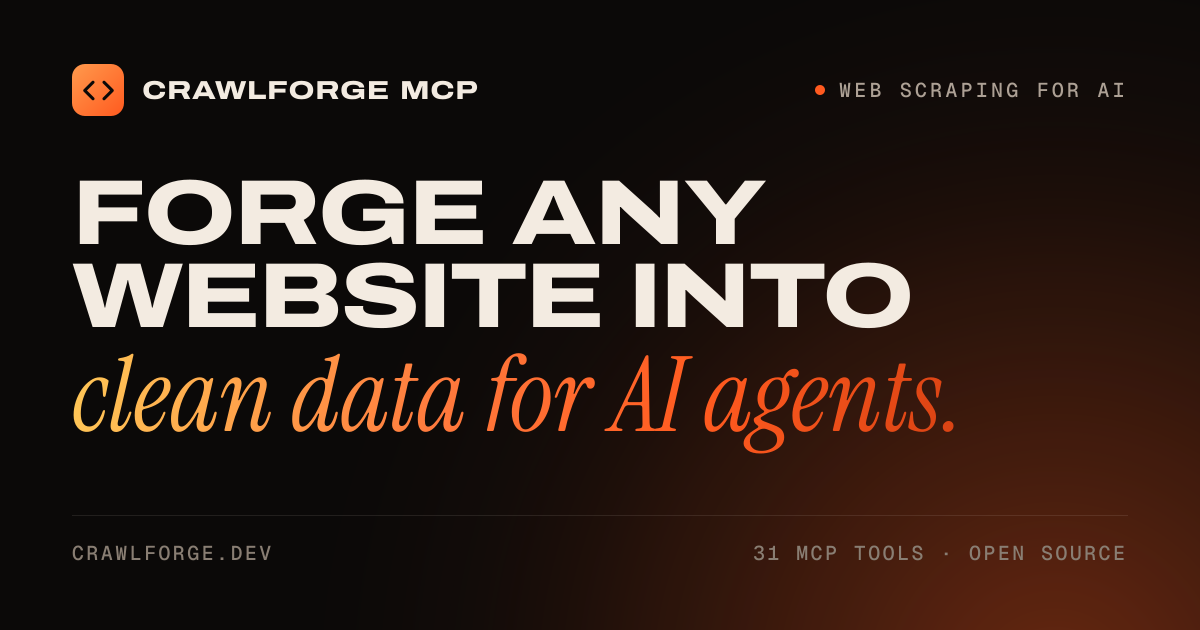
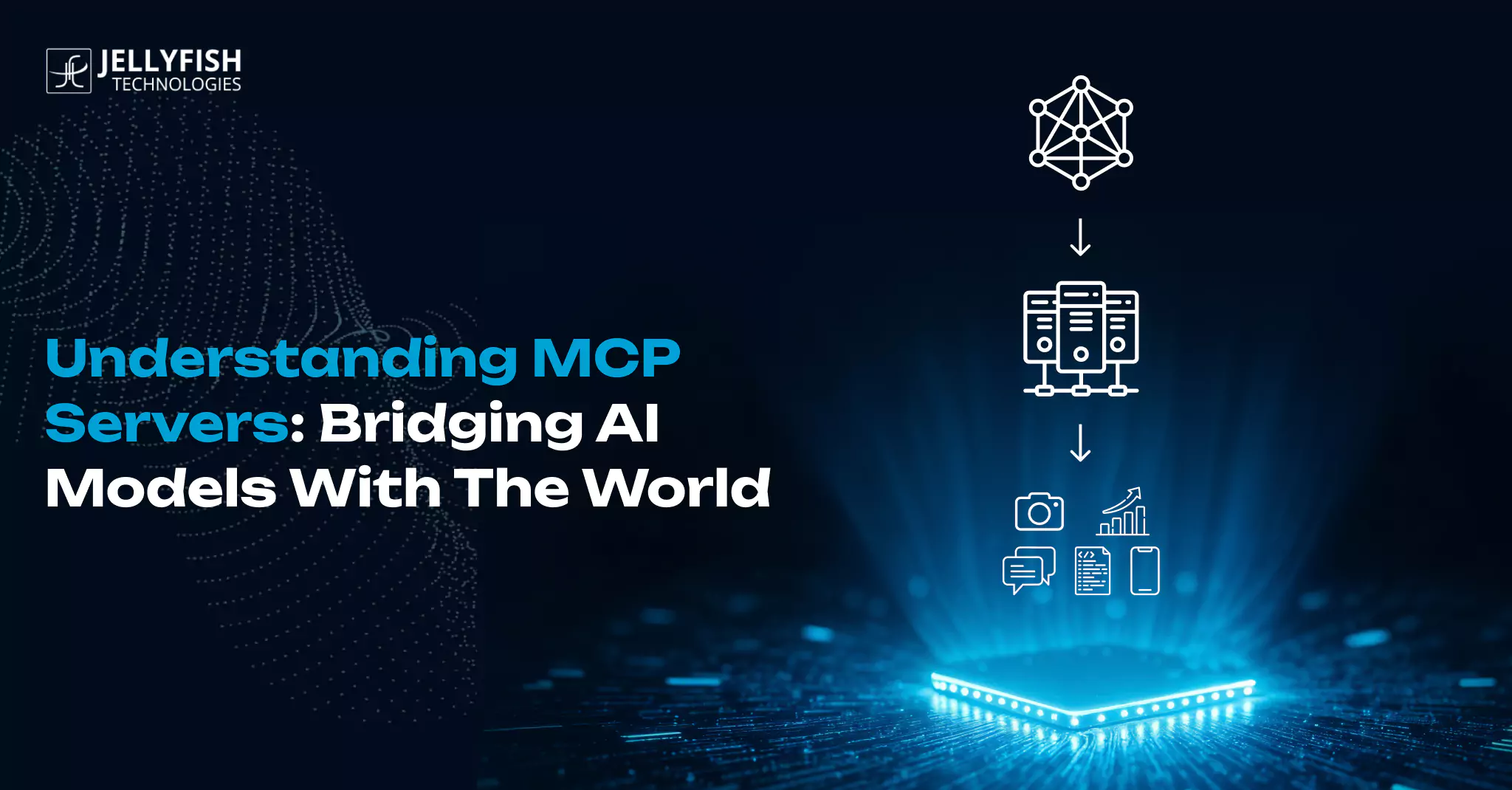
CrawlForge MCP can be understood as a web-crawling and extraction layer designed to work with the Model Context Protocol (MCP). MCP is an open protocol that allows AI applications to connect with external tools, services, and data sources in a consistent way. Instead of requiring every AI application to implement a separate integration for every crawler, database, or search service, an MCP-compatible server can expose those capabilities through standardized tools and resources.
In practical terms, CrawlForge MCP may sit between an AI agent and the public web:
The agent identifies a need for external information.
It invokes an available CrawlForge tool.
CrawlForge retrieves or processes the relevant web content.
The server returns structured results to the agent.
The agent uses those results in its reasoning, report, or downstream workflow.
This approach is particularly valuable for information that changes frequently or is not available through conventional APIs. Product documentation, public announcements, pricing pages, regulatory updates, technical references, and competitor pages are all examples of sources that may need to be inspected directly.
02Why Conventional AI Workflows Fall Short
Large language models are capable of summarizing and reasoning over information, but they do not automatically have access to every current web page. Even when a model includes a browsing feature, the browsing process may not be optimized for repeated, structured, or programmatic use.
A typical workflow built without a dedicated crawling layer can involve several disconnected steps:
Finding a relevant URL manually
Downloading the page with custom code
Removing navigation and unrelated markup
Extracting the main content
Handling pagination or linked pages
Converting the results into a format an AI model can use
Recording citations and retrieval times
Each step introduces potential failure points. A page may rely on JavaScript, change its layout, return different content based on location, or contain large amounts of boilerplate. Search results can also be incomplete, while a direct request may retrieve raw HTML that is difficult for an AI model to interpret.
A specialized MCP server helps consolidate these operations. The agent can request a task at a higher level, such as “extract the current pricing information from this documentation site,” while the crawling layer handles retrieval and normalization.
03Core Capabilities
The exact tools exposed by a CrawlForge MCP implementation depend on its configuration and version, but a capable integration commonly includes several categories of functionality.
Page Retrieval
The most basic operation is fetching a page from a supplied URL. A useful retrieval tool should support common web behavior, including redirects, standard HTTP errors, timeouts, and content-type detection.
The response may include:
Page title
Final URL after redirects
HTTP status
Retrieval timestamp
Cleaned text
Relevant metadata
Links discovered on the page
A reference to the original source
Returning metadata alongside content is important. It gives the AI agent context about where the information came from and whether it may be stale or incomplete.
Structured Extraction
Raw page text is often insufficient. Agents may need specific fields, such as a product’s listed price, a publication date, an author name, or a set of technical requirements.
Structured extraction allows a request to define the desired output. For example:
The crawler can first identify the relevant content and then return data that follows the requested schema. This makes the output easier to validate, compare, store, and pass to other systems.
Site Crawling
A single page is often not enough for research. A site crawl can discover linked pages within an allowed domain and collect content according to rules such as:
Maximum page count
Maximum crawl depth
URL pattern
Inclusion or exclusion paths
File types
Delay between requests
Content-length limits
For example, an agent researching an API could begin at a documentation homepage and follow only links under /docs/, excluding blog posts and account pages. The result would be a focused collection rather than an indiscriminate copy of the entire site.
Search and Discovery
A crawling service may also support discovery through a search query or a starting set of URLs. Search and crawling serve different purposes. Search is useful for locating candidate pages, while crawling is useful for gathering and processing content once the target domain or path is known.
A workflow might use both:
Search for official pages related to a topic.
Restrict results to trusted domains.
Crawl the selected pages.
Extract facts into a consistent structure.
Ask the model to compare the results.
This sequence helps reduce the risk of relying on a single page or an unverified third-party summary.
Change Detection
Many business workflows do not need a complete crawl every time. They need to know what changed since the previous check. Change detection can compare page content, extracted fields, or selected sections and report differences.
Examples include:
A pricing tier has been renamed.
A product’s availability has changed.
A documentation example has been modified.
A policy page has added a new requirement.
A government notice has been updated.
Change-focused crawling can reduce bandwidth and processing costs while making alerts more useful. Instead of sending an entire page to an agent, the system can provide the previous value, the new value, and the location of the change.
04How MCP Improves the Agent Experience
MCP gives external capabilities a discoverable interface. An AI client can inspect the tools made available by a server, understand their input requirements, and call them when appropriate. This is different from embedding a long list of custom instructions or writing one-off code for each data source.
A well-designed CrawlForge MCP server can expose tool descriptions that clarify:
What the tool does
Which arguments are required
What limits apply
What format the result uses
Which errors may occur
Whether the operation can access external URLs
This allows an agent to select the appropriate operation dynamically. For instance, it might use a direct page extraction tool for one URL, a bounded crawl for a documentation site, and a change-monitoring tool for a recurring task.
MCP also separates responsibilities. The AI application handles conversation, planning, and reasoning. CrawlForge handles web access, parsing, and crawl controls. This separation makes the system easier to test and maintain.
05Example Workflow: Competitive Intelligence
Consider a company that tracks several competitors. A manual process might require an analyst to visit each website, locate pricing pages, record changes, and prepare a weekly summary.
With CrawlForge MCP, the workflow could be organized as follows:
Extract pricing, plan names, usage limits, and product claims.
Compare the latest structured results with the previous snapshot.
Ask an AI agent to summarize material changes.
Deliver the report to a dashboard, email channel, or collaboration tool.
The AI should not be asked to infer facts from unrelated page content when a defined extraction schema is available. A structured pipeline makes it easier to identify missing fields and distinguish an actual change from a formatting difference.
06Example Workflow: Technical Documentation
Developers frequently need answers that depend on current documentation. A model trained on older information may produce an outdated parameter name or recommend a deprecated method.
An MCP-enabled documentation assistant could:
Crawl a specified documentation domain
Index pages by title and heading
Retrieve relevant sections when asked a question
Include source URLs with the response
Flag pages whose content has changed recently
Suppose a developer asks how to authenticate a current API version. The agent could retrieve the official authentication guide, inspect related reference pages, and answer using the latest available material. If the required information is not found, the system can state that limitation rather than inventing a likely-looking answer.
07Managing Dynamic and Difficult Websites
The modern web is not uniform. Some pages contain clean server-rendered HTML, while others depend heavily on client-side JavaScript. Some publish content through structured data, RSS feeds, sitemaps, or embedded metadata. Others place the primary text behind navigation elements, cookie banners, or repeated templates.
A robust crawling system may need to support:
HTML parsing and boilerplate removal
Sitemap discovery
Canonical URL detection
Duplicate-content handling
Metadata extraction
Browser rendering for selected pages
Retry and timeout policies
Text encoding detection
PDF or other document processing where permitted
Rendering a page in a browser can improve coverage, but it is more resource-intensive than a simple HTTP request. A practical system should use the least expensive retrieval method that produces reliable content and reserve browser automation for pages that require it.
08Reliability and Grounding
Connecting an AI model to live web data does not automatically make its answers correct. The source may be inaccurate, incomplete, outdated, or unavailable. CrawlForge MCP should therefore be treated as a grounding mechanism, not an unconditional truth engine.
Useful reliability practices include:
Returning source URLs with every extracted result
Recording retrieval timestamps
Preserving relevant snippets or headings
Marking content that could not be fetched
Distinguishing extracted facts from model-generated interpretation
Validating structured fields against expected types
Requesting multiple sources for high-impact claims
For sensitive decisions, an agent should present evidence for human review. A crawler can supply the current page, but it cannot determine whether a statement is legally sufficient, scientifically sound, or appropriate for a particular organization without additional evaluation.
09Security and Governance Considerations
Web access introduces security risks that should be addressed before deploying an MCP crawler in production.
Restricting Destinations
Unrestricted URL fetching can expose internal services or metadata endpoints if an agent is tricked into requesting them. Destination controls should limit access to approved domains, protocols, ports, and address ranges. Private network addresses should generally be blocked unless there is a specific, reviewed reason to allow them.
Handling Untrusted Content
Web pages can contain instructions intended to manipulate an AI system. This is commonly described as indirect prompt injection. For example, a page might include text telling the agent to ignore its task, disclose credentials, or call another tool.
Retrieved content should be treated as data, not as trusted instructions. Tool results should be clearly separated from system and developer instructions, and agents should require confirmation before taking consequential actions.
Credentials and Secrets
CrawlForge or its surrounding application may need credentials for authenticated sources. Secrets should be stored outside prompts and page content, with limited permissions and regular rotation. A page should never be allowed to influence where credentials are sent.
Rate Limits and Respectful Crawling
Crawling should respect applicable terms, access controls, and published preferences such as robots.txt, while recognizing that legal and operational obligations may vary by jurisdiction and use case. Rate limits, caching, and clear user-agent identification can reduce unnecessary load on source websites.
10Cost and Performance Optimization
Web crawling can become expensive when it involves browser rendering, large documents, repeated requests, and high-volume model processing. Several techniques can improve efficiency:
Cache pages that have not changed
Use conditional requests when supported
Limit crawl depth and page counts
Extract only relevant sections
Deduplicate URLs before retrieval
Summarize after filtering rather than before
Use smaller models for classification and larger models for final synthesis
Run recurring jobs at appropriate intervals
The goal is not to collect the maximum amount of content. It is to collect the smallest reliable set of information needed for the task.
11Designing a Production-Ready Integration
A useful implementation should include observability from the beginning. Logs and metrics can answer questions such as:
Which URLs are requested most often?
Which domains produce the most errors?
How long does retrieval take?
How many pages return empty content?
How often does extraction fail schema validation?
How much content is sent to the language model?
Which sources are responsible for final answers?
A production workflow should also define fallback behavior. If a site is unavailable, the agent might use a cached result while clearly labeling it as cached. If extraction fails, it might return the source page for manual inspection rather than generating an unsupported answer.
Testing should cover ordinary pages as well as redirects, duplicate URLs, malformed markup, large documents, blocked requests, dynamic content, and unexpected changes in page layout.
12Limitations to Keep in Mind
CrawlForge MCP cannot guarantee universal web access or perfect extraction. Websites may block automated requests, require authentication, change their structure, or publish information in images and interactive elements that are difficult to parse. A page can also be technically reachable while its important content remains unavailable to a text-based extractor.
There are additional limits around freshness. A retrieved page reflects the state observed at a particular time, and cached content may be older. For time-sensitive tasks, the workflow should show when the content was retrieved and how frequently it is refreshed.
Finally, crawling does not replace domain expertise. It improves access to evidence, but people and specialized systems may still be needed to interpret that evidence.
13The Broader Significance
CrawlForge MCP represents a broader shift in AI system design: agents are becoming connected to live, specialized capabilities rather than relying solely on static model knowledge. In this model, the language model acts as an orchestrator that can request data, inspect results, and decide what to do next.
The value comes from the combination of three layers:
Access: retrieving current information from permitted sources.
Structure: converting inconsistent web content into usable data.
Reasoning: helping users interpret the results and take informed action.
When these layers are designed carefully, the web becomes a more practical input to automated workflows. Research assistants can work from current sources, monitoring systems can detect meaningful changes, and internal tools can turn scattered public information into repeatable processes.
14Conclusion
CrawlForge MCP helps address the unseen data gap by connecting AI agents with web retrieval and extraction capabilities through a standardized interface. Its usefulness lies not merely in downloading pages, but in making external information discoverable, structured, traceable, and available at the point where an AI workflow needs it.
Successful deployments should combine bounded crawling, structured extraction, source citations, security controls, rate management, and human oversight. With those safeguards in place, CrawlForge MCP can serve as a practical foundation for AI-powered research, documentation support, monitoring, and data-enrichment workflows—turning otherwise difficult-to-access web information into a more reliable resource for intelligent applications.
For CrawlForge MCP, Nonilion can be used as the practical AI-office example: a shared workspace where human teammates and AI agents keep discussion, decisions, and execution connected.
The reason CrawlForge MCP keeps returning to Nonilion is simple: the topic becomes more useful when it turns into coordinated work, not just another article, chat, or dashboard.
15Why This Trend Matters for Nonilion
This trend matters to Nonilion because it points to a bigger change: teams are moving from simple calls toward persistent, AI-supported collaboration spaces. Nonilion can bridge live presence, meeting context, avatars, and follow-up work so the trend becomes a usable workflow instead of a headline.
16Shareable Extracts
The trend is not just "CrawlForge MCP: Bridging the Unseen Data Gap in AI-Powered Workflows" - it is a signal that team coordination is becoming the next competitive edge.
Hot take: the teams that win from this shift will not be the ones with more meetings; they will be the ones with clearer shared context after every meeting.
If crawlforge mcp: bridging the unseen data gap in ai-powered workflows keeps moving this fast, remote teams need a workspace where conversation, presence, and follow-up stay connected.
CrawlForge MCP: Bridging the Unseen Data Gap in AI-Powered Workflows In the evolving landscape of AI-powered workflows, the seamless flow of accurate, real-time data is paramount.
Yet, a significant challenge persists: how do AI agents access and process the vast, dynamic information available on the web in a structured, actionable format?
17Social Hooks
Everyone is talking about CrawlForge MCP: Bridging the Unseen Data Gap in AI-Powered Workflows. The overlooked part is what happens to team workflows after the headline fades.
The uncomfortable question behind CrawlForge MCP: Bridging the Unseen Data Gap in AI-Powered Workflows: are teams adapting their collaboration systems fast enough?
This is not a meeting trend. It is a coordination trend, and products like Nonilion sit right in the middle of that shift.
18Sources and Author
Sources
CrawlForge MCP Turns Any Website Into Clean Data for AI ...
www.crawlforge.dev