Home/Blog/Open MicroManipulator: Mastering Sub-Micrometer 3D Motion Control for the Future of Work
AI-native teamwork
Open MicroManipulator: Mastering Sub-Micrometer 3D Motion Control for the Future of Work
Open MicroManipulator: Mastering Sub-Micrometer 3D Motion Control for the Future of Work In an era defined by precision and automation, the development of sophisticated tools capab
15 MIN READ
18 Oct 2026
AI-native teamwork
Open MicroManipulator: Mastering Sub-Micrometer 3D Motion Control for the Future of Work
In an era defined by precision and automation, the development of sophisticated tools capable of operating at microscopic scales is paramount. The Open MicroManipulator – A sub-micrometer 3D motion control platform represents a critical advancement in this domain, enabling unprecedented control over the unseen world. This technology underpins innovations ranging from advanced robotics to intricate scientific research, pushing the boundaries of what is physically and digitally possible. As we delve into the intricacies of sub-micrometer precision, it becomes clear that such complex systems benefit immensely from the collaborative environments fostered in modern AI offices, where human ingenuity and AI agent capabilities converge to accelerate discovery and development.
01The Foundation of Precision: What is an Open MicroManipulator?
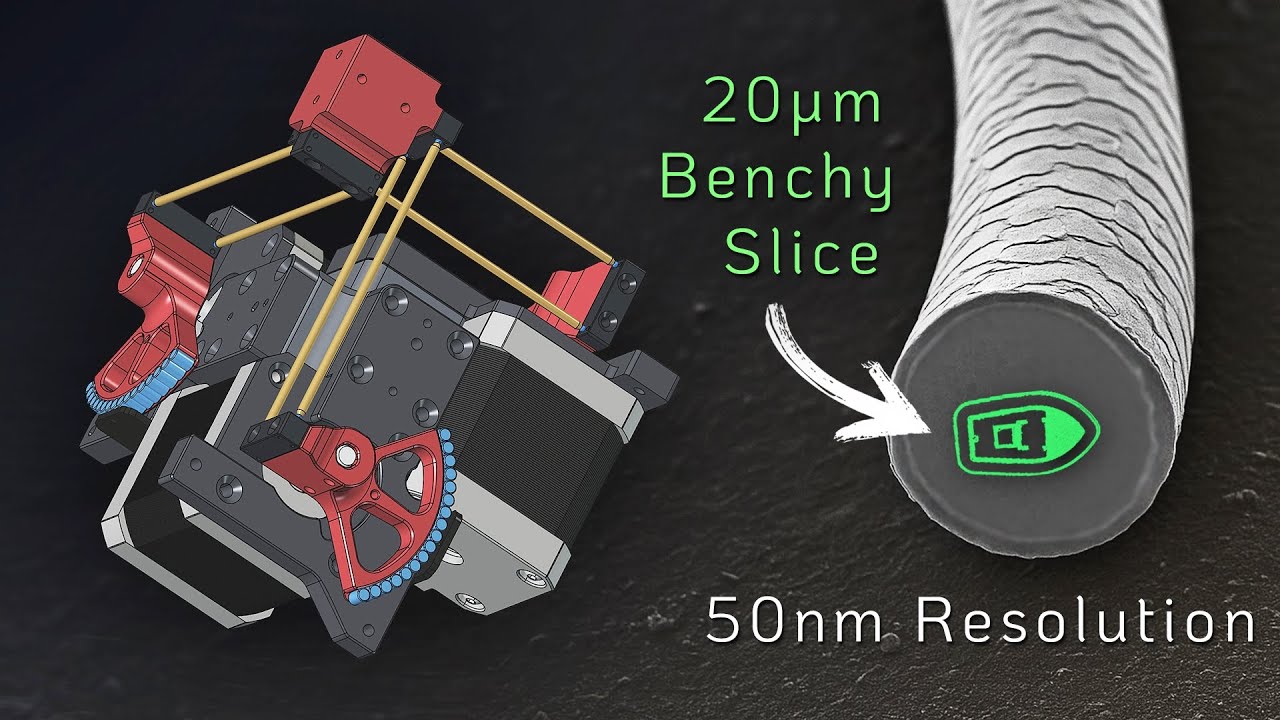
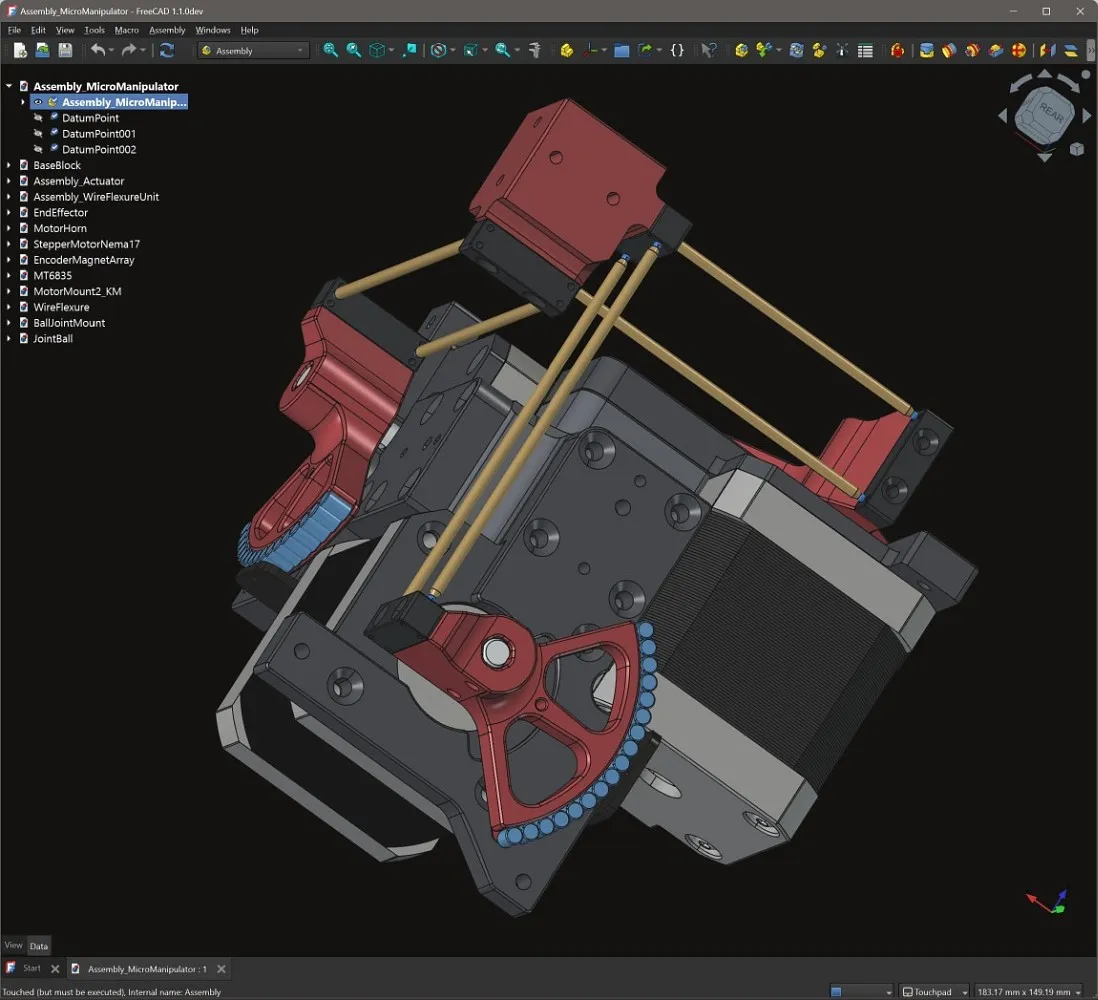
At its core, an Open MicroManipulator is a system designed for extremely fine, three-dimensional movement control, operating at dimensions smaller than a micrometer. This level of precision is essential for tasks that require delicate interaction with microscopic objects or environments. Such devices are often conceptualized and realized through detailed 3D models, as seen with the
Want your team to run this workflow with AI-native execution?
intricate designs associated with the project. A typical system combines mechanical components, miniature actuators, position sensors, control electronics, and software into one coordinated platform.
The word “open” is important. It generally indicates that the design files, documentation, firmware, or software are available for inspection and modification. Depending on the implementation, users may be able to build the manipulator from commercially available parts, adapt it to a particular microscope, or contribute improvements to the wider project. This approach lowers the barrier to experimentation and makes the platform easier to reproduce than a closed, proprietary instrument.
02Understanding Sub-Micrometer Motion
A micrometer, or micron, is one-millionth of a meter. For scale, the diameter of a human hair is commonly around 50 to 100 micrometers, although hair thickness varies considerably. Sub-micrometer motion therefore describes movement smaller than one micrometer, often involving positional changes of hundreds or tens of nanometers.
Precision should not be confused with accuracy. Resolution describes the smallest commanded or detected movement. Repeatability describes how closely the system returns to the same position after repeated motions. Accuracy describes how closely the actual position matches the intended position. A manipulator may report very fine increments while still requiring calibration to achieve reliable absolute positioning.
Other terms are equally important:
Stability is the ability to hold a position without unwanted drift.
Stiffness describes resistance to deformation under an applied force.
Backlash is lost motion caused by mechanical play, especially in screw-driven mechanisms.
Hysteresis occurs when the path taken to a position affects the final position.
Bandwidth indicates how quickly the system can respond to changes in a command or disturbance.
A useful design does not simply maximize one specification. Increasing travel range, for example, can make it more difficult to maintain high stiffness. Increasing speed can introduce vibration. Reducing the size of a mechanism can make it more sensitive to thermal changes and manufacturing tolerances. Sub-micrometer motion control is consequently a system-engineering problem rather than a single-component feature.
03The Mechanical Architecture
A three-dimensional manipulator normally provides independent movement along the X, Y, and Z axes. In a microscope-mounted configuration, X and Y commonly control lateral movement across the specimen, while Z changes the tool’s height relative to the sample. Some designs use separate linear stages for each axis; others use flexures, parallel mechanisms, or compact stacked assemblies.
Several actuator technologies can produce fine movement:
Stepper motors with lead screws offer affordability, availability, and relatively simple control. Their practical resolution can be improved through microstepping and mechanical reduction, but microstepping does not automatically guarantee equivalent physical accuracy.
DC motors with encoders provide closed-loop position control and can operate across a broad range of speeds. They require feedback electronics and a suitable control algorithm.
Piezoelectric actuators can achieve very small, rapid movements and are widely used in precision instruments. Their range may be limited, and their behavior can include hysteresis and creep.
Voice-coil actuators provide smooth, frictionless motion over a limited travel range. They are useful when fast and responsive positioning is more important than long travel.
Flexure mechanisms guide movement through elastic deformation rather than bearings or sliding surfaces. They eliminate backlash and friction, although their travel is generally constrained and their design must account for material fatigue.
The most suitable architecture depends on the application. A system intended to position a probe over several millimeters may combine a coarse motorized stage with a fine piezoelectric stage. This two-stage arrangement allows rapid navigation over a large area while reserving the finest actuator for final positioning.
Flexures and Mechanical Compliance
Flexure-based mechanisms are particularly attractive for open precision platforms because they can be manufactured with relatively few parts. A flexure consists of a carefully shaped section of material that bends in a controlled direction. Since it has no rolling or sliding contact, it avoids many sources of mechanical play.
However, a flexure is not perfectly rigid. Motion along one axis can produce unwanted displacement in another, a phenomenon known as cross-axis coupling. The shape, thickness, material, and mounting method all affect this behavior. Finite element analysis can help evaluate stress and deformation before a component is manufactured, while experimental calibration is still needed to verify real-world performance.
04Sensors and Closed-Loop Control
Open-loop control sends a command to an actuator without directly measuring the resulting position. This can be adequate for simple movements, but it is vulnerable to missed steps, friction, load changes, and thermal expansion. Closed-loop control adds a position sensor and continuously compares the measured location with the desired location.
Possible feedback devices include optical encoders, magnetic encoders, capacitive sensors, linear variable differential transformers, and interferometric systems. The choice depends on travel, environmental conditions, cost, and the required resolution.
The controller then uses this error to adjust the actuator command. A proportional-integral-derivative, or PID, controller is a common starting point. The proportional term responds to present error, the integral term compensates for persistent offset, and the derivative term anticipates changes based on the error’s rate of change.
At very small scales, an aggressive controller can create oscillation rather than precision. Sensor noise, mechanical resonance, electrical interference, and computational delays must all be considered. Filtering may reduce noise, but excessive filtering introduces delay. A well-tuned system therefore balances responsiveness against stability.
05Software as Part of the Instrument
The physical mechanism is only one part of a modern micro-manipulation platform. Software determines how users define movements, monitor status, calibrate the device, and integrate it with other laboratory equipment.
An open software stack may include:
A low-level firmware layer for generating actuator signals and reading sensors
A motion-control layer for trajectory planning and limit enforcement
A calibration module for correcting scale, offset, and axis alignment errors
A graphical interface for manual positioning
An application programming interface for scripts and external programs
Logging tools for recording positions, commands, faults, and environmental data
A practical user interface should support both direct control and repeatable automation. A researcher may first move the tool manually to inspect a specimen, then save those coordinates as waypoints for a later automated procedure. Scripts can also coordinate the manipulator with a camera, microscope focus system, illumination source, or force sensor.
Safety functions are essential. Software should prevent motion beyond known travel limits, detect invalid commands, and provide a clear emergency-stop path. Depending on the hardware, it may also monitor actuator temperature, motor current, sensor plausibility, and communication failures.
06Calibration: Turning Motion Into Reliable Position
No manufactured mechanism is perfectly aligned. Calibration establishes the relationship between commanded coordinates and physical coordinates. At a minimum, each axis may require an offset and a scale factor. More advanced calibration models compensate for nonlinearity, orthogonality errors, cross-axis coupling, and repeatable mechanical distortion.
A typical calibration workflow might include:
Homing the mechanism against a defined reference.
Measuring known positions across the usable travel range.
Comparing commanded coordinates with readings from a trusted reference sensor.
Fitting correction parameters.
Repeating measurements in both forward and reverse directions.
Recording uncertainty and validating the correction on independent points.
Environmental conditions should be included in this process. Temperature changes can expand structural components, alter sensor readings, and affect actuator performance. Vibrations from pumps, fans, nearby machinery, or building activity can also degrade measurements. Mounting the platform on a stable base and isolating it from avoidable vibration may produce a greater improvement than simply purchasing a higher-resolution sensor.
07Applications Across Research and Industry
Sub-micrometer 3D control is valuable wherever an object must be observed, positioned, contacted, or assembled at microscopic scale.
Biological and Medical Research
Micro-manipulators are used in cell biology, electrophysiology, developmental biology, and laboratory automation. A fine probe can be positioned near a cell membrane, while a pipette can be guided for injection or aspiration. In these situations, smooth motion and low vibration are often more important than maximum speed.
The platform can also support repeatable sample handling under a microscope. A researcher may define a trajectory for moving between multiple wells, collecting measurements at predetermined coordinates, or positioning a sensor relative to a biological structure.
Microfabrication and Semiconductor Work
Manufacturing and inspection processes frequently involve small features whose dimensions are measured in micrometers or nanometers. A precision stage can move a probe across a wafer, align an optical element, or position a tool during assembly and inspection. Open platforms are especially useful in research environments where the standard commercial instrument may not support a custom tool or workflow.
Optical Alignment
Lenses, mirrors, fibers, and detectors often require careful alignment along several axes. A three-axis manipulator can help maximize coupling between an optical fiber and a waveguide, center a beam through a small aperture, or adjust the distance between an objective and a specimen.
Optical systems also demonstrate why repeatability matters. If a component is moved during testing and must later return to its original position, the mechanism needs a stable coordinate reference and predictable backlash behavior.
Microscopy and Nanotechnology
The platform can position samples, probes, and sensors under optical, electron, or scanning-probe microscopes. In scanning applications, coordinated movement may be used to map a surface or locate a feature of interest. The manipulator may also serve as a coarse positioning system paired with a finer actuator integrated into the probe itself.
08Designing for Accessibility and Reproducibility
An open project becomes more useful when other people can reproduce it. Clear mechanical drawings should include dimensions, tolerances, material specifications, fastener information, and assembly orientation. Electronics documentation should identify connectors, voltage levels, current limits, and communication protocols. Software repositories benefit from versioned releases, example configurations, and instructions for diagnosing common faults.
Manufacturing choices affect accessibility. A design based entirely on specialized components may be precise but difficult for schools, independent researchers, and small laboratories to build. Conversely, a platform using 3D-printed parts may be inexpensive and adaptable, but printed materials can introduce creep, dimensional variation, and lower stiffness. A hybrid design can use printed structural components for prototypes while reserving precision-machined or flexure elements for critical motion paths.
Documentation should also explain limitations. Reporting a nominal step size without discussing load, travel, repeatability, or environmental conditions can create unrealistic expectations. Honest performance data helps users select the platform appropriately and identify where additional hardware is necessary.
09Human and AI Collaboration in Development
Developing a precision instrument requires mechanical design, electronics, firmware, software, metrology, and application knowledge. Teams can use AI tools to assist with repetitive engineering tasks such as generating test cases, organizing documentation, checking configuration files, or proposing software interfaces. AI can also help compare design alternatives and identify missing assumptions in a specification.
These tools do not replace measurement. A generated control algorithm still needs to be tested against the real mechanism, and a simulated deformation model must be compared with experimental data. The most reliable workflow combines computational assistance with human review, controlled experiments, and traceable calibration results.
In a modern laboratory or AI-enabled workplace, the manipulator can become part of a larger feedback loop. A vision system identifies a target, software calculates a coordinate, the manipulator moves into position, and new measurements confirm whether the task succeeded. Human operators remain responsible for defining acceptable outcomes, interpreting ambiguous observations, and handling exceptions.
10Challenges and Future Development
Several challenges remain central to sub-micrometer motion control. Miniaturization can reduce stiffness, increase sensitivity to heat, and make assembly more difficult. Sensors may provide high nominal resolution while being limited by noise or long-term drift. Communication delays can affect closed-loop performance, especially when control is distributed across multiple devices.
Future systems are likely to combine multiple scales of movement. A coarse axis may rapidly cover a large workspace, a fine axis may provide nanometer-level adjustment, and software may automatically switch between them. Force feedback could allow the manipulator to detect contact and reduce the risk of damaging fragile samples. Vision-based correction may compensate for changes in the specimen or tool position during an experiment.
Better interoperability is another important direction. Standardized interfaces would allow an open manipulator to work with different microscopes, cameras, sensors, and laboratory automation platforms. This would make it easier to replace individual components without redesigning the entire system.
11Conclusion
The Open MicroManipulator illustrates how precision engineering can be made more adaptable through open mechanical designs, accessible electronics, and extensible software. Its value lies not only in the ability to command very small movements, but in combining resolution with stability, calibration, feedback, and practical usability.
For researchers, educators, and developers, such a platform provides a foundation for experimentation at the boundary between the visible and microscopic worlds. It can support delicate biological procedures, optical alignment, microfabrication, automated inspection, and many applications that have yet to be defined. As open hardware communities continue to refine their designs and share reliable methods, sub-micrometer 3D motion control can become less of a specialized capability and more of a flexible building block for the future of scientific work.
For Open MicroManipulator – A sub-micrometer 3D motion control plattform, Nonilion can be used as the practical AI-office example: a shared workspace where human teammates and AI agents keep discussion, decisions, and execution connected.
The reason Open MicroManipulator – A sub-micrometer 3D motion control plattform keeps returning to Nonilion is simple: the topic becomes more useful when it turns into coordinated work, not just another article, chat, or dashboard.
12Why This Trend Matters for Nonilion
This trend matters to Nonilion because it points to a bigger change: teams are moving from simple calls toward persistent, AI-supported collaboration spaces. Nonilion can bridge live presence, meeting context, avatars, and follow-up work so the trend becomes a usable workflow instead of a headline.
13Shareable Extracts
The trend is not just "Open MicroManipulator: Mastering Sub-Micrometer 3D Motion Control for the Future of Work" - it is a signal that team coordination is becoming the next competitive edge.
Hot take: the teams that win from this shift will not be the ones with more meetings; they will be the ones with clearer shared context after every meeting.
If open micromanipulator: mastering sub-micrometer 3d motion control for the future of work keeps moving this fast, remote teams need a workspace where conversation, presence, and follow-up stay connected.
Open MicroManipulator: Mastering Sub-Micrometer 3D Motion Control for the Future of Work In an era defined by precision and automation, the development of sophisticated tools capable of operating at microscopic scales is paramount.
The Open MicroManipulator – A sub-micrometer 3D motion control platform represents a critical advancement in this domain, enabling unprecedented control over the unseen world.
14Social Hooks
Everyone is talking about Open MicroManipulator: Mastering Sub-Micrometer 3D Motion Control for the Future of Work. The overlooked part is what happens to team workflows after the headline fades.
The uncomfortable question behind Open MicroManipulator: Mastering Sub-Micrometer 3D Motion Control for the Future of Work: are teams adapting their collaboration systems fast enough?
This is not a meeting trend. It is a coordination trend, and products like Nonilion sit right in the middle of that shift.
This article on Open MicroManipulator – A sub-micrometer 3D motion control plattform was generated by the Nonilion AI blog workflow using web research inputs and AI-assisted synthesis.