Home/Blog/Navigating Pet Food Recalls: A Deep Dive into Fromm and Oma's Pride Recalls and the Future of Trust in an AI-Driven World
human + AI workflows
Navigating Pet Food Recalls: A Deep Dive into Fromm and Oma's Pride Recalls and the Future of Trust in an AI-Driven World
Navigating Pet Food Recalls: A Deep Dive into Fromm and Oma's Pride Recalls and the Future of Trust in an AI-Driven World In an increasingly interconnected world, the integrity of
14 MIN READ
23 Aug 2026
human + AI workflows
Navigating Pet Food Recalls: A Deep Dive into Fromm and Oma's Pride Recalls and the Future of Trust in an AI-Driven World
In an increasingly interconnected world, the integrity of our supply chains, particularly for the food we consume and provide to our beloved pets, is paramount. Recent events, such as the Fromm and Oma's Pride recalls, serve as stark reminders of the vulnerabilities inherent in these systems. These incidents not only highlight the critical importance of stringent quality control but also underscore the profound impact that a breach of trust can have on consumers. As we delve into the specifics of these significant pet food recalls, we also consider how advanced technologies, particularly within AI offices, could reshape our approach to product safety and crisis management, fostering a new era of human + AI collaboration.
01The Unseen Costs of Trust Betrayed: Examining the Fromm and Oma's Pride Recalls
The recent brought critical safety concerns to the forefront, impacting pet owners across several states. These incidents involved distinct hazards that necessitated immediate action from the manufacturers.
Fromm and Oma's Pride recalls
Want your team to run this workflow with AI-native execution?
Fromm Family Foods LLC initiated a recall concerning its wet canned dog food. This recall, announced on August 21, 2026, was prompted by the potential for metal contamination within the products. The presence of metal fragments in pet food poses a significant physical risk to animals, potentially leading to internal injuries or digestive complications. The specific products affected were two types of Fromm canned dog foods, indicating a targeted issue within their production line. Such contamination underscores the need for meticulous oversight throughout the manufacturing process, from ingredient sourcing to final packaging.
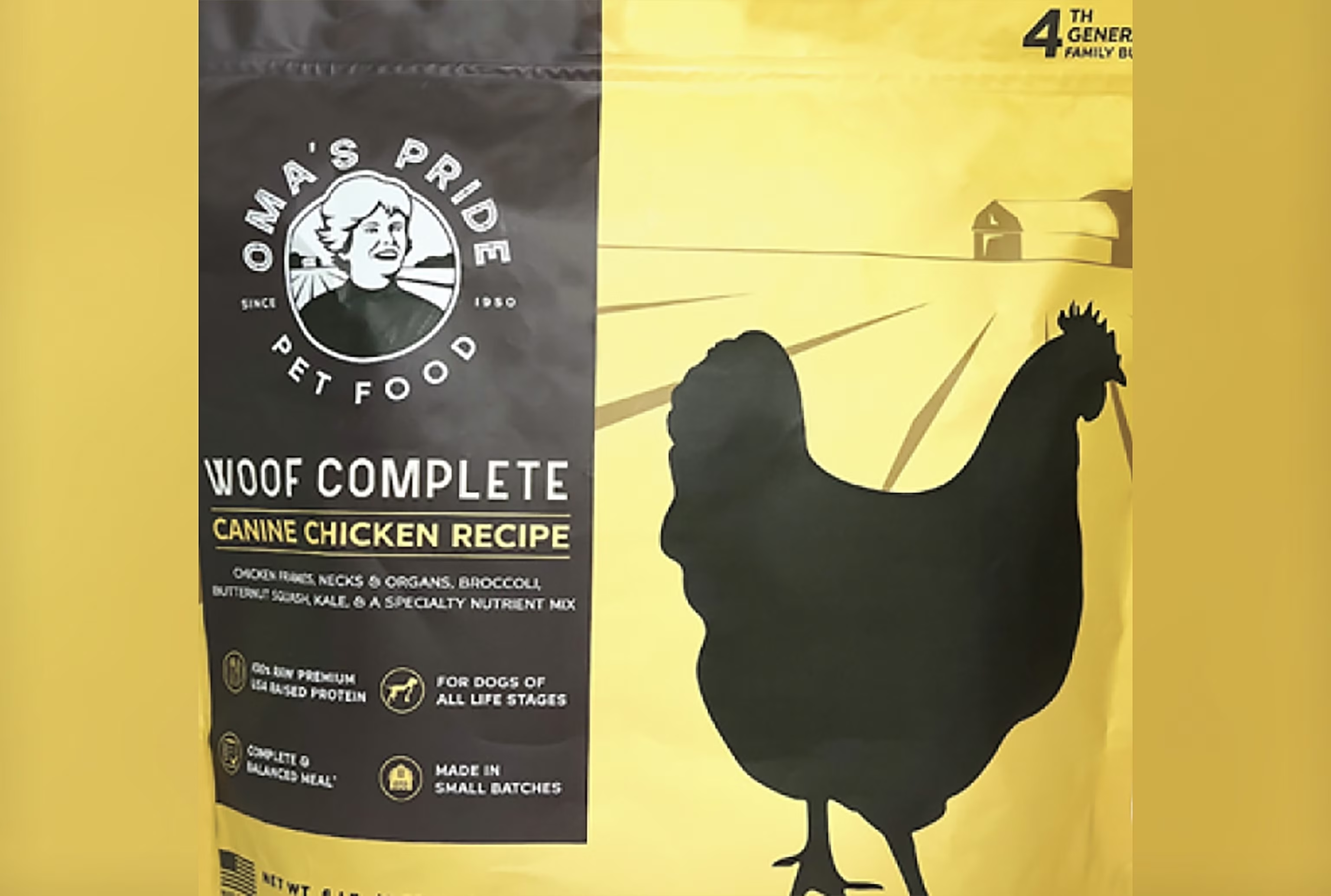
Separately, Oma's Pride issued a voluntary recall for one lot of its raw canine food due to potential Salmonella contamination. This announcement came earlier, on August 17, 2026. The product in question was the Woof Complete Canine Chicken Recipe, packaged in 6-pound bags. Each bag contained 12 individually wrapped, 8-ounce vacuum-sealed portions of food, identified by lot code BB012729. This specific lot was distributed to retailers and wholesalers across a broad geographic area, including Arizona, California, Indiana, Kentucky, Louisiana, Maryland, New Jersey, Nevada, New York, Pennsylvania, and Virginia. The company, a Connecticut-based pet food manufacturer, made the recall announcement available on the U.S. Food and Drug Administration (FDA) website, emphasizing the seriousness of the potential health risk.
The Oma's Pride recalls raw dog food over Salmonella concern is particularly significant due to the zoonotic nature of Salmonella, meaning it can be transmitted between animals and humans. This dual threat elevates the urgency of such recalls. The broad distribution of the affected lot meant that a wide network of consumers and retailers needed to be promptly informed and take action. These events serve as a powerful reminder of the complex challenges faced by pet food manufacturers in maintaining rigorous safety standards across extensive supply chains.
02Understanding the Hazards: Salmonella and Metal Fragments in Pet Food
The contaminants identified in the Fromm and Oma's Pride recalls represent two distinct yet equally serious threats to pet health and, in some cases, human well-being. Understanding the specific dangers associated with each is crucial for appreciating the gravity of these recall events.
Salmonella contamination, as seen in the Oma's Pride recall, is a bacterial pathogen that can cause severe gastrointestinal illness. In dogs, symptoms of salmonellosis can include lethargy, diarrhea (which may be bloody), fever, vomiting, and decreased appetite. While some dogs may be asymptomatic carriers, they can still shed the bacteria and infect other animals or humans. For humans, contact with contaminated pet food or an infected pet can lead to symptoms such as fever, diarrhea, nausea, vomiting, and abdominal pain. In vulnerable populations, such as young children, the elderly, or immunocompromised individuals, Salmonella infections can be particularly dangerous, potentially leading to severe complications requiring hospitalization. This risk highlights why
pet food recalls involving bacterial contamination demand immediate and thorough response measures.
Metal contamination, as identified in the Fromm recall, presents a different kind of danger. Unlike bacteria, metal fragments are a physical hazard that can cause cuts, punctures, choking, or blockages in the mouth, throat, stomach, or intestines. Even small pieces can be harmful, especially for smaller dogs or cats. In some cases, symptoms may not appear right away, which makes the issue even more concerning. A pet may continue eating normally while internal damage develops behind the scenes. Warning signs can include vomiting, abdominal pain, reduced appetite, lethargy, or signs of distress during or after eating. Because of that delay, pet owners are often advised to stop feeding the product immediately, even if their animal seems fine.
These two recall types also illustrate an important point: not all food safety failures are the same, but all require speed, transparency, and coordination. A bacterial contamination issue may call for sanitation reviews, environmental testing, and traceability across ingredients and finished goods. A foreign material issue may require equipment inspections, maintenance records, and packaging-line audits. In both cases, the underlying question is the same: where did the process break down, and how can it be prevented from happening again?
03What Pet Owners Should Do During a Recall
When a recall is announced, the first step is to identify whether the product in your home is affected. This means checking the brand, product name, package size, lot code, and expiration or best-by date against the official recall notice. For the Fromm and Oma's Pride recalls, this level of detail matters because recalls often apply only to specific lots or production runs rather than an entire brand line.
If you have the recalled product, stop feeding it immediately. Do not donate it, and do not give it to another pet, even if the package appears unopened. Store it safely away from children and animals until you can follow the manufacturer’s instructions for disposal or return. In some cases, companies ask consumers to discard the product and then submit proof of purchase for a refund. Others may request that the product be returned to the place of purchase. Always follow the recall notice exactly.
It is also wise to clean and sanitize any bowls, scoops, storage bins, countertops, or other surfaces that came into contact with the food. For raw pet food recalls in particular, this step is essential because bacteria can spread easily through cross-contamination. Wash your hands thoroughly after handling any potentially affected product, and be careful not to let pets lick your hands or surfaces until everything has been cleaned.
If your pet has already eaten the recalled food, monitor closely for symptoms and contact your veterinarian if you notice anything unusual. In the case of Salmonella exposure, even pets without symptoms can still pose a risk to people in the household. If a family member becomes ill after handling pet food or cleaning up after a pet, medical advice should be sought promptly.
04Why Recalls Happen Even in Established Brands
Many pet owners assume that recalls only happen with lesser-known or poorly managed brands, but the reality is more complicated. Established companies can still experience contamination, equipment failure, supplier issues, or packaging errors. Modern food production involves multiple layers of sourcing, processing, and distribution, and a problem at any one of those stages can affect the final product.
Ingredient sourcing is one common vulnerability. A manufacturer may rely on outside suppliers for raw materials, meats, vitamins, or packaging components. If one supplier introduces contamination or fails to meet specifications, the issue can move downstream quickly. Manufacturing facilities also depend on machinery that must be maintained and calibrated. If a piece of equipment begins to wear down or break apart, foreign material such as metal fragments can enter the product stream.
Another factor is the complexity of traceability. When a recall occurs, companies need to identify exactly which products were affected, where they were shipped, and which retailers or consumers may have received them. That process is easier when records are complete and accurate, but it becomes much harder if data is fragmented across systems or handled manually. The speed of recall communication often depends on how well a company can trace each lot from production to shelf.
05The Role of Transparency in Rebuilding Confidence
A recall is not just a safety event; it is also a communication test. Consumers want to know what happened, what products are affected, what risks exist, and what they should do next. Clear, timely, and honest communication can reduce confusion and help prevent harm. Delayed or vague messaging, on the other hand, can deepen distrust and leave pet owners uncertain about whether their animals are safe.
This is where modern crisis communication practices matter. A strong recall response should include direct notices on company websites, retailer alerts, regulatory filings, and customer support channels. It should also use plain language. Technical terms may be necessary in some contexts, but the core instructions should be easy to understand: stop feeding the product, check the lot code, dispose of or return the item, and contact a veterinarian if your pet shows symptoms.
In the age of digital media, recall information can spread quickly, but so can misinformation. Pet owners may see partial details on social platforms before the full recall notice is available. That makes it even more important for manufacturers and regulators to publish accurate, searchable, and updated information as soon as possible. The faster the public can verify whether a product is affected, the better the chances of preventing illness.
06How AI Could Improve Recall Detection and Response
The Fromm and Oma's Pride recalls also point toward a broader conversation about the future of food safety. As supply chains become more complex, AI-powered tools may help companies detect problems earlier and respond more effectively. In an AI-driven office environment, data from production lines, supplier audits, lab tests, and distribution records can be analyzed in real time to identify unusual patterns before they become full-scale recalls.
For example, AI systems could monitor sensor data from manufacturing equipment and flag abnormal vibration, temperature, or wear patterns that may indicate a risk of foreign material contamination. They could also scan batch records and quality-control logs for inconsistencies, helping human teams catch issues faster. In the case of microbial hazards like Salmonella, AI-assisted analytics could help detect trends in environmental testing results or ingredient sourcing data that suggest a contamination risk.
AI can also support recall communication. Automated workflows can help generate draft notices, identify affected customers from purchase records, and route alerts to the right internal teams. Human oversight remains essential, of course, especially when public health is involved. But by reducing the time spent on repetitive data review and administrative tasks, AI can free up people to focus on judgment, coordination, and decision-making.
The most effective model is not AI replacing humans, but human + AI collaboration. People bring context, ethics, and accountability. AI brings speed, pattern recognition, and scale. Together, they can strengthen the systems that protect pets and the families who care for them.
07Lessons for the Pet Food Industry
The recalls involving Fromm and Oma’s Pride offer several lessons for manufacturers, retailers, and regulators alike. First, prevention must remain the priority. That means investing in equipment maintenance, environmental monitoring, supplier verification, and robust testing protocols. Second, traceability systems should be designed for speed. When a problem is discovered, the company should be able to identify affected lots quickly and communicate clearly.
Third, recall readiness should be treated as part of normal operations, not an emergency afterthought. Companies that regularly test their response plans are better prepared to act decisively when something goes wrong. This includes training staff, reviewing escalation procedures, and ensuring that customer service teams know how to answer questions accurately.
For retailers, the lesson is to maintain strong inventory controls and act quickly when recall notices are received. For consumers, the lesson is to stay informed, save packaging when possible, and check recall databases periodically, especially if they feed their pets raw, canned, or minimally processed foods.
08A Safer Future Depends on Better Systems
No food system is perfect, and recalls will likely continue to happen. But each incident is also an opportunity to improve. The challenge is not to eliminate every risk overnight, but to build systems that detect problems earlier, communicate more clearly, and reduce harm when failures occur.
The Fromm and Oma's Pride recalls remind us that trust is earned through consistency, transparency, and accountability. They also show that the future of pet food safety may depend on more than traditional quality control alone. With thoughtful use of AI, stronger data systems, and a commitment to human oversight, the industry can move toward a model that is not only more efficient, but also more resilient.
For pet owners, the takeaway is simple: stay alert, read recall notices carefully, and act quickly when a product is flagged. For manufacturers, the message is equally clear: safety is not just a regulatory requirement, but the foundation of long-term trust.
For fromm and oma's pride recalls, Nonilion can be used as the practical AI-office example: a shared workspace where human teammates and AI agents keep discussion, decisions, and execution connected.
The reason fromm and oma's pride recalls keeps returning to Nonilion is simple: the topic becomes more useful when it turns into coordinated work, not just another article, chat, or dashboard.
09Why This Trend Matters for Nonilion
This trend matters to Nonilion because it points to a bigger change: teams are moving from simple calls toward persistent, AI-supported collaboration spaces. Nonilion can bridge live presence, meeting context, avatars, and follow-up work so the trend becomes a usable workflow instead of a headline.
10Shareable Extracts
The trend is not just "Navigating Pet Food Recalls: A Deep Dive into Fromm and Oma's Pride Recalls and the Future of Trust in an AI-Driven World" - it is a signal that team coordination is becoming the next competitive edge.
Hot take: the teams that win from this shift will not be the ones with more meetings; they will be the ones with clearer shared context after every meeting.
If navigating pet food recalls: a deep dive into fromm and oma's pride recalls and the future of trust in an ai-driven world keeps moving this fast, remote teams need a workspace where conversation, presence, and follow-up stay connected.
Recent events, such as the Fromm and Oma's Pride recalls, serve as stark reminders of the vulnerabilities inherent in these systems.
These incidents not only highlight the critical importance of stringent quality control but also underscore the profound impact that a breach of trust can have on consumers.
11Social Hooks
Everyone is talking about Navigating Pet Food Recalls: A Deep Dive into Fromm and Oma's Pride Recalls and the Future of Trust in an AI-Driven World. The overlooked part is what happens to team workflows after the headline fades.
The uncomfortable question behind Navigating Pet Food Recalls: A Deep Dive into Fromm and Oma's Pride Recalls and the Future of Trust in an AI-Driven World: are teams adapting their collaboration systems fast enough?
This is not a meeting trend. It is a coordination trend, and products like Nonilion sit right in the middle of that shift.