


Team Operations
Claw Code: The Open-Source Architect of AI Coding Collaboration
Explore Claw Code, the open-source framework for AI coding agents. Discover how it drives transparency, security, and human+AI collaboration, as envisioned by platforms like Nonili

Claw Code: An Open-Source Framework for AI Coding Collaboration
The evolution of Artificial Intelligence is influencing how complex tasks are approached, including software development. As AI agents develop, their potential to contribute to the coding lifecycle is becoming more apparent. Frameworks like Claw Code represent a development in AI agent architectures and their potential integration into collaborative workflows. Platforms like Nonilion are exploring how AI agents can function within a unified workspace, potentially enhancing coordination and workflow automation.
01What is Claw Code?
Claw Code is an open-source AI coding agent framework. It is described as a "clean-room rewrite" of the architecture behind Anthropic's Claude Code. This project was initiated following the public exposure of Claude Code's source code. The developers state that Claw Code was developed from scratch, adhering to architectural principles without copying proprietary code. This approach emphasizes transparency and open development.
Want your team to run this workflow with AI-native execution?
The project has seen community adoption, reaching a significant number of stars on GitHub. This growth suggests interest in transparent AI agent architectures. Claw Code provides a user experience that mirrors Claude Code's command-line interface (CLI), with commands such as /edit, /plan, /run, and /test, which may assist users transitioning from existing tools.
02Why Claw Code Matters: Transparency and Community in AI Development
The development of Claw Code highlights aspects of open-source development in the AI space. Claw Code's emergence as a community-driven, transparent alternative addresses potential concerns related to closed systems.
Transparency and Verifiability: As an open-source project, Claw Code's architecture is accessible for review. This can be important for understanding the functioning of AI systems involved in tasks like code generation. Access to the architecture may allow developers to gain insight into how the agent operates.
Community Oversight: Open-source development can involve a wider community of developers who may identify and contribute to improvements. Claw Code's publicly accessible architecture can benefit from this collective engagement.
Innovation: Open-source frameworks can facilitate access to AI capabilities, potentially allowing a broader range of developers to experiment and build upon the technology. The community growth around Claw Code may exemplify this.
Empowering AI Agents: Claw Code provides a framework for AI agents designed for coding tasks. This suggests potential for AI to engage in more complex functions beyond simple code completion, such as planning, execution, and testing.
03How Claw Code Enables Human + AI Collaboration
Claw Code's significance relates to the practical application of AI agents in collaborative environments. By providing a framework for AI coding agents, it may support human-AI partnerships.
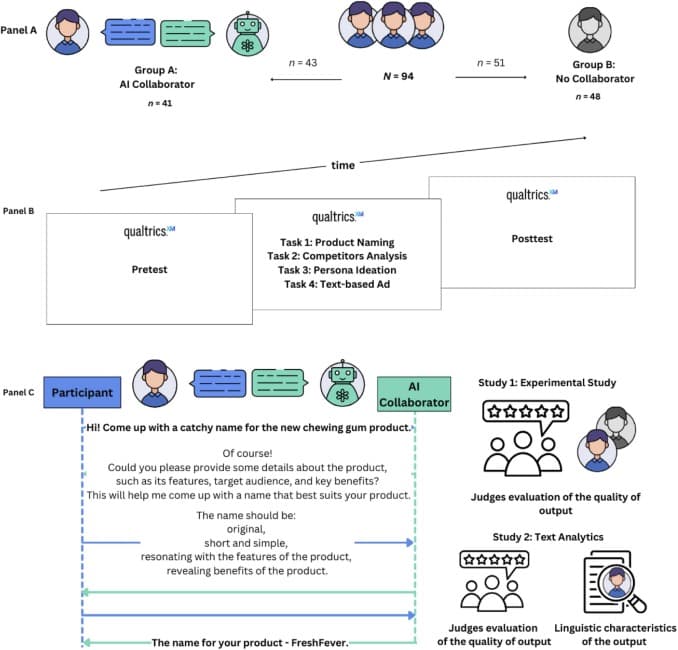
In scenarios involving code-related tasks, an AI agent utilizing Claw Code could potentially execute planned actions, run tests, and report findings. This could allow human developers to focus on higher-level tasks such as architectural decisions and strategic planning. This division of labor, where AI handles specific tasks and humans provide oversight, is a model for human + AI collaboration.
The user experience of Claw Code, by mirroring existing tools, may lower the barrier for human developers to utilize AI coding agents, potentially fostering a more integrated workflow.
04The Future of AI Offices: Orchestrating Specialized Agents
The development of specialized AI agents, such as those enabled by frameworks like Claw Code, is relevant to the concept of the AI office. These agents can be viewed as specialized digital tools.
The Role of AI Offices in the Age of Specialized Agents
An AI office platform, such as Nonilion, can serve as an environment for integrating and managing AI capabilities. While Claw Code might provide the foundation for an AI coding agent, an AI office platform could offer the infrastructure for multiple specialized agents – coding agents, planning agents, communication agents, research agents – to potentially work together.
Consider a project requiring code development, documentation, and communication:
- The Coding Agent (potentially Claw Code powered): Could handle code writing, testing, and refactoring.
- The Planning Agent: Might assist in breaking down project requirements.
- The Documentation Agent: Could potentially generate or update project documentation.
- The Communication Agent: May manage updates or synthesize discussions.
Within a platform like Nonilion, these agents, alongside human team members, could operate within a shared workspace. This facilitates asynchronous execution and workflow automation. Human team members could review AI-generated outputs and provide feedback. Nonilion aims to provide an interface where agent outputs are presented, and human input can be integrated into workflows, enabling teams to achieve collective goals.
00Where Does Claw Code Fit in the Nonilion Ecosystem?
Claw Code represents a component for AI agents that could be part of future AI office environments. Its open-source nature and focus on coding agent architecture make it a potential candidate for integration into platforms like [this platform](https://this platform.com/).
Within the [this platform](https://this platform.com/) ecosystem, a Claw Code-powered agent could be utilized for software development tasks. This could allow human developers to concentrate on architectural design, user experience, and strategic product direction, while the AI agent handles coding, debugging, and testing. This human + AI co-working model is an area that platforms like [this platform](https://this platform.com/) are designed to facilitate, potentially enabling teams to increase productivity and innovation. Orchestrating and managing specialized agents within a cohesive workflow is how platforms like [this platform](https://this platform.com/) aim to leverage AI capabilities for team achievements.
06Conclusion: The Dawn of Collaborative AI Development
Claw Code is an open-source project that contributes to the development of AI coding agents. Its emphasis on transparency and community development offers a model for AI tooling. Frameworks like Claw Code may play a role in the development and deployment of increasingly sophisticated AI agents.
The integration of AI agents into collaborative environments is key. Platforms like [this platform](https://this platform.com/) are important for orchestrating these specialized agents, enabling them to work alongside humans in a potentially seamless and productive manner. The future of work may involve collaboration where human capabilities are augmented by intelligent AI agents working within integrated virtual office environments.
07Sources and Author
Sources
-
Claw Code — Open-Source AI Coding Agent Framework ... claw-code.codes
-
GitHub - ultraworkers/claw-code-parity: Join Discord: https ... github.com/ultraworkers/claw-code-parity
-
Claw‑Code: Clean Rewrite of Claude's Harness (with legal ... www.reddit.com/r/ClaudeCode/comments/1s8sj9m/clawcode_clean_rewrite...
Author
This article on claw-code was generated by the Nonilion AI blog workflow using web research inputs and AI-assisted synthesis.