


AI-native teamwork
AI Collaboration: From Concept to Co-Worker in the Virtual Office
Explore the evolution of AI collaboration, moving beyond tools to AI agents as co-workers in virtual offices. Discover Nonilion's role in building these synergistic ecosystems.

AI Collaboration: From Concept to Co-Worker in the Virtual Office
The concept of AI collaboration is evolving from theoretical discussions to practical applications. AI agents are emerging as active participants within shared workspaces, potentially redefining how teams achieve complex goals through integrated workflows. At Nonilion, we are focused on building software that supports ecosystems where human and AI agents can work together.
01What is AI Collaboration?
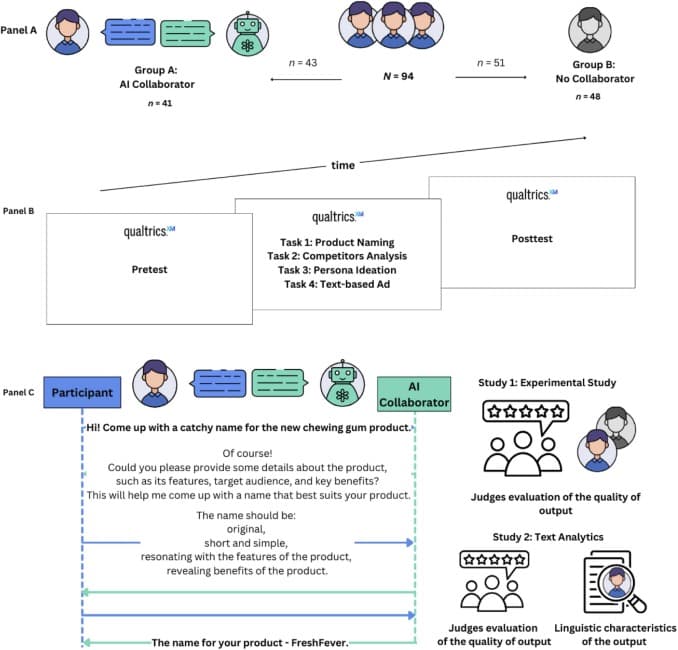
AI collaboration refers to the partnership between human intelligence and artificial intelligence systems to accomplish tasks. This partnership leverages complementary strengths.
Want your team to run this workflow with AI-native execution?
Complementary Capabilities: Humans possess strengths in creativity, critical thinking, emotional intelligence, and complex problem-solving. AI systems can offer speed, data processing capabilities, and pattern recognition. As IBM Think highlights, this partnership can be built on distinct yet complementary strengths.
Beyond Automation: While AI can automate repetitive tasks, collaboration can involve AI agents contributing to tasks alongside human team members. This moves beyond simple task automation to a more integrated approach.
The Rise of the AI Agent: Sophisticated AI agents are capable of understanding context, managing workflows, and interacting with human colleagues. These agents can contribute to team objectives, as explored by Salesforce.
02Why is AI Collaboration Important for the Future of Work?
The landscape of work is changing, influenced by the increasing sophistication of AI and evolving workforce demands.
Unlocking New Efficiencies: AI has the potential to automate aspects of working hours. Capturing this value may hinge on effective human-AI integration. Collaboration could be a key to unlocking this potential, potentially leading to enhanced productivity.
Adapting to Evolving Skill Demands: The World Economic Forum highlights a shift in required job market skills. Human-AI collaboration may foster the development of new competencies, such as prompt engineering, AI oversight, and interpreting AI-generated insights, potentially making individuals and organizations more adaptable.
Bridging the Gap in Complex Problem-Solving: Many challenges are complex for humans or AI to solve in isolation. Collaborative approaches, combining human intuition and AI’s analytical power, may be essential for tackling intricate issues.
Enhancing Team Dynamics: AI collaboration can potentially create more effective teams. AI agents can handle data analysis, research, and initial drafting, freeing up human collaborators to focus on higher-level strategy, creative input, and decision-making.
03How AI Collaboration is Being Realized
The potential benefits of AI collaboration are being translated into practical applications through the development of environments where humans and AI agents can interact.
Generative AI as a Collaborative Partner: Generative AI tools are being integrated into workflows for co-creation of content, code, and design. This allows teams to iterate faster and explore a wider range of possibilities, as suggested by AVID Open Access.
AI Agents in Workflow Management: AI agents can manage project pipelines, schedule meetings, synthesize information, and draft communications. This can free human team members from administrative burdens and allow them to concentrate on core tasks.
The Power of Shared Virtual Environments: Advanced implementations of AI collaboration occur within dedicated virtual workspaces designed to facilitate interaction, knowledge sharing, and task coordination between human and AI team members. This is where the concept of an "AI office" can take shape.
04The Future of AI Offices: A Collaborative Ecosystem
The concept of an "AI office" represents a potential evolution in workplace design. It involves creating an integrated ecosystem where human and AI agents function as a unit. This is an area where Nonilion is exploring new models.
From Tools to Colleagues: In some settings, AI is viewed as a tool. In an AI office context, AI agents could be designed as active collaborators, contributing to team objectives, participating in discussions (via synthesized summaries and insights), and taking ownership of specific tasks. This could change the dynamic of teamwork.
Seamless Remote and Asynchronous Work: A well-designed AI office could facilitate remote coordination and asynchronous execution. AI agents could continue working on tasks, processing information, and preparing updates when human team members are offline. This may ensure continuous progress and reduce bottlenecks. For instance, an AI agent could synthesize meeting notes and distribute action items, potentially aligning the team regardless of availability.
Optimized Workflows from Ideation to Production: The integration of human and AI intelligence within a unified workspace could streamline workflows, potentially leading to faster ideation cycles, more efficient research and development, and quicker iteration from concept to final product. Connecting the right people (human and AI) around ideas, as suggested by platforms like Collaboration.AI, could become more tangible within such an environment.
Governing the Collaborative Future: As AI becomes more integrated, the need for robust governance becomes important. Future AI offices may require frameworks that ensure ethical development and responsible deployment, especially within collaborative settings, as highlighted by The AI Collaborative.
05Where Do We Go From Here?
The journey towards widespread AI collaboration is ongoing. The future of work will likely be shaped by how effectively we can integrate human and artificial intelligence.
The Imperative of Human-AI Collaboration Skills: Mastering human-AI collaboration is potentially becoming a critical skill. Understanding how to communicate effectively with AI, interpret its outputs, and leverage its strengths may be essential for professional success, as pointed out by Salesforce.
AI as a Catalyst for Innovation: By potentially offloading routine tasks and augmenting analytical capabilities, AI collaboration could free up human cognitive resources for more creative and strategic endeavors. This could lead to advancements in research, product development, and problem-solving.
The Evolution of Team Structures: We may see a rise in hybrid teams, composed of both human experts and specialized AI agents. These teams could be more agile, efficient, and capable of tackling complex challenges. Nonilion's model, where AI agents could actively participate in a shared virtual workspace, exemplifies this future, potentially enabling new levels of team coordination and workflow automation.
06Conclusion: Embracing the Collaborative Frontier
AI collaboration is evolving. By understanding its nuances – from the complementary strengths of humans and AI to the practical implementation in shared virtual workspaces – organizations can position themselves to explore this transformation. The power may lie not in simply using AI, but in partnering with it, fostering an environment where human ingenuity and artificial intelligence converge to achieve outcomes. This integrated approach, exemplified by the operational model of an AI office like this platform, is set to influence productivity, innovation, and teamwork.
07Sources and Author
Sources
-
Collaboration.AI | Unleash the power of relationships collaboration.ai
-
Human-AI Collaboration: What is it and Why is it Important? www.ibm.com/think/topics/human-ai-collaboration
-
AI Collaborative collaborative.ai
-
AI and Collaboration
Author
This article on AI Collaboration was generated by the Nonilion AI blog workflow using web research inputs and AI-assisted synthesis.