

Developer Productivity
openclaw: What Developers Need to Know
The Collaborative Leap: How Personal AI Agents Inform the AI Office The promise of artificial intelligence that "actually does things" has long been a captivating vision. From scie
01The Collaborative Leap: How Personal AI Agents Inform the AI Office
The promise of artificial intelligence that "actually does things" has long been a captivating vision. From science fiction to our daily lives, we've yearned for digital assistants capable of more than just answering questions – agents that can proactively manage our lives, execute tasks, and truly augment our capabilities. In this evolving landscape, tools like OpenClaw emerge as compelling examples, showcasing the power of personal, autonomous AI agents. Yet, their existence prompts consideration of how we transition from empowering individual efficiency to fostering collective intelligence within a collaborative AI office?
This article explores the rise of personal AI assistants, using OpenClaw as a lens, and then pivots to the broader implications for team productivity and the future of work. While personal agents offer a glimpse into direct human-AI interaction, a significant next step lies in their integration into shared, collaborative environments. Platforms like Nonilion aim to address this shift, providing AI-powered collaboration where human teams and AI agents can work together in a unified virtual workspace.
I. The Rise of the Personal AI Assistant: What is OpenClaw?
Want your team to run this workflow with AI-native execution?
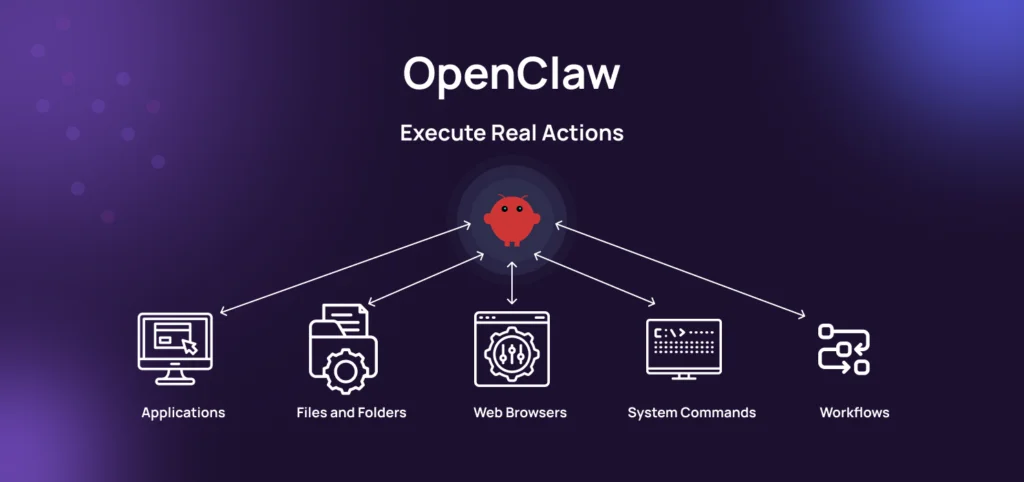
The concept of a personal AI assistant that can clear your inbox, manage your calendar, or even check you in for flights, all from the comfort of your preferred chat app, is undeniably appealing. OpenClaw represents a development in this direction. As a free and open-source autonomous artificial intelligence agent, OpenClaw operates on your own devices, leveraging large language models (LLMs) to execute tasks via familiar messaging platforms like WhatsApp or Telegram.
Its core appeal lies in several key areas:
Action-Oriented Utility: OpenClaw moves beyond mere information retrieval, focusing on direct task execution. It's designed to "do things," translating natural language commands into actionable steps across various digital services.
Self-Hosted & Open-Source: For many, the ability to run an AI assistant on their own hardware can offer enhanced privacy and control. This open-source nature also fosters community-driven development and transparency, appealing to users wary of cloud-centric solutions.
Accessibility & Ease of Use: By integrating with existing chat applications and offering a relatively straightforward installation process across multiple operating systems, OpenClaw lowers the barrier to entry for individuals eager to experiment with autonomous AI.
OpenClaw, therefore, serves as a demonstration of individual AI agency. It shows us what's possible when AI is given the autonomy to act on our behalf. However, while such tools empower individuals, they also prompt a larger, more strategic question for organizations: how do these individual capabilities scale to foster collective intelligence and team productivity? This is where the concept of an AI office, which platforms like Nonilion aim to support, can be considered for enabling human + AI co-working on shared objectives.
II. The Evolution of AI Agents: Beyond Personal Efficiency
The development of AI has shown a conceptual shift – from simple automation scripts and task-specific tools towards more autonomous agents. This evolution suggests a move from AI merely assisting to AI potentially participating in workflows.
From Tools to Agents: Historically, AI has been integrated into software as features: a spell-checker, a recommendation engine, a chatbot. These are tools that augment specific functions. Autonomous agents, however, suggest a different approach. They are designed to understand context, make decisions, execute multi-step tasks, and can potentially learn from interactions. This move from passive tool to more active agent is a key aspect of solutions like OpenClaw – they aim to demonstrate AI that can truly "do things" without constant, explicit human prompting for every micro-step.
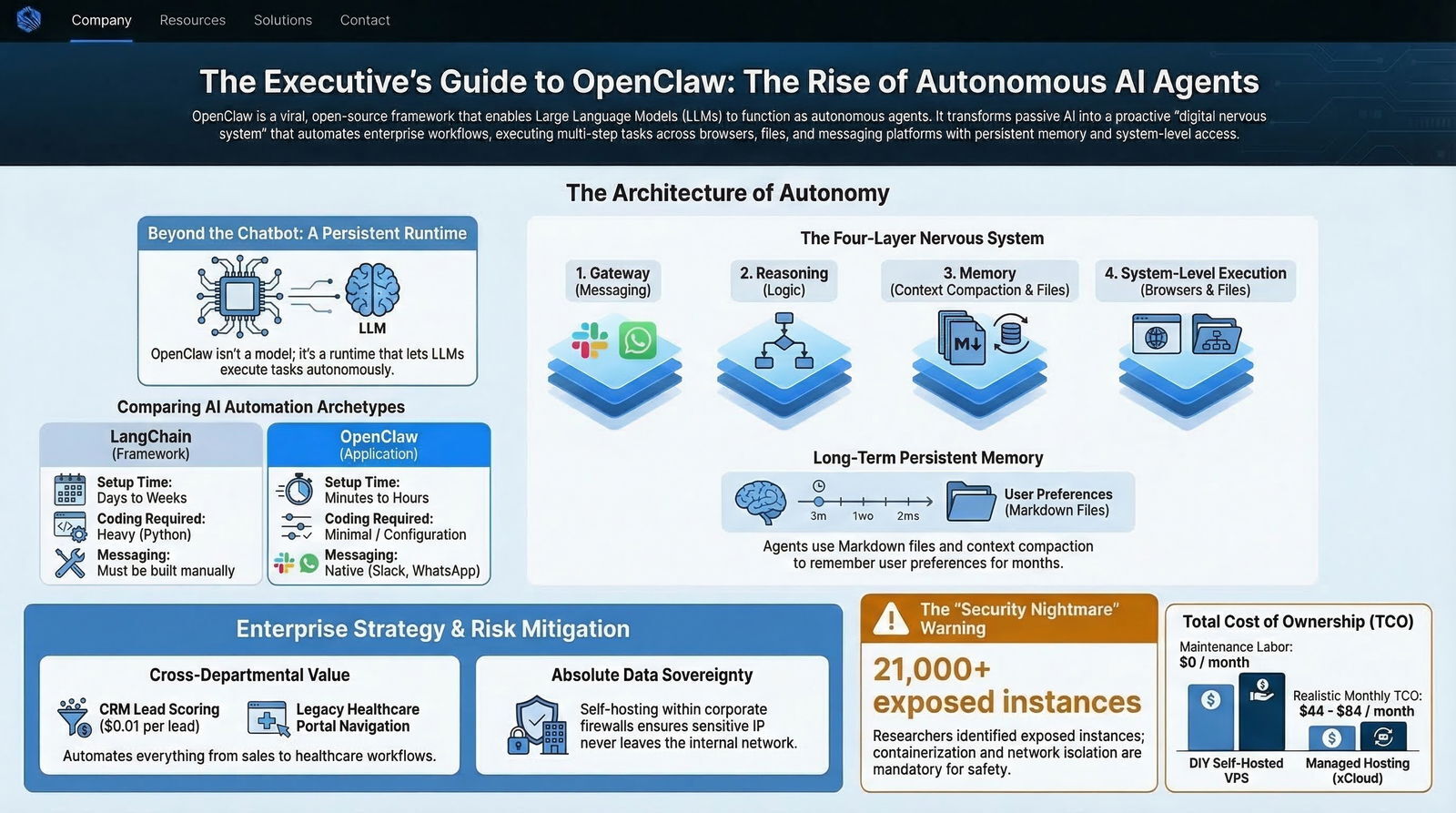
The Appeal of Autonomy: Users are increasingly drawn to agents that can take initiative. The cognitive load of managing countless digital tasks, from email triage to scheduling, is immense. An agent capable of understanding a high-level directive ("clear your inbox," "organize your travel") and breaking it down into executable steps offers significant relief and efficiency gains for individuals. This autonomy is a powerful driver for adoption, as it frees up human time and mental energy for more complex or creative endeavors.
The "Team Gap" in Personal AI: While the individual utility of personal AI agents is clear, a potential challenge emerges when considering their application in organizational settings.
- Lack of Shared Context: A personal assistant, by its very nature, operates within the user's individual context. It doesn't inherently understand team dynamics, shared project goals, or cross-functional dependencies. Information processed by one agent remains siloed, making collective knowledge building challenging.
- Fragmented Information & Workflows: When every team member uses their own personal agent, information and task execution can become highly fragmented. An agent clearing your inbox doesn't solve a team's communication bottleneck, nor does it provide visibility into project progress for others. This can lead to disconnected workflows, missed handoffs, and a lack of unified project memory.
- Scaling Challenges for Organizations: While self-hosting offers privacy for individuals, scaling this model across an entire organization introduces significant complexity. Managing disparate self-hosted agents, ensuring consistent security protocols, handling updates, and providing centralized oversight becomes an operational burden. The "easy install" for one person becomes a complex IT challenge for a hundred.
- Limited Collaborative Capabilities: Personal agents are not designed for team coordination, shared objective setting, or collaborative problem-solving. Their focus is on individual productivity, not collective intelligence.
The challenge, then, is how to leverage the potential of agentic AI to amplify group output and achieve organizational goals, rather than just individual ones. A potential next step involves moving beyond isolated personal efficiency towards integrated, collaborative AI that can support teams.
III. From Individual to Collaborative AI: The AI Office Paradigm
The limitations of purely personal AI agents for team-based work suggest the need for a new paradigm: the collaborative AI office.
What OpenClaw's Emergence Can Inform for AI Offices Like Nonilion
The rise of personal agents like OpenClaw can offer insights for the development of AI office platforms.
- Validation of Agentic AI: OpenClaw's ability to "actually do things" can be seen as an example of agentic AI – suggesting that AI can move beyond passive chatbots to active, task-executing participants. This may indicate a foundational capability upon which more complex, collaborative AI systems could be built, and suggests a potential user interest in AI that takes initiative.
- The Privacy and Control Imperative: The appeal of self-hosting for privacy and control, a feature of OpenClaw, points to a potential user and organizational interest in data sovereignty. For AI offices, this may suggest a need for robust security, transparent data handling, and managed environments that aim to instill trust, especially when dealing with sensitive organizational data. Organizations may seek assurance that their collective intelligence is protected and utilized responsibly.
- The Integration Challenge Highlighted: OpenClaw's reliance on external chat apps, while convenient for individual access, points to the potential benefit of a unified workspace for teams. For AI offices, this could involve building dedicated environments where agents and humans share context, memory, and objectives, rather than operating in silos across disparate communication platforms. The friction of context switching and fragmented information can be a challenge for teams.
- Beyond the "Personal Assistant" Mindset: While OpenClaw focuses on personal tasks, its model can suggest the potential for AI offices to move beyond individual productivity tools. The goal might shift from an agent clearing your inbox to agents potentially coordinating a project, analyzing team communications to identify bottlenecks, or drafting shared meeting summaries. The focus could expand from individual efficiency to collective intelligence and strategic collaboration.
The Collaborative AI Office: A Potential Operating Model A collaborative AI office can be described as a shared digital workspace where human teams and AI agents might work together on collective goals. It aims to be an environment designed to facilitate interaction, shared understanding, and potentially enhanced output.
Key characteristics of such a potential operating model could include:
- Persistent Memory & Shared Context: Unlike some personal agents that might reset with each interaction or operate within a single user's domain, AI agents in a collaborative office could be designed to access shared, persistent memory of team projects, discussions, and decisions. This could allow them to maintain context across tasks and contribute over time.
- Integrated Workflows: AI agents in such an environment could be designed to be integrated within a team's workflows, from project management to communication and document creation. They could potentially trigger actions, provide updates, and automate steps within the flow of work.
- Centralized Project Views: Humans and AI agents could be designed to access a common view of project status, dependencies, and objectives. This unified view aims to reduce information silos and support all participants, including AI, in working towards shared goals.
Unlike personal assistants that operate in isolation, platforms like Nonilion aim to provide a dedicated virtual office where AI agents can be integrated into team workflows. In such environments, AI agents might analyze team communications to synthesize potential decisions, draft meeting summaries, or manage project dependencies across multiple team members. This seeks to support human + AI co-working within a shared workspace, aiming to enhance individual contributions and collective impact. The concept of collective intelligence, where AI agents, given shared objectives and access to team knowledge, could amplify group output, is a key focus.
IV. The Future of Work: Where Humans and AI Agents Converge
The evolution from personal AI assistants towards collaborative AI offices suggests a potential shift in how we leverage artificial intelligence in the workplace. This future could involve a symbiotic relationship where human creativity and strategic thinking are augmented by the efficiency and analytical capabilities of AI agents.
The Future of AI Offices: Beyond Task Automation to Strategic Partnership
A potential future for AI in the workplace could move beyond simply automating discrete tasks. It might involve AI agents acting as strategic partners, integrated into an organization, contributing to complex, long-term objectives.
- From "Doing Things" to "Achieving Goals Together": The evolution could shift from agents executing individual "to-dos" to agents potentially participating in achieving collective, strategic goals. This might mean agents that can not only schedule a meeting but also analyze outcomes, suggest follow-up actions, and even draft initial reports based on discussions, all within a shared team context.
- The Role of Human Oversight and Direction: In this future, AI agents do not replace human ingenuity but rather augment it. Humans remain the architects of vision, strategy, and ethical oversight. Agents act as intelligent executors, researchers, and coordinators, freeing human teams to focus on higher-level problem-solving, innovation, and interpersonal collaboration. The human-AI partnership is about leveraging each other's strengths.
- this platform's Role in Shaping the Future: In the context of AI offices, platforms like [this platform](https://this platform.com/) aim to foster strategic partnerships between humans and AI. [this platform](https://this platform.com/)'s approach to AI agents is designed not just for individual task execution but also for team coordination, supporting async execution across time zones, and automating workflows within a shared environment. This seeks to enable human teams to focus on higher-level problem-solving and innovation, while operational details are supported by AI.
- Scaling Trust and Demonstrable Impact: Moving from individual, self-hosted solutions to managed platforms designed for organizational scale may help address adoption and trust concerns sometimes seen with nascent personal AI. Organizations often seek demonstrable ROI and a reliable infrastructure. Collaborative AI offices aim to provide this by offering transparent, auditable, and secure environments where the collective impact of human-AI collaboration can be evaluated.
V. Conclusion: Embracing the Collaborative AI Frontier
The journey from individual AI assistants like OpenClaw towards the concept of a collaborative AI office suggests an evolution in how we might leverage artificial intelligence. While personal agents can demonstrate AI's capacity for direct action and individual efficiency, their potential impact may be amplified when integrated into shared, collaborative environments.
The future of work could involve humans and AI agents collaborating within a unified workspace to enhance productivity, innovation, and collective intelligence. By considering this collaborative AI approach, organizations may aim to move beyond fragmented efficiency and further develop the potential of their teams in the age of AI.
02Why This Trend Matters for Nonilion
This trend matters to Nonilion because it points to a bigger change: teams are moving from simple calls toward persistent, AI-supported collaboration spaces. Nonilion can bridge live presence, meeting context, avatars, and follow-up work so the trend becomes a usable workflow instead of a headline.
03Shareable Extracts
- The trend is not just "openclaw: What Developers Need to Know" - it is a signal that team coordination is becoming the next competitive edge.
- Hot take: the teams that win from this shift will not be the ones with more meetings; they will be the ones with clearer shared context after every meeting.
- If openclaw: what developers need to know keeps moving this fast, remote teams need a workspace where conversation, presence, and follow-up stay connected.
- The Collaborative Leap: How Personal AI Agents Inform the AI Office The promise of artificial intelligence that "actually does things" has long been a captivating vision.
- From science fiction to our daily lives, we've yearned for digital assistants capable of more than just answering questions – agents that can proactively manage our lives, execute tasks, and truly augment our capabilities.
04Social Hooks
- Everyone is talking about openclaw: What Developers Need to Know. The overlooked part is what happens to team workflows after the headline fades.
- The uncomfortable question behind openclaw: What Developers Need to Know: are teams adapting their collaboration systems fast enough?
- This is not a meeting trend. It is a coordination trend, and products like Nonilion sit right in the middle of that shift.
05Sources and Author
Sources
-
OpenClaw — Personal AI Assistant openclaw.ai
-
OpenClaw — Personal AI Assistant github.com/openclaw/openclaw
-
OpenClaw en.wikipedia.org/wiki/OpenClaw
-
Anyone actually using Openclaw? : r/LocalLLaMA
Author
This article on openclaw was generated by the Nonilion AI blog workflow using web research inputs and AI-assisted synthesis.