Home/Blog/The Precision Imperative: Fueling AI Agents with Specialized Context through the Firecrawl Developer Index
Developer Productivity
The Precision Imperative: Fueling AI Agents with Specialized Context through the Firecrawl Developer Index
The Precision Imperative: Fueling AI Agents with Specialized Context through the Firecrawl Developer Index The landscape of artificial intelligence is rapidly evolving, moving beyo
11 MIN READ
28 Aug 2026
Developer Productivity
The Precision Imperative: Fueling AI Agents with Specialized Context through the Firecrawl Developer Index
The landscape of artificial intelligence is rapidly evolving, moving beyond simple chatbots to sophisticated AI agents capable of autonomous action and complex problem-solving. These agents, whether operating in a virtual AI office or assisting in highly specialized tasks, demand a level of precision and contextual understanding that general web search simply cannot provide. As organizations like Nonilion envision a future where human and AI collaboration is seamless, the quality of information available to AI agents becomes paramount. This is where specialized data infrastructure, such as the Firecrawl Developer Index, emerges as a critical enabler, transforming how AI agents access, interpret, and act upon information.
01The Evolving Landscape of AI Agents and the Need for Specialized Data
The promise of AI agents lies in their ability to automate, augment, and accelerate complex workflows. From coding and debugging to research and strategic planning, these agents are increasingly integrated into daily operations. However, their effectiveness is directly tied to the quality and relevance of the data they consume. Traditional web scraping and general search APIs often yield vast amounts of data that, while comprehensive, can be unstructured, irrelevant, or outdated for a specific AI agent's task. This leads to inefficiency, increased token consumption, and ultimately, less reliable outputs.
Want your team to run this workflow with AI-native execution?
The challenge intensifies when AI agents are tasked with highly technical domains, such as software development. A coding agent, for instance, requires access to precise, up-to-date documentation, code repositories, and issue trackers to perform its functions accurately. Relying on broad internet searches for such granular, domain-specific context is akin to asking a human developer to write code without access to official documentation or version control systems. The result would be suboptimal, error-prone, and time-consuming. This highlights a critical need for an infrastructure layer that helps AI systems find, read, and act on information across the live web, specifically tailored to their operational context. Powering AI agents with clean web data is no longer a luxury but a necessity for the next generation of AI-powered solutions.
02Understanding the Firecrawl Developer Index: A Deep Dive into its Architecture and Scope
The Firecrawl Developer Index represents a significant leap forward in providing specialized context for AI agents. It is not merely another search engine; it is a purpose-built, specialized index designed specifically for coding agents. Unlike general web search products adapted for human use, the Firecrawl Developer Index is structured from the ground up to cater to how AI coding agents consume information. This distinction is crucial, as it ensures that the data presented to an AI agent is in a format and context that maximizes its utility and minimizes processing overhead.
At its core, the Firecrawl Developer Index gives coding agents the essential resources they need to write and debug real code. This includes a vast repository of over 70 million primary sources. These sources encompass critical developer artifacts such as READMEs, comprehensive documentation pages, open issues, resolved pull requests (PRs), and detailed API specifications. By curating and structuring this immense volume of developer-centric data, the Developer Index provides a single, reliable retrieval surface for AI agents. This specialized approach ensures that when an AI agent queries the index, it receives highly relevant and accurate information, directly impacting its ability to generate correct and up-to-date code.
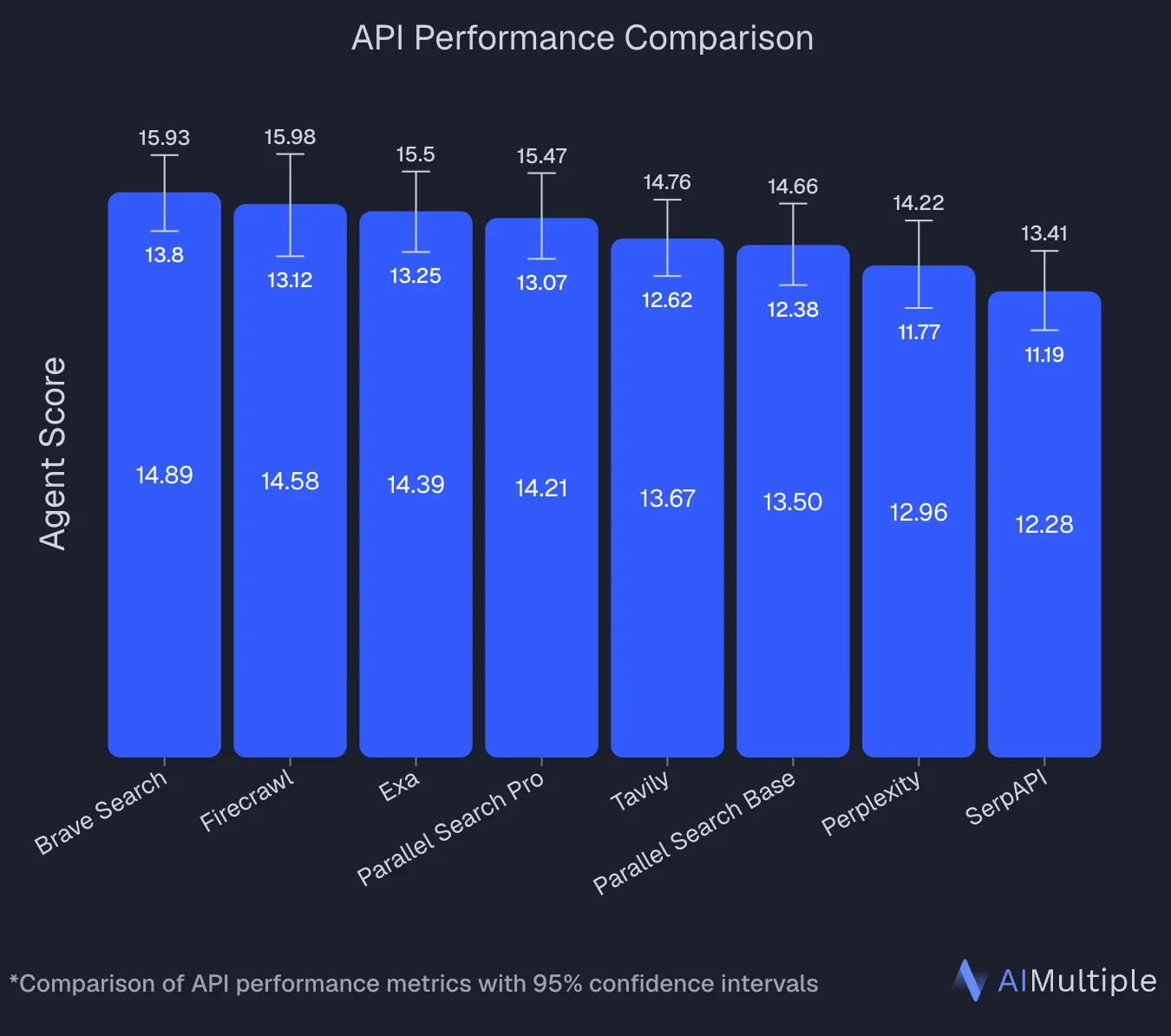
The efficacy of this specialized indexing is further underscored by its performance metrics. The Firecrawl Developer Index has demonstrated impressive capabilities, achieving a 63% recall@10 across 1,179 real developer queries. These queries span a diverse range of categories, including repositories, documentation, and pull requests. This performance benchmark is significant, as it indicates a superior ability to retrieve relevant information compared to other external coding-specific indexes. Such high recall rates are vital for AI agents that require precise factual accuracy to function effectively, particularly in sensitive tasks like code generation or vulnerability patching. This robust architecture positions the Firecrawl Developer Index as an indispensable tool for any organization deploying AI agents in development workflows.
03Empowering Coding Agents: Features and Capabilities of Firecrawl's Context API
Firecrawl positions itself as the infrastructure layer that helps AI systems find, read, and act on information across the live web, and the Developer Index is a prime example of this capability. At its heart, Firecrawl functions as a comprehensive context API designed to search, scrape, and interact with the web at scale. This allows AI agents to move beyond static datasets and engage with the dynamic, ever-changing information landscape of the internet. The API is built to be fast, reliable, and token-efficient, addressing some of the most pressing challenges in AI agent development.
The core features of Firecrawl's context API are multifaceted, offering a robust toolkit for AI agents. These include:
Search: Enabling AI agents to locate specific information across the web, leveraging the specialized Firecrawl Developer Index for coding-related queries.
Scrape: Extracting clean, relevant content from web pages, transforming raw HTML into structured data or clean Markdown that AI agents can easily process. This capability is crucial for turning disparate web data into actionable intelligence.
Interact: Allowing AI agents to engage with web interfaces, navigating pages, filling forms, and performing actions as a human user would. This opens up possibilities for more complex automation and data gathering.
Power Your Agent: This overarching feature emphasizes Firecrawl's role in providing the necessary web context for AI agents to operate effectively. An AI agent can simply describe what it needs, and Firecrawl's underlying agent searches, navigates, and retrieves the information, often without requiring specific URLs.
This comprehensive suite of tools ensures that AI agents can access high-quality web data seamlessly. The transformation of web data into AI-powered solutions is streamlined, as Firecrawl handles the "hard stuff" of web interaction and data cleaning. For instance, AI agents like Cursor, Claude Code, and Windsurf are already leveraging Firecrawl for their web research capabilities. Aemon, an AI R&D agent, specifically powers its web research with Firecrawl's search and scrape functionalities, demonstrating the API's utility in advanced research contexts.
Furthermore, Firecrawl is available as both an open-source project and a hosted service, providing flexibility for developers and organizations. Its open-source nature fosters community contributions and transparency, while the hosted service offers convenience and scalability. To facilitate integration, Firecrawl provides Software Development Kits (SDKs) across a wide range of popular programming languages, including Python, Node.js, Go, Java, Elixir, Rust, Ruby, .NET, and PHP. This broad support ensures that developers can easily connect their AI agents and leverage Firecrawl's capabilities, making it a versatile and accessible tool for enhancing AI agent performance.
04The Strategic Impact of Specialized Indexes on AI Office Workflows
The advent of highly capable AI agents, empowered by specialized tools like the Firecrawl Developer Index, is fundamentally reshaping the modern workplace. In advanced virtual AI offices, such as those envisioned by Nonilion, human and AI agents are increasingly collaborating in shared digital workspaces. This collaboration extends beyond simple task delegation to complex co-creation, where AI agents contribute meaningfully to strategic objectives. The strategic impact of specialized indexes like the Firecrawl Developer Index on these AI office workflows is profound, directly enhancing efficiency, accuracy, and the overall quality of collaborative output.
For Nonilion, this means that AI agents engaged in coding, documentation, or debugging tasks within the virtual office environment can operate with unprecedented precision. When a human developer in Nonilion's workspace initiates a request for code analysis or feature implementation, an AI agent can instantly tap into the Firecrawl Developer Index. This allows the agent to access the exact READMEs, documentation, issues, or pull requests relevant to the task, ensuring that its responses and actions are informed by the most accurate and up-to-date context. This capability is critical for:
Async Execution of Coding Tasks: AI agents can independently research and draft code segments, review pull requests, or debug issues by referencing the Developer Index, freeing up human developers for higher-level strategic work.
Automated Workflow Steps: Workflows that previously required manual research for coding context can now be fully automated. An AI agent can identify a bug report, consult the Developer Index for related code and past fixes, and even suggest a solution, streamlining the development lifecycle within Nonilion.
Enhanced Team Coordination: By providing a single, reliable source of truth for developer artifacts, the Developer Index ensures that all AI agents, and by extension, human collaborators, are working with consistent information. This minimizes misunderstandings and accelerates project progress.
Optimized Human + AI Co-working: In this platform's shared workspace, human developers can rely on AI agents to provide accurate, context-rich information almost instantaneously. This reduces the cognitive load on humans, allows for faster decision-making, and fosters a more symbiotic relationship between human intelligence and artificial intelligence.
The alternative – relying on general web search for AI agents in these scenarios – presents significant drawbacks. It is often less token-efficient, as agents must sift through vast amounts of irrelevant data, leading to higher operational costs and slower processing times. More critically, general search is less reliable for coding tasks, where precision is paramount. A general search might return outdated forum posts or tangential articles, leading to incorrect code suggestions or flawed debugging efforts. The Firecrawl Developer Index, by offering a purpose-built, highly curated data source, directly addresses these challenges, making human + AI collaboration in AI offices like this platform not just possible, but highly effective and reliable.
05The Future of AI Agent Development: Testable Retrieval and Beyond
The evolution of AI agent development is inextricably linked to the sophistication of their information retrieval capabilities. The introduction of specialized indexes like the Firecrawl Developer Index signals a pivotal shift towards more intelligent, reliable, and ultimately, more autonomous AI agents. One of the most compelling aspects of this development is how it transforms retrieval into a "testable component." This means that the accuracy and relevance of the information an AI agent retrieves can be systematically evaluated and improved, much like any other software component. This level of testability is crucial for building trust in AI systems and ensuring their outputs are consistently high-quality.
For AI R&D agents, the availability of reliable, high-quality web data is a game-changer
06Why This Trend Matters for Nonilion
This trend matters to Nonilion because it points to a bigger change: teams are moving from simple calls toward persistent, AI-supported collaboration spaces. Nonilion can bridge live presence, meeting context, avatars, and follow-up work so the trend becomes a usable workflow instead of a headline.
07Shareable Extracts
The trend is not just "The Precision Imperative: Fueling AI Agents with Specialized Context through the Firecrawl Developer Index" - it is a signal that team coordination is becoming the next competitive edge.
Hot take: the teams that win from this shift will not be the ones with more meetings; they will be the ones with clearer shared context after every meeting.
If the precision imperative: fueling ai agents with specialized context through the firecrawl developer index keeps moving this fast, remote teams need a workspace where conversation, presence, and follow-up stay connected.
These agents, whether operating in a virtual AI office or assisting in highly specialized tasks, demand a level of precision and contextual understanding that general web search simply cannot provide.
As organizations like $1 envision a future where human and AI collaboration is seamless, the quality of information available to AI agents becomes paramount.
08Social Hooks
Everyone is talking about The Precision Imperative: Fueling AI Agents with Specialized Context through the Firecrawl Developer Index. The overlooked part is what happens to team workflows after the headline fades.
The uncomfortable question behind The Precision Imperative: Fueling AI Agents with Specialized Context through the Firecrawl Developer Index: are teams adapting their collaboration systems fast enough?
This is not a meeting trend. It is a coordination trend, and products like Nonilion sit right in the middle of that shift.
09Sources and Author
Sources
Firecrawl - The context API to search, scrape, and interact with ...
www.firecrawl.dev