Home/Blog/OpenClaw: The Dawn of Personal AI Agents and the Evolution of Collaborative Workspaces
virtual coworking
OpenClaw: The Dawn of Personal AI Agents and the Evolution of Collaborative Workspaces
OpenClaw: Exploring Personal AI Agents and the Evolution of Collaborative Workspaces I. Introduction: The Emergence of Personal AI Assistants A. Introducing OpenClaw In the evolvin
6 MIN READ
09 Jun 2026
virtual coworking
OpenClaw: Exploring Personal AI Agents and the Evolution of Collaborative Workspaces
01I. Introduction: The Emergence of Personal AI Assistants
A. Introducing OpenClaw
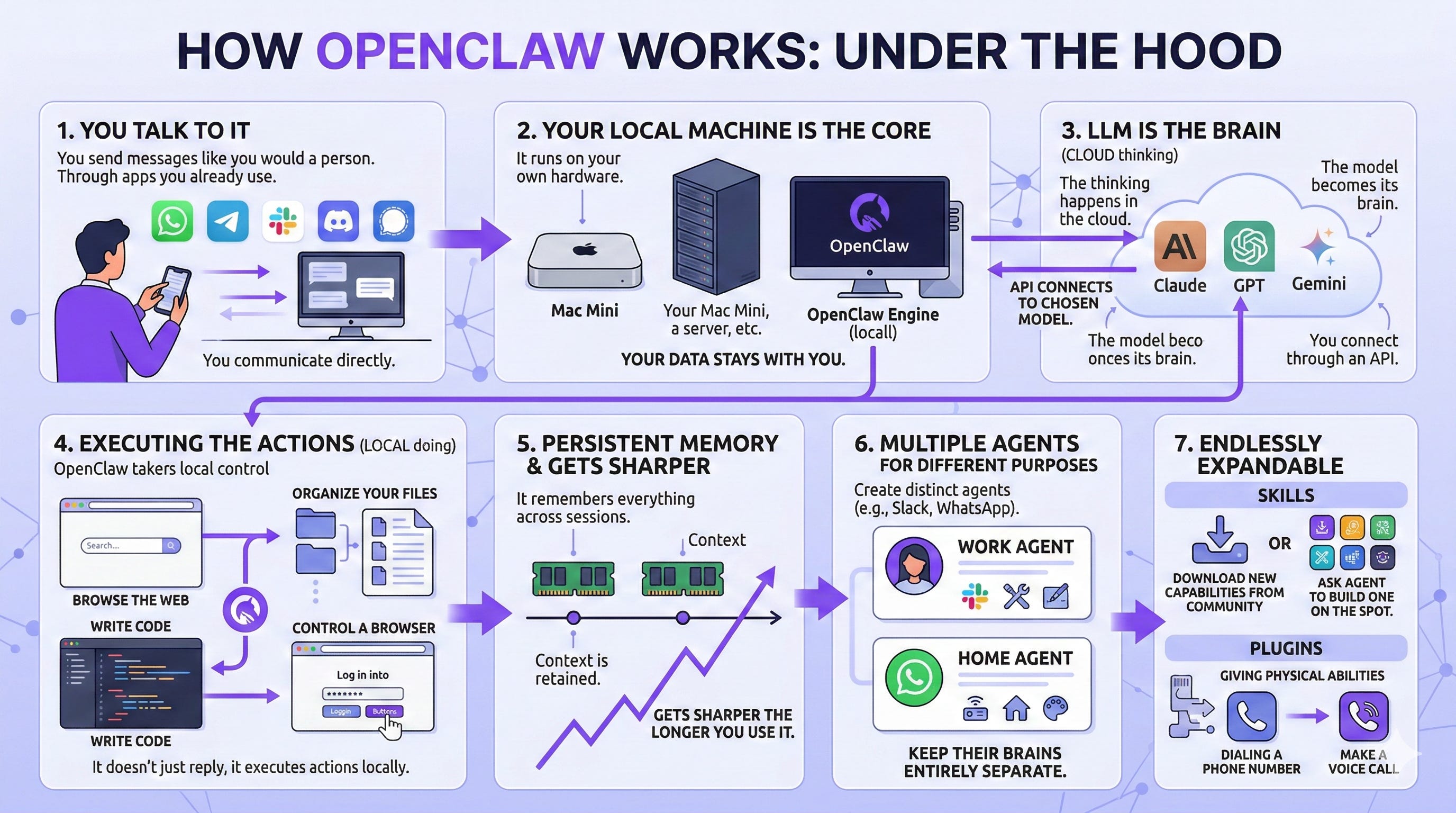
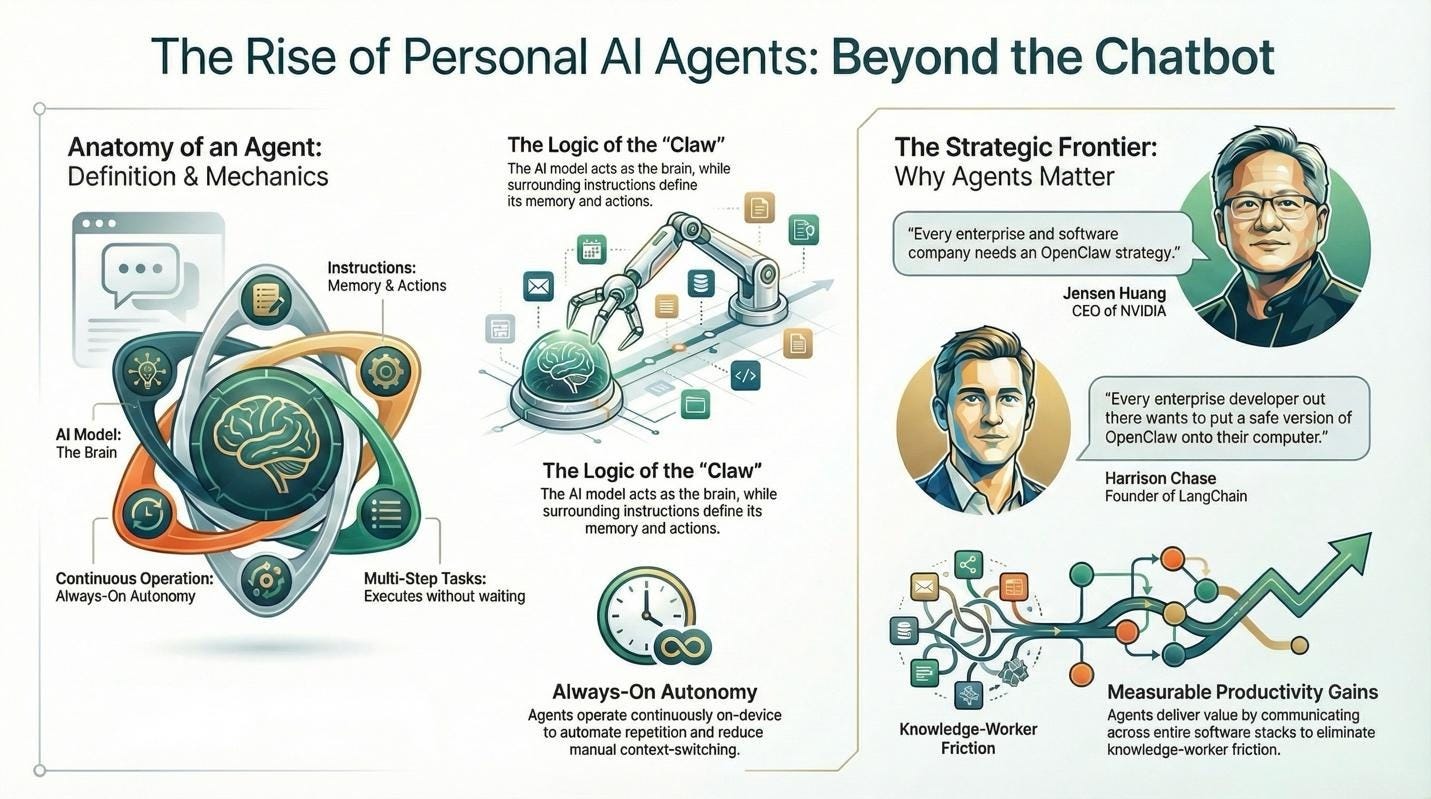
In the evolving landscape of artificial intelligence, tools are emerging that may alter daily workflows. OpenClaw is presented as a personal AI assistant designed to act and automate tasks. Its stated capabilities include managing inboxes, scheduling appointments, and handling activities like flight check-ins. OpenClaw's integration with messaging platforms such as WhatsApp, Telegram, and X (formerly Twitter) aims to bring AI capabilities into existing communication channels.
Want your team to run this workflow with AI-native execution?
The development of personal AI agents like OpenClaw aligns with a broader trend towards integrating AI into individual workflows. This trend also highlights the potential need for AI integration at the team and organizational level—a domain where contributes by developing solutions for team-level AI operations.
The emergence of personal AI assistants is influenced by advancements in underlying technologies. Improvements in Large Language Models (LLMs) and natural language processing (NLP) have enhanced AI's ability to understand and execute instructions. The use of existing messaging applications as an interface can lower adoption barriers by leveraging user familiarity and convenience, potentially making AI task execution more accessible without requiring users to learn new software.
02II. OpenClaw: Functionality and User Experience
A. Core Capabilities
OpenClaw is described as having task execution capabilities beyond basic chatbots. Its product notes indicate it can manage inboxes, send emails, manage calendars, and perform flight check-ins. The concept of an "autonomous agent" is presented as central to OpenClaw, acting on behalf of the user. Its open-source nature and availability for local deployment on macOS, Linux, and Windows may appeal to users seeking privacy, control, and customization.
A feature noted for OpenClaw is its "Skill Workshop," which allows users to extend functionality by creating and deploying reusable "Skills." This skill-based architecture is presented as a way to enable specialization and adaptability in AI agents.
C. User Interface
The use of messaging platforms as the primary user interface for OpenClaw offers familiarity and ease of use. However, for complex team workflows, chat interfaces alone might present challenges for maintaining a unified operational view due to potential information fragmentation and context switching.
03III. Broader Implications: AI in the Workplace
A. From Personal Productivity to Team Collaboration
OpenClaw focuses on personal task automation and individual productivity. This highlights a potential need to bridge the capabilities of personal AI assistants with the demands of collaborative environments. The challenge involves extending AI's utility beyond individual task management to encompass team coordination and shared workflows.
04The AI Office Revolution: Orchestrating Agents for Collective Intelligence
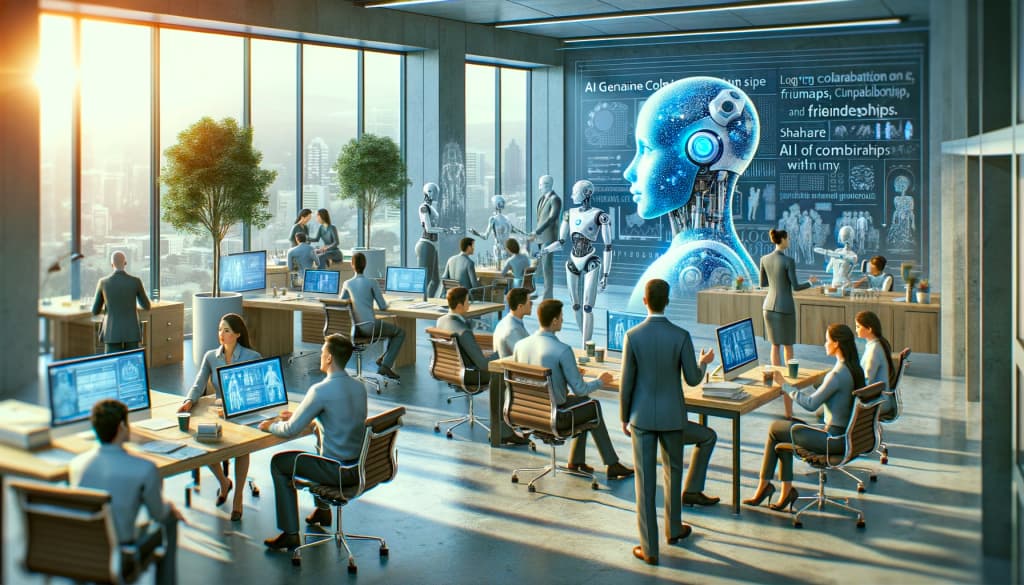
The development of personal AI assistants like OpenClaw can be seen as a step towards AI agents performing discrete tasks. This may pave the way for orchestrating these agents, alongside human collaborators, within a structured environment. Nonilion's vision for the AI office aims to provide a virtual workspace that orchestrates AI agents and human team members, supporting AI agent and human collaboration on shared projects. Nonilion is designed to offer a structured, contextualized environment for these AI-human partnerships, in contrast to the potential fragmentation of chat-based interactions.
B. Asynchronous Execution and Remote Coordination
AI agents, when integrated effectively, may facilitate asynchronous work, which can be beneficial for distributed teams. This allows individuals to contribute and review work on their own schedules. Nonilion aims to enable async execution for teams by allowing AI agents to manage tasks, gather information, and prepare updates, potentially improving team coordination.
05IV. Nonilion: A Collaborative AI Office Approach
A. Bridging the Gap: From Personal Tasks to Team Workflows
While personal AI assistants may automate individual tasks, platforms like this platform focus on team-level operational efficiency. This platform aims to help teams navigate projects, automate follow-ups, and streamline coordination by integrating AI agents into a collaborative team structure.
B. The this platform Advantage: A Unified Workspace for Humans and AI
this platform is presented as a platform where AI agents and human collaborators can interact within a shared context. Its functionalities may include:
AI Agents: Integrating various AI agents specialized for team functions.
Virtual Office Collaboration: Providing a central hub for team activities, discussions, and task management, potentially AI-powered.
Meeting Follow-ups & Workflow Automation: Automating the generation of action items, summaries, and subsequent tasks following team discussions or meetings.
This approach aims to amplify the power of individual AI agents within a collaborative team framework.
06V. Conclusion: The Future of Collaborative AI
A. The Trajectory of AI Assistants
AI assistants appear to be evolving from single-purpose tools to more capable agents. OpenClaw represents a step in making AI actionable and accessible for individuals.
B. The Next Frontier: Integrated Team Intelligence
The integration of AI agents and human talent into collaborative environments is a potential next step. this platform aims to provide the AI office infrastructure for human + AI co-working, which could influence future-of-work strategy.
07Why This Trend Matters for Nonilion
This trend matters to Nonilion because it points to a bigger change: teams are moving from simple calls toward persistent, AI-supported collaboration spaces. Nonilion can bridge live presence, meeting context, avatars, and follow-up work so the trend becomes a usable workflow instead of a headline.
08Shareable Extracts
The trend is not just "OpenClaw: The Dawn of Personal AI Agents and the Evolution of Collaborative Workspaces" - it is a signal that team coordination is becoming the next competitive edge.
Hot take: the teams that win from this shift will not be the ones with more meetings; they will be the ones with clearer shared context after every meeting.
If openclaw: the dawn of personal ai agents and the evolution of collaborative workspaces keeps moving this fast, remote teams need a workspace where conversation, presence, and follow-up stay connected.
OpenClaw: Exploring Personal AI Agents and the Evolution of Collaborative Workspaces I.
Introducing OpenClaw In the evolving landscape of artificial intelligence, tools are emerging that may alter daily workflows.
09Social Hooks
Everyone is talking about OpenClaw: The Dawn of Personal AI Agents and the Evolution of Collaborative Workspaces. The overlooked part is what happens to team workflows after the headline fades.
The uncomfortable question behind OpenClaw: The Dawn of Personal AI Agents and the Evolution of Collaborative Workspaces: are teams adapting their collaboration systems fast enough?
This is not a meeting trend. It is a coordination trend, and products like Nonilion sit right in the middle of that shift.