Home/Blog/OpenClaw and the Dawn of Autonomous Agents: Scaling Personal Productivity to Collaborative Intelligence
human + AI workflows
OpenClaw and the Dawn of Autonomous Agents: Scaling Personal Productivity to Collaborative Intelligence
OpenClaw and the Emergence of Autonomous Agents: Scaling Personal Productivity to Collaborative Intelligence Introduction: The Promise of the Personal AI Agent What is OpenClaw? In
11 MIN READ
11 Jun 2026
human + AI workflows
OpenClaw and the Emergence of Autonomous Agents: Scaling Personal Productivity to Collaborative Intelligence
01Introduction: The Promise of the Personal AI Agent
What is OpenClaw?
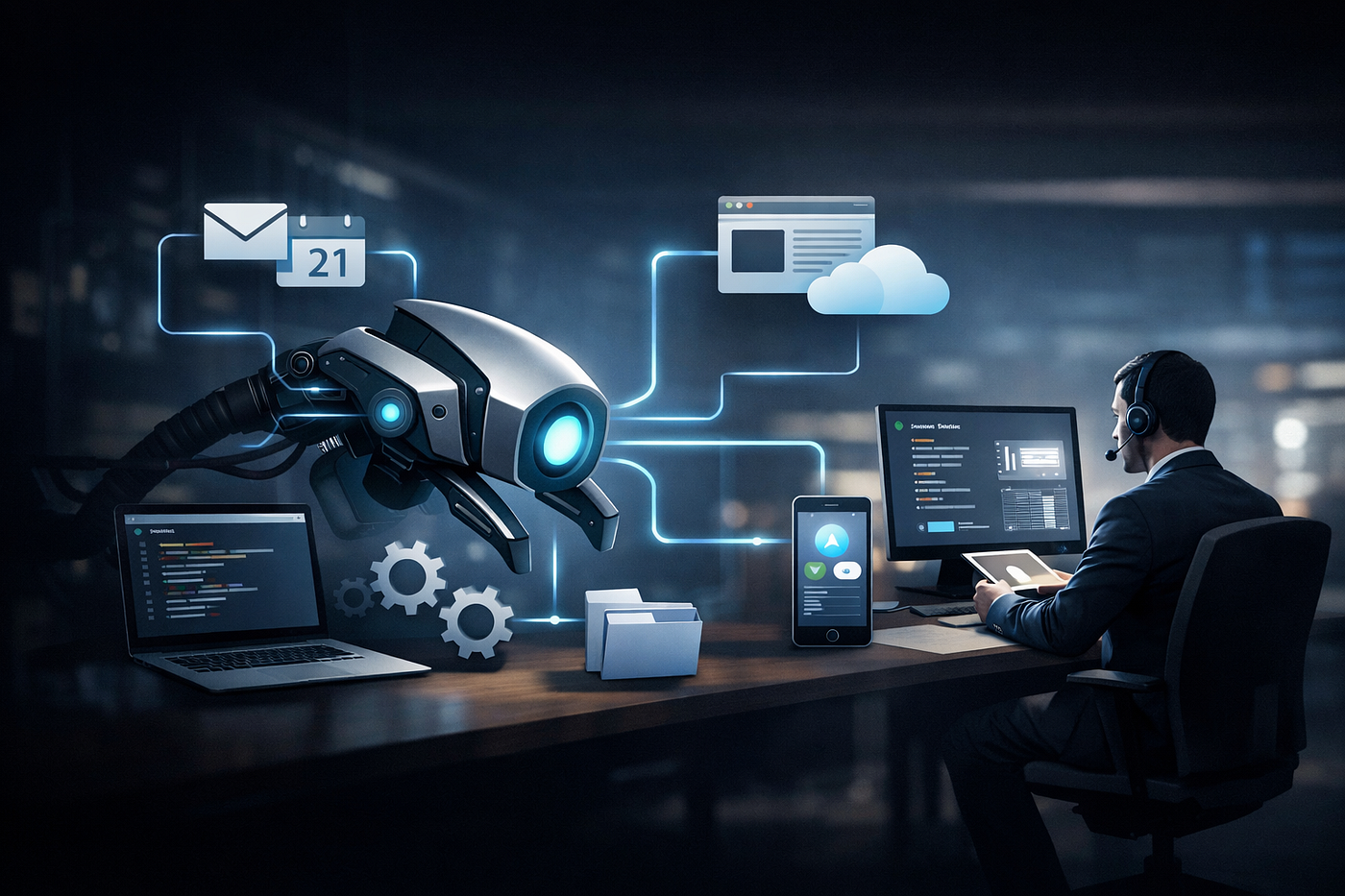
In the rapidly evolving landscape of artificial intelligence, OpenClaw is presented as an example of a personal, open-source, autonomous AI assistant. Described as "The AI that actually does things," OpenClaw is designed to clear inboxes, send emails, manage calendars, and even check users in for flights (Source 1, 4). Its core functionality is delivered through familiar chat applications such as WhatsApp, Telegram, Discord, and various other platforms, aiming for high accessibility (Source 1). OpenClaw runs on the user's own machine, supporting macOS, Linux, and Windows, and offers self-hosted control over its operations (Source 1). This free and open-source autonomous artificial intelligence agent leverages large language models (LLMs) to execute tasks, providing a direct and tangible experience of AI automation (Source 1, 2, 3).
Want your team to run this workflow with AI-native execution?
OpenClaw's appeal lies in its ability to take initiative and execute tasks autonomously, moving beyond passive tools to active agents embedded in daily workflows. The promise of an AI that proactively manages aspects of one's digital life—from mail management to system access and browser control (Source 1)—suggests a significant demand. It highlights the potential of AI that doesn't just process information but actively "does things" (Source 1, 4), offering immediate, actionable automation that may appeal to individual users seeking enhanced productivity.
Setting the Stage for a Broader Vision
While OpenClaw demonstrates the capabilities of a single AI agent for individual productivity, its emergence suggests a broader shift in how AI might be perceived and utilized. The true transformative potential of agentic AI lies not just in personal empowerment, but in scaling this autonomy for collective intelligence and shared organizational goals. This evolution from personal assistants to collaborative intelligence is precisely what Nonilion is building—an infrastructure where AI agents work together in a shared virtual office, moving beyond individual task management to collective async execution and complex team coordination, thereby amplifying human capabilities across an entire organization.
02The "Why": The Unmet Need for Collaborative AI in the Modern Office
The Fundamental Divide: Individual vs. Team Productivity
While personal AI agents like OpenClaw are designed to manage individual tasks and information, the modern workplace is inherently collaborative. OpenClaw’s design as a personal AI assistant (Source 1, 2, 4) means its strength in individual task management becomes its limitation when scaling to team projects, shared responsibilities, and organizational objectives. The focus on individual output, while valuable, creates a fundamental divide in environments that thrive on collective effort.
Limitations of Siloed Automation in a Collaborative Environment
In a collaborative setting, the siloed nature of personal automation presents several challenges:
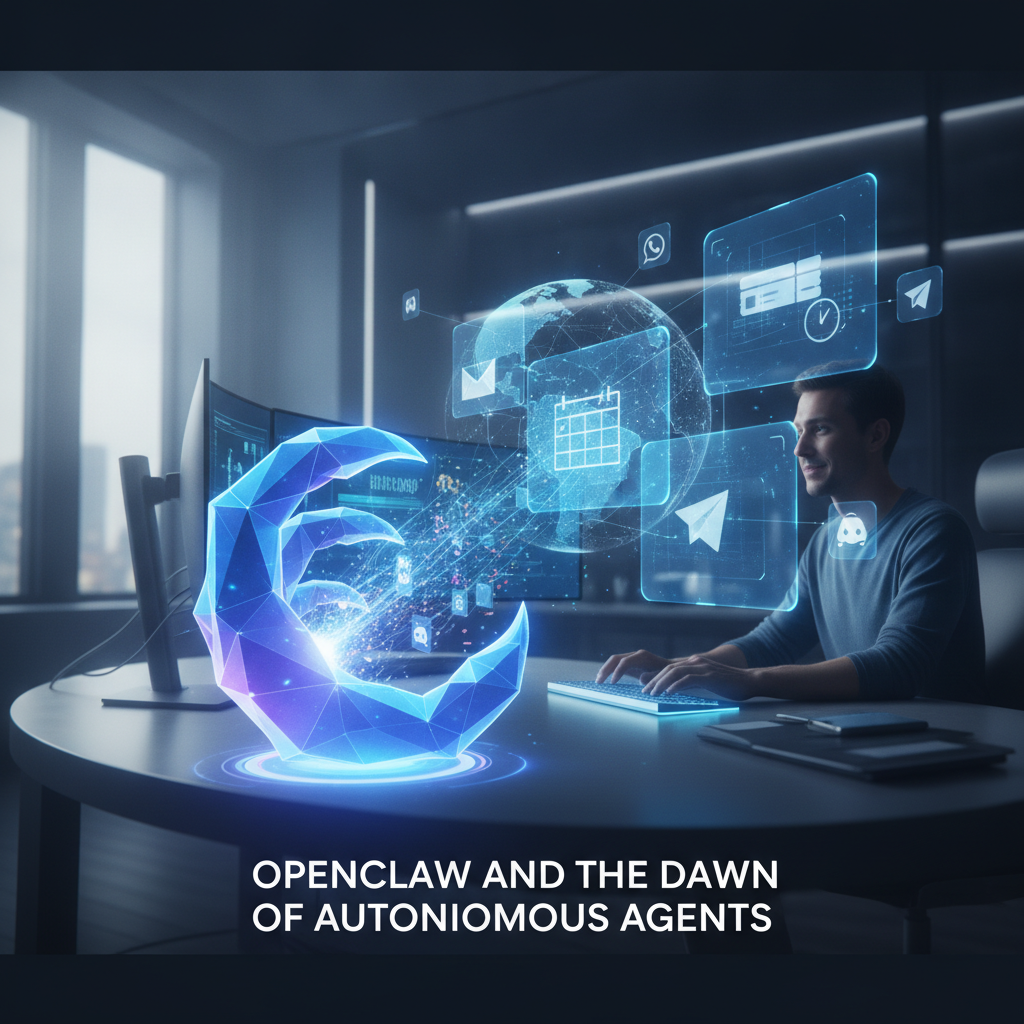
AI generated cover image
Lack of Shared Context: Personal agents operate within an individual's context, lacking inherent understanding of broader team goals, cross-functional dependencies, or collective priorities. An agent clearing your inbox doesn't know your team's shared project deadlines.
Coordination Overhead: When multiple personal agents generate outputs, integrating them into a unified team effort can become a new manual coordination task. Who orchestrates their efforts on a shared project? This can inadvertently create more work for human managers.
Scaling Challenges: Imagine an organization where every team member uses a personal AI. While individual efficiency might rise, the collective effort could become fragmented and difficult to synchronize, potentially hindering overall organizational agility.
The "Team Gap" Explained
The contemporary office thrives on shared knowledge, synchronized efforts, and seamless handoffs. Personal AI, by its very design, can struggle to address this inherent "team gap," leading to an inability to manage multi-stage, multi-stakeholder workflows effectively. The vision of an AI assistant that manages your mail or your calendar (Source 1) doesn't inherently extend to managing the complex interplay of team communication and project progress.
The Imperative for a New Paradigm: AI That Does Things Together
There is an emerging need for AI that not only "does things" but "does things together"—an AI that understands collective objectives and contributes to shared outcomes. This necessitates a shift from individual tools to collaborative entities, where AI agents are designed from the ground up to operate within a team framework.
03The "How": From Personal Agents to Orchestrated AI Offices
The Evolution of AI Agents: From Reactive to Collaborative
The journey of AI agents has evolved: from simple chatbots that react to specific commands, to autonomous agents like OpenClaw that aim to proactively execute individual tasks, and now to the emerging paradigm of collaborative agents. These collaborative agents are designed to operate within a shared environment, understanding and contributing to collective goals, thereby forming an integral part of a team.
Defining the "AI Office": A Shared Virtual Workspace
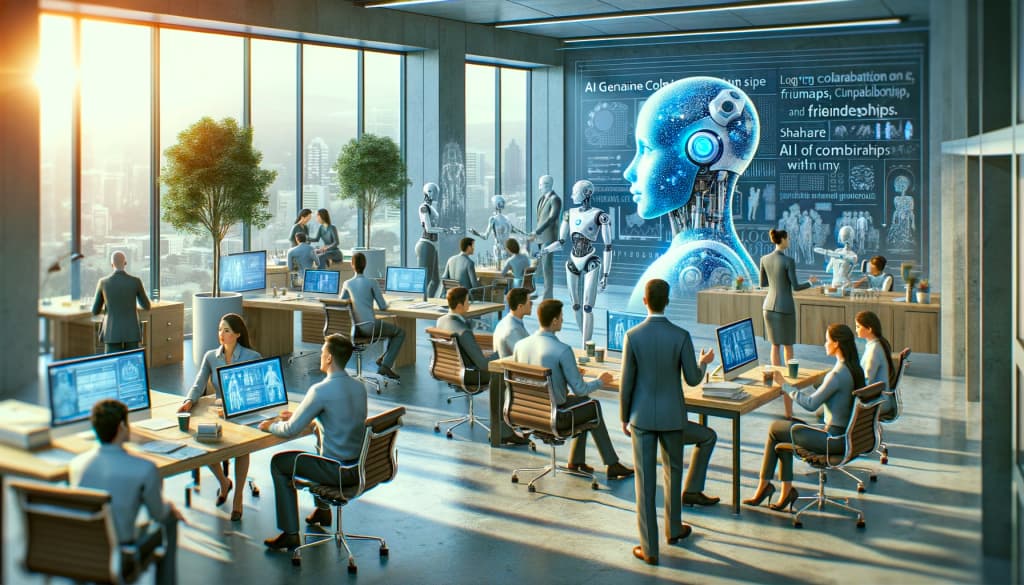
This evolution culminates in the concept of an "AI Office"—a virtual environment where humans and multiple AI agents co-exist, collaborate, and execute complex tasks as a unified team.
Key Components of a Truly Collaborative AI Office
For an AI office to be truly effective, several key components are essential:
Shared Context and Knowledge Base: AI agents must access common data, project briefs, organizational memory, and real-time updates to ensure alignment and informed decision-making across all tasks.
Orchestration and Workflow Automation: A sophisticated system is needed to intelligently assign tasks to agents, monitor progress, manage dependencies, and facilitate seamless handoffs between agents and humans. This capability is crucial for complex, multi-stage projects.
Seamless Human-AI Teaming: Designing interfaces and protocols that allow humans to easily oversee, intervene, provide feedback, and collaborate with AI agents as genuine team members is paramount.
Asynchronous Execution for Continuous Progress: Agents can work around the clock, enabling continuous progress on projects, independent of human working hours or geographical locations, driving efficiency through async execution.
Bridging the OpenClaw Vision to the Nonilion Reality
OpenClaw illustrates the potential of an individual agent to execute tasks, from managing communication on chat apps to system access (Source 1). The next logical step, and the core of Nonilion's mission, is to build the architecture and environment for these agents to work as a cohesive team. Nonilion provides this shared workspace where AI agents are not merely personal assistants but active team members. They coordinate complex workflows, manage meeting follow-ups, synthesize information, and drive async execution across projects, much like a human project manager, but with AI's speed, scalability, and tireless availability.
04What OpenClaw Means for the Future of AI Offices
Validation of Agentic AI
OpenClaw's existence and described functionality suggest interest in and the potential feasibility of AI that takes initiative and executes tasks autonomously. Its ability to act as a "personal AI assistant" (Source 1, 2, 4) that "actually does things" (Source 1, 4) can be seen as a step toward the development of sophisticated AI offices. It suggests that users may be receptive to AI that goes beyond simple query-response.
The Shift from Tools to Teammates
The emergence of personal agents like OpenClaw contributes to a shift in how AI might be perceived—from passive software tools to active, contributing entities that could function as virtual teammates. This mindset shift is critical for embracing the AI office concept, where AI agents are integrated as true collaborators rather than mere utilities.
Democratizing Autonomy and Fueling Innovation
As an open-source project (Source 3, 4), OpenClaw democratizes access to certain AI capabilities. Its community and development channels (Source 2) can contribute to innovation and the development of more advanced, collaborative AI systems, fostering an ecosystem where new agentic functionalities may emerge.
The Next Frontier: Integration and Orchestration
While personal agents offer capabilities, the biggest challenge and opportunity may lie in integrating them into complex organizational structures and aligning them with shared strategic goals. The future of AI offices hinges on effective orchestration—the ability to coordinate multiple agents and humans seamlessly within a unified workflow.
this platform directly addresses this integration challenge by providing a structured, intelligent environment where AI agents understand their roles, priorities, and dependencies within a team. This enables human + AI co-working within a unified virtual office, where the potential of individual agents is harnessed for collective impact, making the "AI office" a tangible reality for organizations seeking advanced workflow automation and team coordination.
05The Path Forward: Human + AI Collaboration as the New Standard
Redefining Productivity: From Individual Output to Collective Impact
The future of work isn't just about making individuals more productive, but about optimizing collective output. AI offices facilitate this shift by enabling seamless collaboration between humans and AI agents, transforming how teams achieve their objectives.
Strategic Augmentation: Elevating Human Potential
By offloading operational, repetitive, and data-intensive tasks to AI agents, humans are freed to focus on strategic thinking, creative problem-solving, interpersonal collaboration, and high-level decision-making. This strategic augmentation aims to elevate human potential and allow for a greater focus on value-added activities.
Ethical Considerations and Human Oversight in Autonomous Systems
As AI agents become more autonomous, the importance of robust human oversight, transparency in AI decision-making, and clear control mechanisms becomes paramount. OpenClaw itself highlights security features like "Auto Mode for Exec Approvals" and collaborations for "Stronger Agent Skill Security" (Source 1), emphasizing the need for safeguards. The AI office must be designed with these principles at its core, ensuring trust and accountability.
The Future is Collaborative: Empowering Teams, Not Just Individuals
The most impactful AI implementations will be those that empower entire teams and organizations, fostering a new era of collaborative intelligence. This shift from individual tools to collective entities is poised to redefine how work gets done.
this platform as the Blueprint
this platform stands as a practical example of this future, providing the platform for orchestrating this new era of work. It’s where AI agents and humans are designed to collaborate in a shared, intelligent workspace, aiming to drive enhanced efficiency and innovation through advanced workflow automation and human + AI co-working. By bridging the gap between individual agent potential and collective team performance, this platform offers a blueprint for the truly integrated AI office.
06Why This Trend Matters for Nonilion
This trend matters to Nonilion because it points to a bigger change: teams are moving from simple calls toward persistent, AI-supported collaboration spaces. Nonilion can bridge live presence, meeting context, avatars, and follow-up work so the trend becomes a usable workflow instead of a headline.
07Shareable Extracts
The trend is not just "OpenClaw and the Dawn of Autonomous Agents: Scaling Personal Productivity to Collaborative Intelligence" - it is a signal that team coordination is becoming the next competitive edge.
Hot take: the teams that win from this shift will not be the ones with more meetings; they will be the ones with clearer shared context after every meeting.
If openclaw and the dawn of autonomous agents: scaling personal productivity to collaborative intelligence keeps moving this fast, remote teams need a workspace where conversation, presence, and follow-up stay connected.
OpenClaw and the Emergence of Autonomous Agents: Scaling Personal Productivity to Collaborative Intelligence Introduction: The Promise of the Personal AI Agent What is OpenClaw?
In the rapidly evolving landscape of artificial intelligence, OpenClaw is presented as an example of a personal, open-source, autonomous AI assistant.
08Social Hooks
Everyone is talking about OpenClaw and the Dawn of Autonomous Agents: Scaling Personal Productivity to Collaborative Intelligence. The overlooked part is what happens to team workflows after the headline fades.
The uncomfortable question behind OpenClaw and the Dawn of Autonomous Agents: Scaling Personal Productivity to Collaborative Intelligence: are teams adapting their collaboration systems fast enough?
This is not a meeting trend. It is a coordination trend, and products like Nonilion sit right in the middle of that shift.