Home/Blog/MSFT stock: what Microsoft’s share price is really telling investors
human + AI workflows
MSFT stock: what Microsoft’s share price is really telling investors
MSFT stock: what Microsoft’s share price may be signaling MSFT stock is more than a ticker on a quote page. Based on the analyzed sources, Microsoft’s recent trading, earnings, and
14 MIN READ
30 Jul 2026
human + AI workflows
MSFT stock: what Microsoft’s share price may be signaling
MSFT stock is more than a ticker on a quote page. Based on the analyzed sources, Microsoft’s recent trading, earnings, and AI infrastructure spending may be pointing investors toward themes such as cloud strength, enterprise demand, and AI adoption. For teams working in an AI office model, that also makes Microsoft a useful example of how humans and AI agents can interpret fast-moving market data together.
01MSFT stock today: what Microsoft’s share price may be signaling
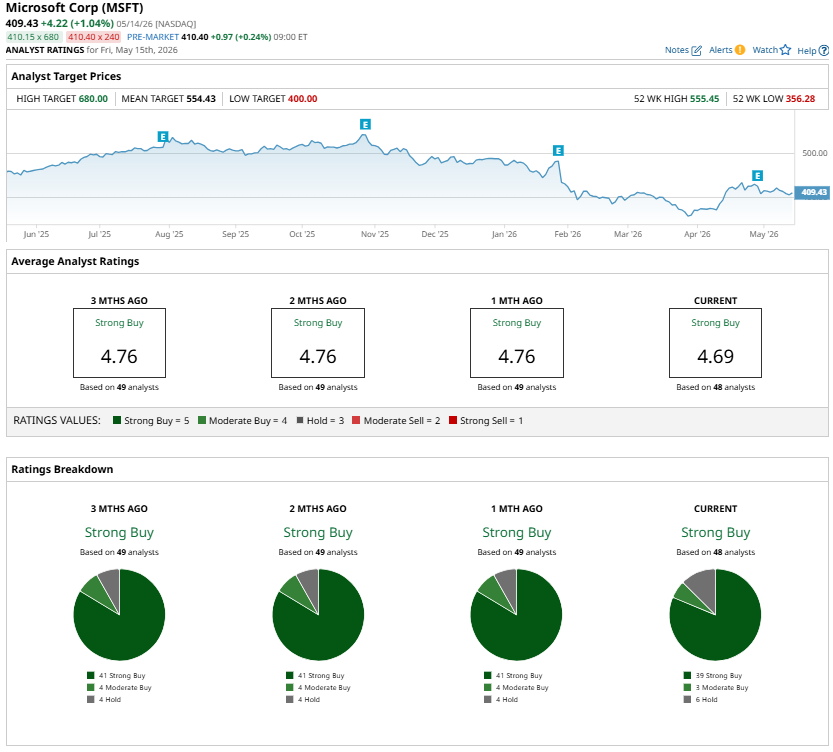
The current picture for MSFT stock depends on which source snapshot you use, but the overall message is consistent: Microsoft remains a large-cap company with active investor attention. The analyzed sources show prices around the high-$300s to mid-$400s, a market cap near $2.9T to $3.34T, a P/E ratio around 23.89, and a dividend yield of 0.89%.
Want your team to run this workflow with AI-native execution?
That combination helps frame Microsoft as a company with both growth and quality characteristics. The stock is not being valued like a speculative AI pure play; it is being priced as a software and infrastructure company with durable cash generation, broad enterprise exposure, and an AI narrative.
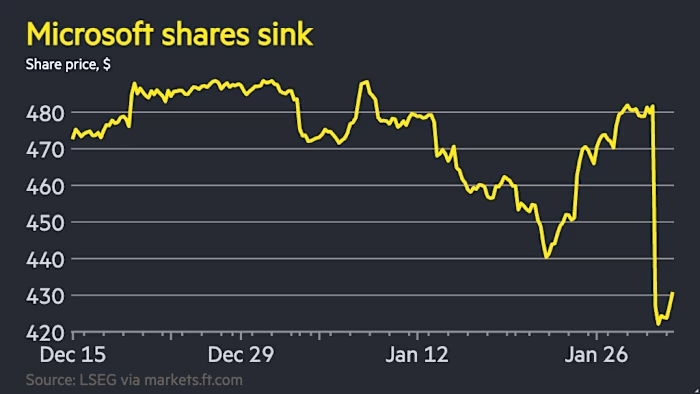
One source notes that Microsoft’s shares moved sharply after earnings, while another shows the stock trading above its 200-day simple moving average and in the middle of its 52-week range. Taken together, the market appears to be balancing strong fundamentals with expectations that future upside will depend on how efficiently Microsoft converts AI spending into growth.
02Why MSFT matters beyond the ticker: Microsoft as a proxy for cloud, AI, and enterprise spending
Microsoft Corporation (MSFT) is not just a single company story. The sources describe it as a software and infrastructure technology business operating across Productivity and Business Processes, Intelligent Cloud, and More Personal Computing. That makes MSFT stock a useful reference point for several major themes at once.
First, it reflects cloud demand. Azure growth was highlighted in the recent earnings summary, and that matters because cloud infrastructure remains one way to gauge enterprise digital spending. Second, it reflects AI adoption. The company’s AI infrastructure spending was specifically called out, which suggests Microsoft is still investing heavily to support future workloads.
For an AI office like Nonilion, this is the kind of market signal that benefits from shared interpretation. A human analyst may focus on valuation, while AI agents can track cloud growth, summarize earnings, and flag changes in sentiment across sources. Together, that supports a more complete view of why MSFT stock matters.
03What moved MSFT recently: earnings, Azure growth, AI infrastructure spend, and market reaction
The clearest catalyst in the analyzed sources was Microsoft’s recent fiscal Q4 earnings report. According to the summary, revenue grew 18% to $90 billion, Azure revenue surged 43%, and AI infrastructure spending reached $41 billion. The market reaction was positive, with the stock rising nearly 10% after the report in one source.
That sequence suggests investors are responding not just to growth, but to growth that appears connected to AI execution and cloud momentum. In other words, the market seems to be looking for evidence that Microsoft can spend aggressively today while still supporting future revenue expansion.
A few market snapshots also show intraday movement and elevated volume. One source notes trading volume of 45.77M versus an average daily volume of 31.57M, which suggests strong attention around the name. Another source shows MSFT moving in a day range and remaining above its 200-day average, reinforcing the idea that the stock is being actively re-priced around earnings and AI expectations.
Revenue growth and Azure momentum
The most important operating signal in the sources is revenue growth combined with Azure acceleration. An 18% revenue increase to $90 billion is strong on its own, but the 43% Azure increase is what gives the story strategic weight.
Why? Because Azure is the part of the business most directly tied to cloud and AI infrastructure demand. When that segment grows quickly, investors may infer that Microsoft is gaining share, capturing enterprise workloads, or both.
For long-term investors, the question is not only whether Azure is growing now, but whether that growth can persist as customers continue shifting workloads and experimenting with AI tools. That is where Microsoft’s position in enterprise technology remains central.
AI capex and what it signals about future margins
The sources identify $41 billion in AI infrastructure spending. That number matters because it signals commitment, but it also raises the margin question.
Heavy capex can support future growth, yet it can also pressure near-term profitability if the spending is not matched by revenue or efficiency gains. Investors therefore have to ask whether Microsoft’s AI investments are building a durable platform advantage or simply raising the cost base.
A practical way to think about this is to separate the story into two layers:
Near term: higher spending, more infrastructure buildout, and possible margin pressure.
Long term: stronger AI capacity, better cloud positioning, and potential operating leverage if demand scales.
That is the kind of tradeoff an AI office workflow can help track. In Nonilion, AI agents can monitor whether future earnings calls continue to support the same capex thesis, while humans decide whether the spending still fits the portfolio’s risk tolerance.
Valuation, P/E, dividend yield, and market-cap context
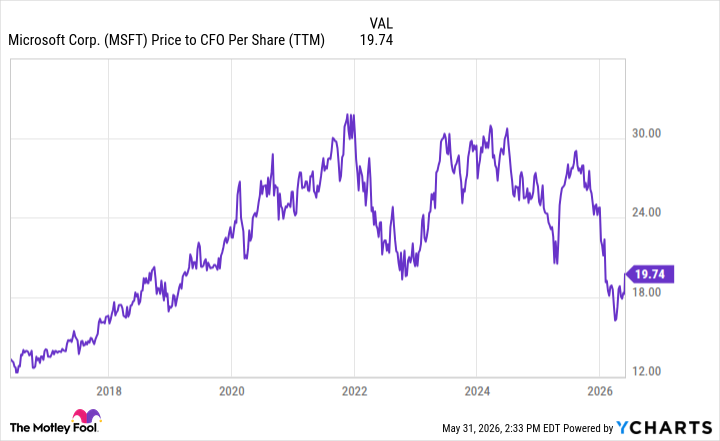
The valuation data in the sources gives MSFT stock its context. A P/E ratio of 23.89 appears in one snapshot, while another source lists a P/E ratio of 23.2608. The dividend yield is shown at 0.89%, and market cap ranges from about $2.90T to $3.34T depending on the source snapshot.
Those figures suggest a mature mega-cap company with growth characteristics, not a high-yield income stock. The valuation is meaningful because it shows the market is willing to pay a premium for Microsoft’s combination of software scale, cloud exposure, and AI optionality.
For investors, the key issue is whether the premium is justified by continued execution. If revenue growth, Azure momentum, and AI demand stay strong, the valuation can remain defensible. If growth slows materially, the multiple becomes harder to support.
Bull case, base case, and risk case for MSFT
A disciplined MSFT stock review should include more than a single price target. Based on the sources, the case can be framed three ways:
Bull case: Microsoft keeps compounding revenue, Azure remains strong, and AI infrastructure spend translates into durable enterprise demand.
Base case: The company continues to grow steadily, but the market moderates its enthusiasm as capex and valuation normalize.
Risk case: AI spending rises faster than returns, cloud growth cools, or competitive pressure makes it harder to sustain premium expectations.
This framework is useful because it turns a headline stock move into a structured thesis. It also fits a shared research environment, where team members can assign different scenarios to different agents and then review the output together.
04What to watch next: earnings dates, guidance, cloud demand, and competitive pressure
The next phase of MSFT stock analysis should focus on what changes, not just what happened. The sources point to earnings, guidance, cloud demand, and analyst reactions as the most relevant follow-up signals.
Here are the main items to monitor:
Earnings updates: whether Microsoft continues to show revenue growth and Azure momentum.
Guidance: whether management signals sustained demand or more cautious spending assumptions.
Competitive pressure: whether rivals challenge Microsoft’s pace in cloud and AI infrastructure.
Analyst sentiment: whether price targets and recommendations remain supportive.
This is also where a repeatable workflow matters. In an AI office setting, one AI agent can track earnings headlines, another can summarize analyst commentary, and a human can decide which signals are material enough to change the thesis.
00What MSFT stock means for AI offices like Nonilion
MSFT stock is a market story, but it is also a workflow story. The same forces that move Microsoft shares—earnings, cloud growth, AI capex, and analyst reaction—are the kinds of inputs that can overwhelm a team if they are handled manually.
For Nonilion, the relevance is practical: an AI office can turn scattered market updates into a shared research process. Instead of having one person read every source, AI agents can collect the data, summarize the changes, and prepare a draft view for the team to review asynchronously.
Turning market research into an async team workflow
A shared workspace works best when research is broken into small, repeatable tasks. That is especially true for a name like MSFT stock, where headlines, earnings, and valuation data can shift quickly.
A simple async workflow could look like this:
Collect the latest quote, earnings, and news snapshots.
Summarize the key changes in plain language.
Compare the new data with the prior thesis.
Flag what is confirmed, what is uncertain, and what changed.
Escalate only the questions that need human judgment.
This approach keeps the team aligned without requiring everyone to be online at the same time. It also makes the research trail easier to audit later.
Using AI agents to summarize earnings, track signals, and draft thesis updates
The MSFT stock case is a strong fit for AI agents because the data is repetitive but the interpretation is nuanced. An agent can summarize the earnings report, note the 18% revenue growth, highlight Azure’s 43% surge, and capture the $41 billion AI spending figure.
Another agent can track market reaction, volume, and valuation snapshots. A third can draft a thesis update that compares the current evidence against the prior bull, base, and risk cases.
That division of labor matters because it reduces friction. Humans do not need to spend time copying numbers between tabs; they can spend time deciding what the numbers mean.
Human judgment for final calls, risk framing, and portfolio decisions
Even in a highly automated research environment, the final call on MSFT stock should remain human-led. The sources provide data, but they do not decide how much risk a portfolio should take or whether the valuation premium is acceptable.
That is where human judgment matters most:
deciding whether AI capex is a strength or a warning sign,
framing downside scenarios realistically,
and aligning the thesis with broader portfolio strategy.
In this platform-style workflow, the best outcome is not replacing analysts. It is giving them a cleaner, faster, more collaborative way to make decisions.
06Where Microsoft fits in the future of work: productivity, AI copilots, and collaborative decision-making
Microsoft’s role in the future of work is part of why MSFT stock continues to attract attention. The company spans productivity, cloud, and AI infrastructure, which places it at the center of how modern teams operate.
That matters because the future of work is increasingly collaborative and AI-assisted. Teams are not just using software; they are using AI copilots, shared dashboards, and asynchronous decision loops to move faster with less friction.
Microsoft’s business model fits that shift. Its enterprise reach and cloud foundation make it a natural reference point for organizations trying to combine human judgment with AI support. For this platform, that means the Microsoft story is also a preview of how AI offices can structure their own work: one shared workspace, multiple agent roles, and clear human oversight.
07How to build a repeatable MSFT research process inside a shared workspace
A repeatable process helps teams avoid reactive investing. For MSFT stock, the goal is to create a system that captures the same core signals every time the story changes.
Set up a stock-monitoring dashboard
Track the essentials in one place:
current share price,
market cap,
P/E ratio,
dividend yield,
revenue growth,
Azure performance,
and major news updates.
A dashboard does not replace analysis, but it gives everyone the same starting point.
Assign agent roles for news, earnings, and valuation notes
Different AI agents can own different parts of the workflow. One agent can monitor news, another can summarize earnings, and another can maintain valuation notes.
That structure creates consistency. It also makes it easier for the team to see whether the thesis is changing because of new facts or simply because the market is noisy.
Create a weekly review loop for investment decisions
A weekly review helps the team stay disciplined. In that review, compare the latest MSFT stock data with the previous week’s thesis and ask three questions:
What changed?
What still matters?
What should a human decide next?
That loop is especially useful in this platform environment, where async collaboration can keep the research moving even when the full team is not in the same meeting.
08Key Takeaways
MSFT stock is best understood as a live signal for cloud demand, AI infrastructure spending, and enterprise technology leadership. The analyzed sources show strong revenue growth, a 43% Azure surge, and $41 billion in AI infrastructure spending, all of which help explain why the market reacted positively.
For long-term investors, the key is to balance growth, valuation, and capex risk. For AI offices like this platform, Microsoft is also a useful model for how humans and AI agents can collaborate on market research, thesis updates, and decision support.
The best analysis combines market data, AI context, and team coordination. That is how a fast-moving stock story becomes a repeatable research process rather than a one-time reaction.
09Why This Trend Matters for Nonilion
This trend matters to Nonilion because it points to a bigger change: teams are moving from simple calls toward persistent, AI-supported collaboration spaces. Nonilion can bridge live presence, meeting context, avatars, and follow-up work so the trend becomes a usable workflow instead of a headline.
10Shareable Extracts
The trend is not just "MSFT stock: what Microsoft’s share price is really telling investors" - it is a signal that team coordination is becoming the next competitive edge.
Hot take: the teams that win from this shift will not be the ones with more meetings; they will be the ones with clearer shared context after every meeting.
If msft stock: what microsoft’s share price is really telling investors keeps moving this fast, remote teams need a workspace where conversation, presence, and follow-up stay connected.
MSFT stock: what Microsoft’s share price may be signaling MSFT stock is more than a ticker on a quote page.
Based on the analyzed sources, Microsoft’s recent trading, earnings, and AI infrastructure spending may be pointing investors toward themes such as cloud strength, enterprise demand, and AI adoption.
11Social Hooks
Everyone is talking about MSFT stock: what Microsoft’s share price is really telling investors. The overlooked part is what happens to team workflows after the headline fades.
The uncomfortable question behind MSFT stock: what Microsoft’s share price is really telling investors: are teams adapting their collaboration systems fast enough?
This is not a meeting trend. It is a coordination trend, and products like Nonilion sit right in the middle of that shift.