


Developer Productivity
hermes-agent: What Developers Need to Know
The Self-Improving Agent and the Vision for Collective AI Intelligence I. Introduction: The Emergence of Self-Improving Agents The landscape of artificial intelligence is rapidly e
01The Self-Improving Agent and the Vision for Collective AI Intelligence
I. Introduction: The Emergence of Self-Improving Agents
The landscape of artificial intelligence is rapidly evolving, with a growing focus on dynamic, learning capabilities. We are seeing the development of AI that can learn and adapt, moving beyond static execution.
An example of this development is Hermes Agent by Nous Research. This autonomous agent is designed with a built-in learning loop. It's designed to create skills from experience, continuously improve those skills during use, and build a persistent model of its user across sessions. Hermes Agent is designed to remember what it learns and become more capable the longer it runs, offering capabilities beyond typical single-session tools.
Want your team to run this workflow with AI-native execution?
This design aims to enable the AI to move from a reactive tool towards a more adaptive, self-improving assistant. The individual impact can be significant, offering enhanced personalization and task automation. It's an agent designed to “grow with you,” aiming to learn your projects and retain knowledge of how it solved problems.
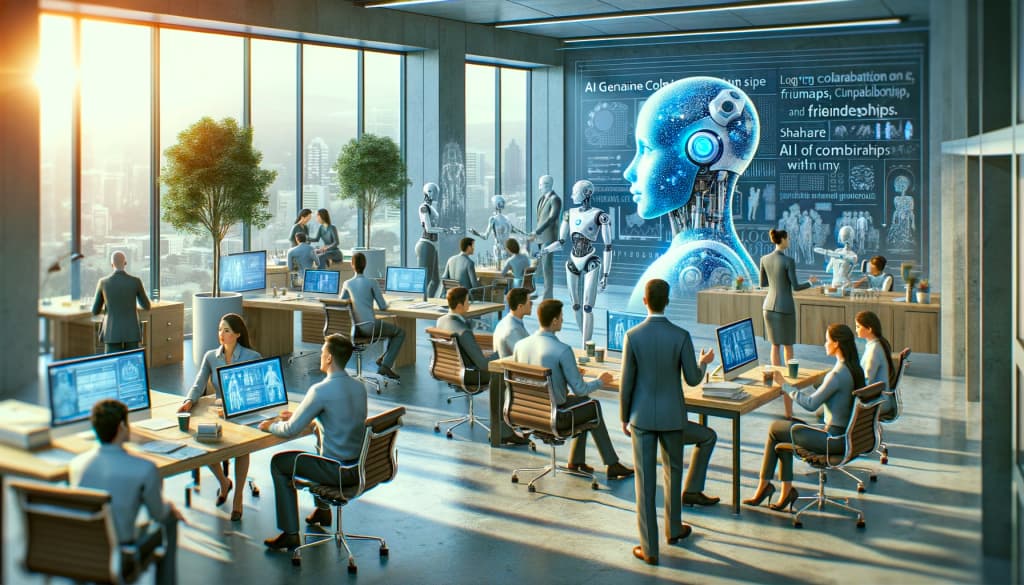
While offering notable capabilities for personal use, this individual intelligence raises a larger question: What happens when such self-improving capabilities scale beyond a single user? How do these evolving agents integrate into a team environment? This is where the concept of the AI office becomes relevant, and platforms like Nonilion are designed to orchestrate this evolving area of human + AI collaboration, aiming to transform individual learning into collective organizational intelligence.
II. Exploring Hermes Agent's Core Innovation
Hermes Agent is designed with learning mechanisms.
The "Learning Loop" Explained:
A key innovation is its built-in learning loop. This mechanism allows Hermes Agent to observe and learn from interactions, autonomously generating new "skills" or capabilities. These skills are not pre-programmed; they are emergent, arising directly from the agent's experience. This experience-driven skill creation aims for the agent to adapt to its environment and the user's specific needs.
Furthermore, the learning loop facilitates iterative improvement. As Hermes Agent uses its created skills, it refines them, becoming more effective and efficient over time. This continuous refinement is intended to allow the agent's capabilities to evolve and optimize for performance.
Persistent Memory and Contextual Understanding:
A key feature of Hermes Agent is its persistent memory. It remembers past solutions, project details, and user preferences across sessions. This is designed to be more than short-term memory, aiming to persist knowledge and build a growing context of user interactions. This persistent memory is important for personalized AI, allowing the agent to provide contextually relevant assistance without needing constant re-instruction.
Multi-Platform Accessibility:
Hermes Agent is designed to support multiple platforms, aiming to be accessible across various user environments. It supports various communication channels, including Telegram, Discord, Slack, WhatsApp, Signal, Email, and CLI. This aims to make the agent accessible across different workflows, potentially allowing users to start an interaction on one platform and pick it up on another.
Autonomous agents, with features like learning loops, persistent memory, and personalized AI capabilities, suggest a potential shift in how AI is utilized. They aim to move beyond static utility, offering adaptive capabilities that can develop alongside the user.
III. From Individual Agent Capabilities to Collective Potential
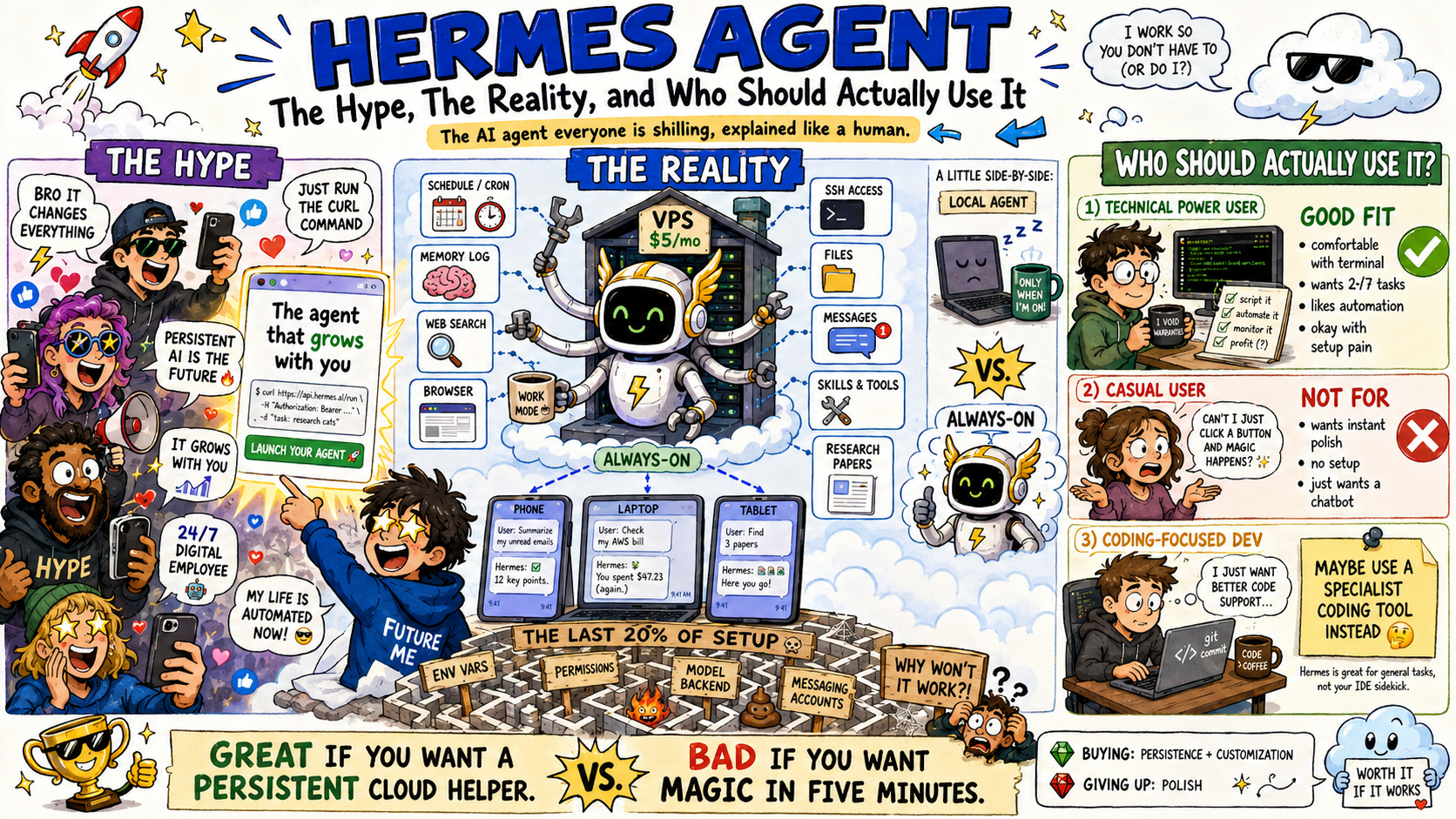
While Hermes Agent focuses on individual productivity, its approach to personal learning also highlights a consideration in a team setting: how to share individual insights. The unique insights, learned skills, and persistent knowledge acquired by one agent for one person, while powerful individually, do not automatically translate into collective success. This creates potential "silos of intelligence" where valuable organizational knowledge remains confined to individual human-agent pairings.
Orchestrating Agents in a Shared Workspace:
To move beyond individual empowerment, there is a need for an environment where agents can contribute to shared projects, collective knowledge bases, and orchestrated team workflows. The question becomes: How do we transition from an agent learning your projects to agents learning the team's projects, processes, and objectives?
This is where an AI office platform like Nonilion can play a role. Nonilion aims to provide the shared context and infrastructure for agents to contribute their evolving skills to an entire team, fostering shared knowledge, streamlined workflows, and supporting collective intelligence. It's a framework designed to help agents move beyond individual empowerment to collective impact, facilitating virtual office collaboration and enhancing team coordination. This shift is important for realizing the potential of AI in an organizational context, moving towards collective intelligence in a shared workspace, and aiming to boost team productivity through advanced AI collaboration.
IV. Implications of Self-Improving Agents for AI Offices like Nonilion
The principles demonstrated by self-improving agents like Hermes Agent offer a compelling vision for the future of AI offices. The ability of an agent to learn and improve based on experience can be impactful when scaled to an entire organization.
From Personal Mastery to Team-Wide Competency:
Imagine an agent that learns the nuances of a specific client account, internal approval processes, or a complex software development pipeline. In a traditional setup, this learned intelligence might be confined to one user. However, in an AI office, this individual mastery can become a shared, team-wide competency. For example, an agent that learns how to draft a specific type of report for a manager could have that learned skill, or the underlying process, generalized and made available to other agents or human team members. This can help promote consistency and efficiency across the organization, rather than being siloed.
The Role of Shared Context and Persistent Memory in a Collaborative AI Office:
For this scaling to be effective, an AI office can aim to ensure that an agent's individual learning isn't lost, but instead contributes to a collective organizational memory. This can involve a centralized, accessible knowledge base that agents can both contribute to and query, potentially enhancing team intelligence. Nonilion is built to manage this shared context, enabling agents to execute tasks asynchronously, follow up on meetings with contextual understanding, and automate complex workflows based on a collective, evolving understanding of team goals and processes. This can help integrate individual agent capabilities into a more cohesive force for organizational efficiency, fostering human + AI collaboration.
Human + AI Collaboration: Beyond Task Delegation:
The future of work can involve more than just delegating tasks to AI; it can include a collaborative relationship where AI agents learn and improve alongside humans. The AI office can be a dynamic space for continuous learning, not just for the AI but also for the humans who interact with agents. Platforms like this platform facilitate human + AI co-working, where the evolving capabilities of agents can enhance human decision-making, creativity, and strategic thinking by handling iterative, knowledge-intensive aspects of work, allowing humans to focus on higher-value activities.
V. Practical Implications for Collaborative AI Workspaces
The emergence of self-improving agents like Hermes Agent brings practical implications for how we design and operate future workplaces.
Designing for Agent Collaboration:
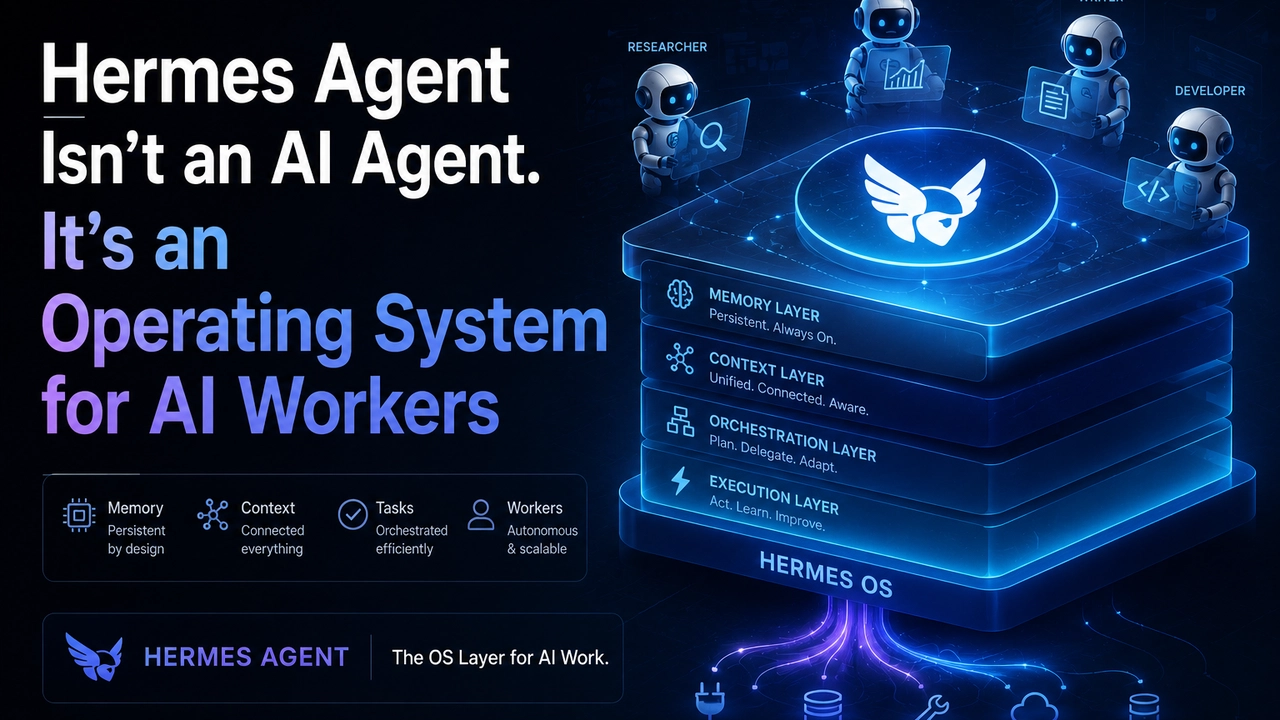
To support self-improving agents contributing to a collective goal, specific infrastructure and architectural principles can be important. This includes robust APIs for seamless agent interaction, secure data environments to protect sensitive information, and clear governance frameworks to manage how agents interact with each other and with human team members.
The Ethical Dimension of Evolving AI:
As AI agents learn and adapt autonomously, ethical considerations become important. Issues such as bias propagation from learned data, the need for effective control mechanisms, and transparency in self-improving systems warrant attention. Within the AI office, human oversight and "human-in-the-loop" mechanisms can help guide agent learning and align it with organizational values and ethical standards.
The this platform Vision: Fostering a Collaborative AI Ecosystem:
this platform is actively building and refining the environment for this future. It's not merely about deploying individual agents, but about cultivating an AI ecosystem where the principles of self-improving agents (like those demonstrated by Hermes) can contribute to the collective intelligence of an entire team. This has the potential to impact how organizations operate, innovate, and grow. this platform aims to be the shared workspace where this vision can be realized, supporting organizational intelligence through advanced AI collaboration.
VI. Conclusion: The Evolving Workspace with AI
The journey from the personal, self-improving AI agent to the collective potential of the AI office represents a significant development in how we conceive of work. Tools like Hermes Agent by Nous Research showcase the potential of individual AI development, demonstrating how an autonomous agent can create skills from experience, improve them during use, and build a persistent model of its user.
The potential lies in scaling this intelligence, moving from "my agent" to "our agents" – a fleet of collaborative AIs working in concert with humans. This transition suggests the need for platforms that can manage shared context, facilitate agent collaboration, and integrate individual agent learning into a collective organizational memory.
The future of work can involve human + AI collaboration, where intelligent agents can function as learning components in a shared, dynamic workspace. Platforms like this platform are working to enable this evolving collaboration, contributing to the foundations of tomorrow's collaborative AI office, where self-improving agents can support team productivity and innovation.
02Why This Trend Matters for Nonilion
This trend matters to Nonilion because it points to a bigger change: teams are moving from simple calls toward persistent, AI-supported collaboration spaces. Nonilion can bridge live presence, meeting context, avatars, and follow-up work so the trend becomes a usable workflow instead of a headline.
03Shareable Extracts
- The trend is not just "hermes-agent: What Developers Need to Know" - it is a signal that team coordination is becoming the next competitive edge.
- Hot take: the teams that win from this shift will not be the ones with more meetings; they will be the ones with clearer shared context after every meeting.
- If hermes-agent: what developers need to know keeps moving this fast, remote teams need a workspace where conversation, presence, and follow-up stay connected.
- Introduction: The Emergence of Self-Improving Agents The landscape of artificial intelligence is rapidly evolving, with a growing focus on dynamic, learning capabilities.
- We are seeing the development of AI that can learn and adapt, moving beyond static execution.
04Social Hooks
- Everyone is talking about hermes-agent: What Developers Need to Know. The overlooked part is what happens to team workflows after the headline fades.
- The uncomfortable question behind hermes-agent: What Developers Need to Know: are teams adapting their collaboration systems fast enough?
- This is not a meeting trend. It is a coordination trend, and products like Nonilion sit right in the middle of that shift.
05Sources and Author
Sources
-
NousResearch/hermes-agent: The agent that grows with you github.com/nousresearch/hermes-agent
-
Hermes Agent — The Agent That Grows With You | Nous ... hermes-agent.nousresearch.com
-
Has anyone here explored Hermes Agent by Nous ... www.reddit.com/r/LocalLLM/comments/1t47ec0/has_anyone_here_explored...
Author
This article on hermes-agent was generated by the Nonilion AI blog workflow using web research inputs and AI-assisted synthesis.