



human + AI workflows
MiMo Code: Where Models and Agents Co-Evolve
MiMo Code: Where Models and Agents Co-Evolve Introduction: Why MiMo Code Matters Beyond the Model MiMo Code can be read as one example of a broader trend in AI: models and agents a
MiMo Code: Where Models and Agents Co-Evolve
01Introduction: Why MiMo Code Matters Beyond the Model
MiMo Code can be read as one example of a broader trend in AI: models and agents are increasingly being discussed together rather than as completely separate layers. The model may improve at reasoning, planning, and responding within workflows, while the agent may become better at using that model to complete work across tools, people, and time. For teams, the practical question is not only about output quality, but also about how AI fits into ongoing work.
For teams trying to work faster without losing coordination, it can be useful to ask how models move beyond isolated chat interfaces and become part of a durable work system. That is where the idea of an AI office becomes useful. In a shared environment like Nonilion, humans and AI agents can support planning, handoffs, meeting follow-ups, and task routing instead of treating AI as a one-off assistant.
Want your team to run this workflow with AI-native execution?
02What MiMo Code May Be Pointing To: Models That Improve Through Agentic Workflows
At a high level, MiMo Code suggests a feedback loop between model capability and agent behavior. The model is not only asked to answer prompts; it is also used inside workflows where actions, constraints, and task structure shape how it is applied. The agent is not just a wrapper around the model; it becomes part of the mechanism that turns model output into execution.
This matters because many workplace problems are not knowledge problems. They are coordination problems. A model can draft a summary, while an agent can help move that summary into follow-up, routing, and status tracking. In that sense, the idea of co-evolution is practical: the model is used in structured work, and the agent is used to carry that work forward.
A useful way to think about this is:
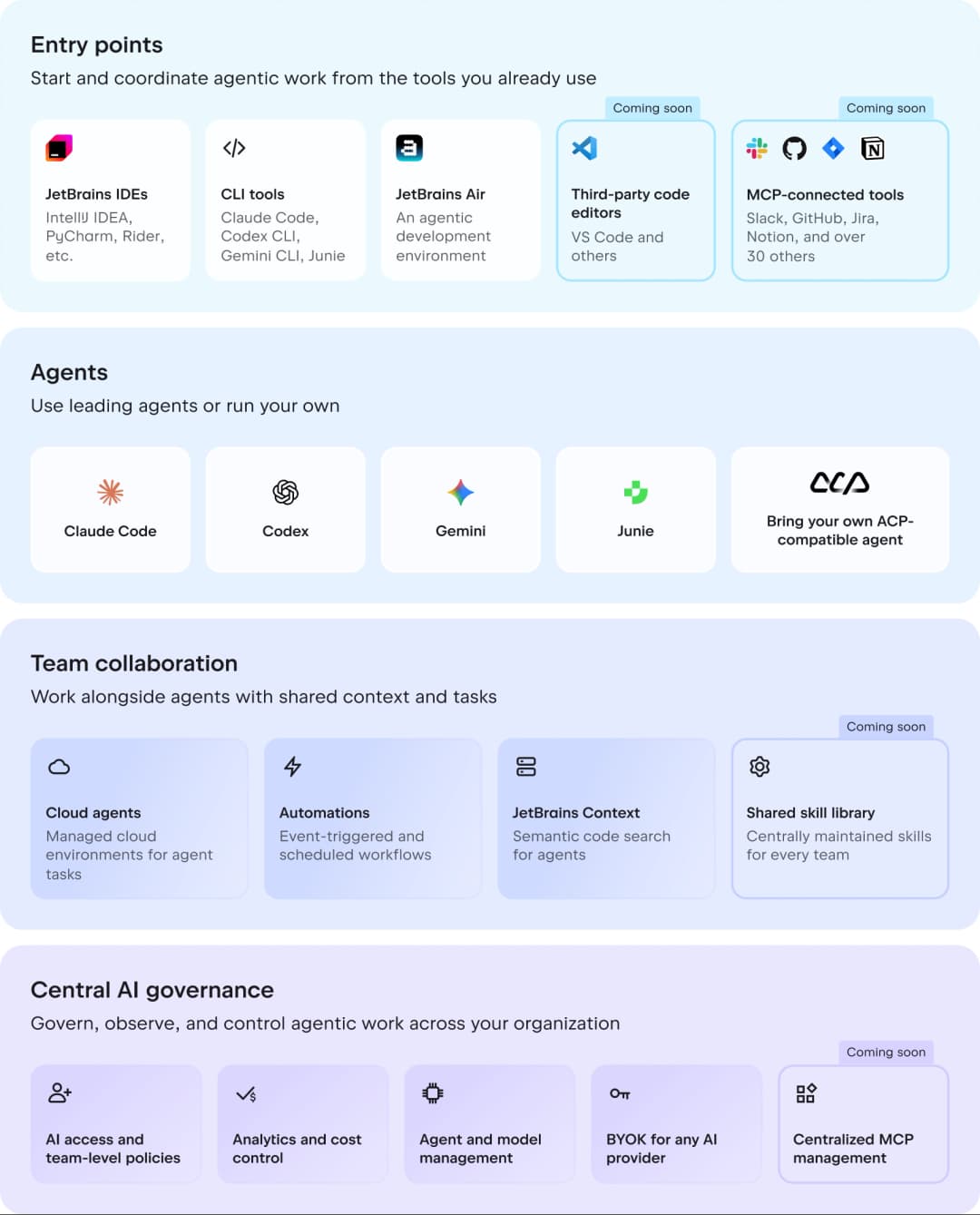
- The model handles interpretation, synthesis, and generation.
- The agent handles sequencing, tool use, and persistence.
- The workflow shapes how both are used.
That is the shift from AI as a responder to AI as part of an operating layer.
03Why Co-Evolution Matters: From Better Model Performance to Better Team Execution
The obvious benefit of co-evolution is better AI performance. But an equally important benefit is better team execution.
When models and agents improve together, teams may be able to move from fragmented work to more coordinated work. Instead of asking, “Can AI write this?” leaders can ask, “Can AI help this move through the organization?” That is a different standard. It includes clarity, timing, accountability, and handoff quality.
Co-evolution matters for three reasons:
1. It reduces translation loss
Human teams often lose momentum when ideas move from conversation to action. An agentic workflow can help preserve intent, context, and next steps more reliably than scattered notes or informal follow-up.
2. It makes work more asynchronous
Distributed teams do not always need more meetings; they often need better continuity. A model-and-agent system can help keep work moving between time zones, shifts, and priorities without requiring everyone to be online at once.
3. It creates a learning loop around operations
When the same system helps with planning, execution, and follow-up, it can be improved based on where work stalls. That makes the workflow itself a source of insight.
In practice, this is where an AI office becomes more than a metaphor. In Nonilion, for example, a meeting can end with an AI agent drafting action items, routing them to the right teammates, and tracking completion asynchronously so the team starts the next day with clearer next steps.
04How Model-and-Agent Co-Evolution Changes the Office Workflow
The office workflow changes when AI is no longer confined to generating content and instead participates in the movement of work.
From prompt-response to workflow participation
Traditional AI use is often linear: ask, answer, stop. More workflow-oriented systems are cyclical: plan, act, observe, refine. The model helps define the work; the agent helps carry it forward.
From individual productivity to shared execution
A model that helps one person write faster is useful. An agentic system that helps a team coordinate faster can be more impactful in shared work. The unit of value shifts from personal output to collective throughput.
From static instructions to adaptive routines
Teams rarely work the same way every day. A co-evolving system can adapt to recurring patterns: weekly planning, client updates, issue escalation, or meeting recap. The model may become better at understanding the team’s operating style, while the agent may become better at executing it.
This is one way to think about the office workflow of the future: not a pile of isolated tools, but a shared workspace where humans and AI agents collaborate on the flow of work.
05Planning, Decomposition, and Handoff: The Role of Agents in Human Work
If models are the reasoning engine, agents can help manage work. Their most valuable role is not replacing human judgment, but making human judgment easier to act on.
Planning
Agents can help turn vague goals into concrete steps. For example, “prepare the customer review” can become a sequence: gather notes, check open issues, draft a summary, request approvals, and schedule follow-up.
Decomposition
Large tasks become more manageable when broken into parts. A model can suggest a structure, while an agent can help operationalize it by assigning subtasks, setting dependencies, and identifying blockers.
Handoff
Handoffs are where work often fails. An agent can preserve context across transitions, helping the next person see not just the task, but also the reasoning behind it, the deadline, and the expected outcome.
This can be especially useful in teams where work crosses functions. Product, operations, sales, and support often need different forms of context. A well-designed agent can help bridge those gaps without forcing everyone into the same meeting.
06What This Means for Distributed Teams and Async Collaboration
Distributed teams live or die by their ability to coordinate without constant overlap. That is why model-and-agent co-evolution is especially relevant for async collaboration.
Better continuity across time zones
An agent can act while humans are offline: collecting updates, summarizing decisions, and preparing the next set of actions. The model may improve the quality of those outputs over time by adapting to the structure of the team’s recurring work.
Less dependency on live meetings
Meetings still matter, but not every decision needs to be made live. With agentic support, teams can move more work into written, traceable, asynchronous channels. That can reduce meeting fatigue and improve accountability.
More reliable follow-through
A distributed team does not just need to decide; it needs to remember. Agents are well suited to the repetitive but essential work of reminders, status checks, and follow-up nudges.
This is one reason the AI office concept is compelling. In a shared workspace like Nonilion, a team can leave a meeting with an AI agent responsible for the next step: creating the task list, assigning owners, and surfacing unresolved items before the next sync. That can make async collaboration feel less like a compromise and more like a strength.
00Where AI Offices Like Nonilion Fit: A Shared Workspace for Human + AI Co-Working
The future of agentic systems is not just embedded inside products. It is also embedded inside workspaces.
An AI office is a place where humans and AI agents share an operational environment. Humans bring judgment, priorities, and relationships. Agents bring persistence, structure, and execution support. Together, they can reduce the gap between intent and action.
This platform fits this model as a practical workspace for human + AI co-working because it supports the kinds of tasks that make co-evolution useful in the first place:
- meeting follow-ups that are less likely to get lost
- async execution that continues after the call ends
- workflow automation that still respects human ownership
- team coordination across roles and time zones
The key idea is not that AI replaces the office. It is that the office becomes a place where AI can participate in the work itself.
08Practical Use Cases: Meeting Follow-Up, Task Routing, and Cross-Team Coordination
The best way to understand co-evolution is through concrete use cases.
Meeting follow-up
A model can summarize a meeting. An agent can turn that summary into action: draft follow-up notes, assign tasks, and send reminders. The result is not just documentation, but momentum.
Task routing
When a request comes in, the model can help interpret what it means, while the agent can help route it to the right person or team. That may reduce bottlenecks caused by manual triage.
Cross-team coordination
Cross-functional work often fails because each team has its own context. An agent can help maintain a shared thread of progress, dependencies, and decisions so that product, operations, and customer-facing teams stay aligned.
These are not futuristic scenarios. They are the kinds of everyday workflows that can benefit from a shared AI office model.
09What Leaders Should Automate First, and What Should Stay Human-Led
Not every workflow should be automated, and not every decision should be handed to an agent. Leaders need a clear boundary.
Automate first
Start with work that is repetitive, structured, and easy to verify:
- meeting summaries and action-item capture
- follow-up reminders
- task routing and ownership assignment
- status collection across teams
- document drafting from approved inputs
Keep human-led
Preserve human ownership where judgment, sensitivity, or tradeoffs matter most:
- hiring and performance decisions
- customer escalations with high emotional stakes
- strategic prioritization
- final approval of external-facing commitments
The goal is not maximum automation. The goal is a better division of labor between humans and agents.
10Adoption Checklist: Preparing a Team for Agentic Systems That Learn Alongside Users
Teams do not adopt agentic systems successfully just by adding tools. They need operating discipline.
1. Define the workflow before the tool
Be clear about the process you want to improve. If the workflow is vague, the agent may only automate confusion.
2. Establish ownership
Every agent-assisted task should have a human owner. Agents can move work forward, but humans should remain accountable.
3. Standardize inputs and outputs
The more consistent the task format, the better the system may perform. Templates help both humans and agents work with less ambiguity.
4. Start with low-risk, high-frequency work
Choose tasks that happen often and have clear success criteria. That creates a safe learning loop.
5. Review and refine regularly
Agentic systems improve when teams inspect what happened, where work stalled, and what context was missing.
6. Design for async by default
If the system only works when everyone is live, it is not yet an AI office. It should support work that continues between meetings.
11Conclusion: From Model Improvement to Operational Improvement
MiMo Code is a useful lens because it captures a broader truth: the future of AI is not only about smarter models, but about smarter work systems. When models and agents co-evolve, they can improve not just the quality of outputs, but also the quality of coordination.
That is the opportunity for teams: use AI to reduce friction, preserve context, and keep work moving across time, tools, and people. In a practical AI office like [this platform](https://this platform.com/), that means humans and AI agents sharing one workspace for planning, follow-up, routing, and async execution. The result is not just faster AI. It is better operational rhythm.
The companies that benefit most will not be the ones that automate everything. They will be the ones that design clear boundaries between human judgment and agentic execution, then let both improve together.
12Why This Trend Matters for Nonilion
This trend matters to Nonilion because it points to a bigger change: teams are moving from simple calls toward persistent, AI-supported collaboration spaces. Nonilion can bridge live presence, meeting context, avatars, and follow-up work so the trend becomes a usable workflow instead of a headline.
13Shareable Extracts
- The trend is not just "MiMo Code: Where Models and Agents Co-Evolve" - it is a signal that team coordination is becoming the next competitive edge.
- Hot take: the teams that win from this shift will not be the ones with more meetings; they will be the ones with clearer shared context after every meeting.
- If mimo code: where models and agents co-evolve keeps moving this fast, remote teams need a workspace where conversation, presence, and follow-up stay connected.
- The model may improve at reasoning, planning, and responding within workflows, while the agent may become better at using that model to complete work across tools, people, and time.
- For teams, the practical question is not only about output quality, but also about how AI fits into ongoing work.
14Social Hooks
- Everyone is talking about MiMo Code: Where Models and Agents Co-Evolve. The overlooked part is what happens to team workflows after the headline fades.
- The uncomfortable question behind MiMo Code: Where Models and Agents Co-Evolve: are teams adapting their collaboration systems fast enough?
- This is not a meeting trend. It is a coordination trend, and products like Nonilion sit right in the middle of that shift.
15Sources and Author
Sources
No direct external source URLs were available for this run.
Author
This article on MiMo Code: Where Models and Agents Co-Evolve was generated by the Nonilion AI blog workflow using web research inputs and AI-assisted synthesis.